Stan. S. Katz

Author of The Emperor and the Spy

  • Home
  • Author
  • Books
  • Reviews
  • Educators
  • News
  • Audiobook & Timeline
  • Mashbir Archives
  • Tokugawa Archives
  • Contact
Follow Stan on FacebookFollow Stan on TwitterFollow Stan on GoodreadsFollow Stan on RSS

Sign Up for Future Blogs Linked to Colonel Mashbir and Japanese History

Read the Intro Posts

INTRODUCTION TO THE ART OF PEACE

WELCOME!

Recent Posts

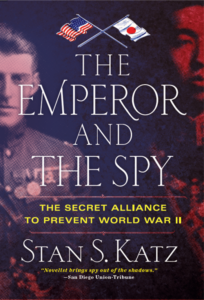
  • San Diego Jewish Journal Holocaust Remembrance Edition May 2016 highlights the historical novel, The Emperor and the Spy and the outstanding achievements of Colonel Sidney Mashbir.
  • The Emperor and the Spy, was one of two books highlighted during academic/diplomatic event sponsored by the Prime Minister’s Office of Japan and hosted by San Diego World Affairs Council
  • Osher Lifelong Education Institute – UCSD Presentation. Remarkable story, the alliance between a patriotic U.S. Intelligence Agent, Colonel Sidney Mashbir, and a humanitarian Japanese International Statesman, Prince Iyesato Tokugawa, who heroically delayed and attempted to prevent WWII in the Pacific.
  • Tokugawa & Komatsu, Forgotten Heroes – Until his passing in 1940, Prince Iyesato Tokugawa held back WWII in the Pacific – Tokugawa’s diplomatic legacy lived on after WWII ended, when his protégé, Takashi Komatsu, guided the US and Japan to again become friends and allies.
  • Have you ever wondered how US and Japan re-established their friendship and alliance following the trauma of WWII? Here’s a new biography that honors an amazing Japanese American statesman, Takashi Komatsu, who guided this major achievement.

Archives

San Diego Jewish Journal Holocaust Remembrance Edition May 2016 highlights the historical novel, The Emperor and the Spy and the outstanding achievements of Colonel Sidney Mashbir.

May 29, 2025 by Stan S. Katz Leave a Comment

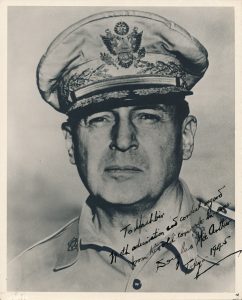
The first page of article has a photo of General Douglas MacArthur.

It was gifted to Colonel Sidney Mashbir and has an inscription from MacArthur to Mashbir.

This inscription gives a sense of the magnitude of Mashbir’s contributions to the Allies’ Victory in Pacific during WWII.

The inscription reads:

To Mashbir

With admiration and cordial regard from his old comrade-in-arms.

Douglas MacArthur

Tokyo – 1945


The Antiquarian and the Creative Writing

by Natalie Jacobs April 29, 2016

Sixteen years ago, Stan Katz had never written a book. The longtime owner of several antiquarian bookstores, Katz knew a lot about books, and had an extensive collection of classics. But he never considered writing one himself, until he heard the story of Colonel Sidney Mashbir.

It was 1999 when someone came into one of Katz’s bookstores with a box of photos and documents.

“I didn’t have any idea what I was really looking at other than it looked really interesting,” he says from his home office in Oceanside.

Katz could immediately gather that the documents were related to intelligence before and during World War II.

“My mom was an Auschwitz survivor and so was her sister. I’ve long had an interest in WWII and what was going on and how it came to be. And then all of a sudden I had the papers of a spy who was very integral in winning WWII, I found out.”

And so began Stan Katz’s investigation into the life and work of Colonel Mashbir, a little-known historical figure from a dense and complicated time period. To help decipher the personal letters and photos from the box he acquired that day in his bookstore, Katz purchased Mashbir’s autobiography, itself an antiquarian rarity (Mashbir’s son later gave Katz the rights to it).

That he had no experience with creative writing didn’t stop Katz from exploring possible ways to use this information, which he immediately felt touched on an important and untold story about a great but mostly forgotten man. Katz spent about a year working on a screenplay, but it didn’t have the “fullness” Katz was looking for. So he settled on an historical novel. But why fictionalize the story if it is so compelling?

“First of all,” he says, “when it comes to spies, you never know the whole story. What happened was, over and over again, I was told by [Mashbir’s] son, by others, that history, in a lot of people’s mind, is boring, it doesn’t engage people.”

To Katz, this was primarily a spy story.

“I would come up with an action-packed espionage novel that’s 70 percent nonfictional in nature, 30 percent fictionalized.”

Katz says he tried to remain true to history even in the fictionalized parts, which required research into people and events that branched off from Mashbir himself. Take, for example, Charles Lindbergh.

“Whether he spoke to Mashbir or not at certain points,” Katz says, “wasn’t as significant as [the fact that Lindbergh] was leading an isolationist movement in America to prevent us from going into WWII. You’ll understand that Henry Ford and Charles Lindbergh were leading a massive effort to keep us out of WWII, regardless of what the Jews were going through.”

So instead of a screenplay, in order to explore the depth of not only this figure Mashbir but also the complications of the WWII era, Katz wrote a 500-page novel called “The Emperor and the Spy, The Secret Alliance to End WWII.” The editing process alone took five years.

Sidney Mashbir was Jewish, and very early on in the book, Katz has Mashbir confront that Jewish identity. He’s young and in the Arizona guard, about to embark on a mission to bring the Mexican revolutionary Poncho Villa to a meeting with General John J. Pershing. One of his colleagues says, “Mashbir, is that Jewish?” Mashbir brushes it off, ignoring the question.

“His grandfather was very Jewish Orthodox,” Katz explains. “He forced Mashbir’s mother to move from Tucson where there weren’t that many Jews at the time [late 1800s], to New York to marry a Jewish Russian immigrant. They married, they have a very unhappy marriage. They go back to the Southwest, they try to make it work but Mashbir sees this constant conflict between his Jewish parents and his grandfather who is Orthodox.

“I have to interpret this,” Katz concludes, from his interviews with Mashbir’s son and other genealogical research.

“He got into the military first in 1904. How were Jews treated in our country? How were they seen? Most wouldn’t even be broadcasting that they’re Jewish.”

After a series of military starts and stops, in 1942 General Douglas MacArthur tapped Mashbir to lead the Allied Translator and Interpreter Section (ATIS) within the Southwest Pacific Area. This was a group of nearly 5,000 intelligence agents working to investigate Japanese war crimes.

Katz pulls out a narrow pamphlet filled with names. It’s a list of all the Japanese enemies identified by ATIS; Mashbir’s personal copy.

Katz discovered that Mashbir’s greatest ally in the Japanese government was Emperor Hirohito’s right-hand man, Prince Iyesato Tokugawa.

“There was an intimacy between Mashbir and Tokugawa,” Katz says, holding up a greeting card sent to Mashbir from Tokugawa, and flipping to a photo of the two at a “prestigious luncheon” in Japan.

“[Mashbir] said Prince Tokugawa was so important that if he hadn’t died, the Japanese would not have allied with the Axis Powers. [Mashbir] said that in his autobiography.”

Katz makes the connection that three months after Tokugawa died, in June of 1940, Japan allied with Germany.

“What Mashbir and the war in the Pacific taught was there was a rising fanaticism who felt they were superior to other races and other creeds and they were going to take over by force. The story depicts how the counter effort was – here are individuals, statesmen, who are trying to use cultural, art, science, music interchange, student exchanges, all these different means to create bridges between people so as to prevent conflict and not let militant extremists, close-minded, narrow-minded people, take over.”

For Katz, the fact that Mashbir himself was ultimately unsuccessful in that effort does not diminish his legacy or the importance of diplomacy.

“Mashbir’s insight into the Japanese culture was such that he was able to guide General MacArthur and other leaders, when the war ended, how best to treat occupied Japan and how best to lead it so that it could become the democratic country that we could be allies with.

“We went into a country like Iraq,” Katz says, bringing the argument to present day, “without really understanding the culture, the leadership, how to move forward, and the country fell apart into civil war. The same thing could have happened in Japan.”

Since publishing “The Emperor and the Spy,” Katz has also completed a 300-page online timeline, which chronicles Mashbir and many of the people he came in contact with throughout his life. That document includes rarely seen photographs of Japanese leaders and members of the U.S. military and general society, from documents that Katz has added to his personal collection throughout the years. One of his goals for the book is to see it used in high school and college courses.

“One of these days, it will be used in teaching a very strong message about why the state of Israel happened, how the Holocaust preceded, and about an American Jewish spy who had major impacts in us winning a war. I think he’ll be a household name.”

Katz’s next book project will be a biography on Prince Tokugawa.

Colonel Sidney Mashbir is buried at Fort Rosecrans in Point Loma. Details on the fictionalized account of his life can be found online at TheEmperorAndTheSpy.com


The second page of article shown below may be hard to read.

For easier reading, the above Transcription was given.


Front cover: May 2016 San Diego Jewish Journal Holocaust Remembrance Edition


BELOW is a Letter to the Publisher of San Diego Jewish Journal, Mark Moss. This letter led to the above magazine article being written.

Dear Dr. Mark Moss,

I hope all is well.

It’s been years since we last met. We have some mutual friends. We spoke to one another at a couple of festive gatherings. Just like yourself, I’m a Dentist whose career went in a very different direction.

Last time we spoke, I mentioned an historical novel I was working on, that had strong connections to Jewish History. You kindly offered to include an announcement or an article linked to the release of this book in the San Diego Jewish Journal.

After sixteen years of writing and research this novel and a website linked to it, are finally completed.

Below are some of the details of this project:

-The title of the novel is, The Emperor and the Spy. It is quite unique, in that it was inspired by my acquisition of the secret personal papers, official documents, and photographs of an American Military Intelligence Officer.

This novel has a strong Jewish theme for various reasons:

1- I’m Jewish and my mother was an Auschwitz survivor.

2- The novel depicts the events leading up to and during the Holocaust, and emphasizes the need for the creation of the State of Israel.

3- The main protagonist in the novel is an unsung hero, an Intelligence agent of Jewish heritage, named Colonel Sidney Mashbir. This master spy allied with top Japanese leaders during the 1920s and 1930s, including members of the Japanese Royal Family. They valiantly attempted to prevent hostilities in Asia, and prevent conflict between their two nations and the outbreak of WWII.

4-Regrettably, when WWII erupted, this intelligence agent of Jewish Heritage, took a major role in defeating the Axis Powers in the Pacific Theater of War. The significant role he took in winning that war will bring pride to the Jewish community, as well as recognition and respect from the general American Public. Colonel Mashbir and the large intelligence organization, ATIS (Allied Translator and Interpreter Section), that he commanded shortened that war by two years!

5- It was surprisingly to discover that one of the peace-loving Japanese leaders who allied with this spy (who is prominently highlighted in the novel), took a pivotal role in the creation of demilitarized “safe zones” in China, that helped save the lives of tens of thousands of Jewish refugees fleeing the Holocaust. These “safe zones” also provided haven to hundreds of thousands of Chinese civilians during the years leading up to and during WWII.  This Japanese statesman, Prince Iyesato Tokugawa, an unsung humanitarian hero, put his life in great danger resisting the militarists in his own country and elsewhere, who wanted war.

6- An extensively documented 125 page Application in the name of Prince Iyesato Tokugawa has been created. This application is going to be sent to the commemorative organization in Israel, Yad Vashem. The goal being, that this Japanese statesman receive the honorary recognition of Righteous Among the Nations. This information will also be sent to other humanitarian organizations such as the U.N. to acknowledge this amazing individual.

You’re invited to explore the website, TheEmperorAndTheSpy.com to learn more. This website displays many of the historical documents that inspired the novel.

Please let me know how we might proceed to bring out this story in the San Diego Jewish Journal, honoring unsung heroes from the past.

Thank you so much for your time and attention,

Stan S. Katz

P.S.

Attached to this Letter is the following:

The National Veterans’ Organization, JAVA (Japanese American Veterans Association), reviewed my website’s historical materials and read the novel. They wished to show their support by highlighting the Release of the novel and the website on Page 17 of their 2016 Summer Quarterly Newsletter. That article is included with this email.



Filed Under: Mashbir Archives Tagged With: Colonel Mashbir, Colonel Sidney Forrester Mashbir, Colonel Sidney Mashbir, Dr. Stan Katz, Holocaust, Holocaust History, Japan and the Holocaust, Jews fleeing Holocaust, Mark Moss, Natalie Jacobs, Prince Iyesato Tokugawa, Prince Iyesato Tokugawa Archives, Prince Tokugawa, Prince Tokugawa Iesato, Publisher of San Diego Jewish Journal, San Diego Jewish Journal, Sidney Mashbir, Stan S. Katz, Stan S. Katz archives, Stan S. Katz blog, The Antiquarian and the Creative Writing, US Japan relations

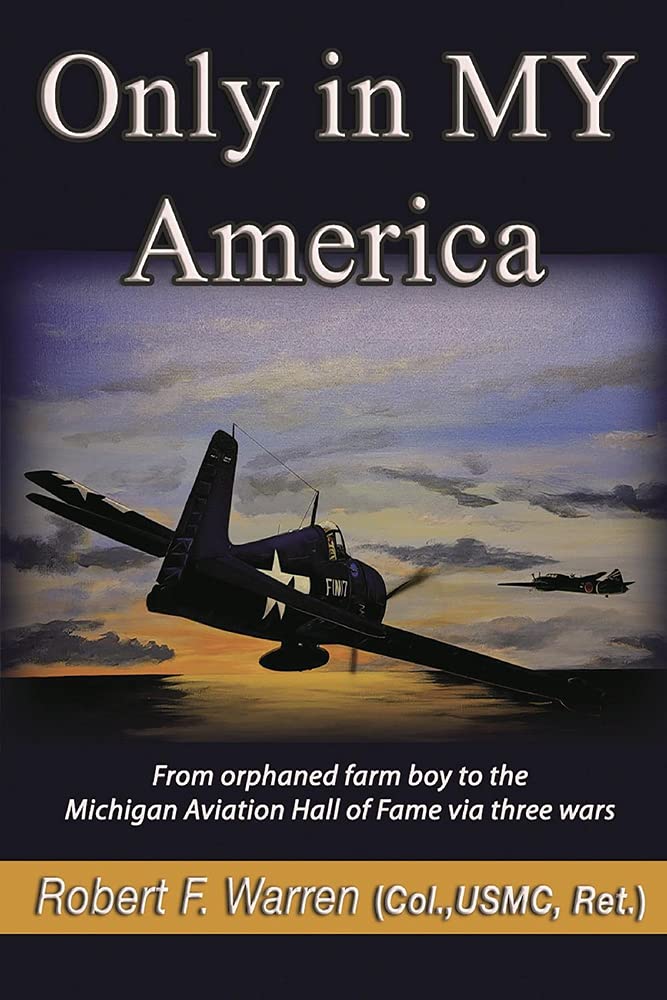
Colonel Sidney Mashbir’s good friend Colonel Robert F. Warren has just had his autobiography “Only In My America” published highlighting his distinguished military aviation career.

August 27, 2021 by Stan S. Katz Leave a Comment


As an author and historian who has studied and written about Colonel Sidney Mashbir, it was my good fortune when Marine Colonel Robert Warren and his son Marine Captain William Warren contacted me three years ago in 2018 to discuss their close friendship with Colonel Mashbir decades earlier.

During the years leading up to and during World War One, Mashbir had taken a pivotal role in maintaining US homeland security against foreign enemy agents. During WWII, Mashbir headed a top-secret intelligence gathering organization for the Allies that greatly shaped military strategy in the Pacific theater of war. Mashbir met and shared this information with General Douglas MacArthur on a daily basis throughout the war. MacArthur five times recommended Colonel Mashbir be promoted to Brigadier General, but political differences following WWII, resulted in Colonel Mashbir never getting that deserved promotion. To learn more about Colonel Mashbir, fascinating exploits, you’re invited to explore this website TheEmperorAndTheSpy.com when you get the opportunity.

Robert and William Warren, both being younger than Mashbir, were inspired and influenced by Colonel Mashbir’s dedication to the United States of America. Colonel Mashbir was likewise impressed by the heroic military careers of Robert and William Warren and their dedication to their nation. William and Robert were interviewed and generously shared various personal and historical insights about their friend Sidney Mashbir. They also shared some fascinating photos linked to Mashbir’s career.

Both Colonel Mashbir and Colonel Warren had a mutual interest in military aviation – Colonel Mashbir designed the first sonar-guided blind-landing aviation guidance system for the military. And anticipation of the potential outbreak of WWII, Mashbir took a pivotal role in guiding the US industrial production of essential Naval aviation equipment and supplies during the decade prior to WWII.


BELOW IS A DESCRIPTION OF COLONEL ROBERT F. WARREN’S IMPRESSIVE AUTOBIOGRAPHY:

This is the engaging life story of a decorated United States Marine Corps aviator, who served with distinction in World War II, Vietnam and Korea. Colonel Robert F. Warren is the only Marine aviator who has commanded both a Marine Helicopter Squadron and later a Marine Jet Attack Squadron. Along the way, Colonel Warren earned three Distinguished Flying Crosses, the Legion of Merit with Combat “V” and many other awards in recognition of his heroism and achievements in aerial flight, and his significant contributions to the success of the United States Marine Corps.
Born in Riverside, MI and raised in nearby Coloma, MI after being orphaned by the death of his mother, and the absence of his father, Bob was later adopted by family members. Separated from his older brother, they would both grow up to be pilots – Bill a pioneer in commercial aviation, and Bob a career military pilot.

Bob joined the Navy Flight Training Program in August, 1942. He received his Naval Aviator Wings and Marine Corps 2nd Lieutenant commission at the age of 19. He trained to be a night fighter pilot at Vero Beach, FL in 1944.

In 1945, during World War II, Bob fought as a Marine night fighter pilot during the Battle for Okinawa, and he was awarded the Distinguished Flying Cross for “heroism and extraordinary achievement in aerial flight”.

Warren instructed Marine fixed-wing pilots transitioning to helicopters, at the outbreak of the Korean War, as part of Helicopter Experimental Squadron One in Quantico, VA (HMX-1).  He was one of three original officers assigned to Helicopter Squadron 161 (HMR-161); the first U.S. Military all-helicopter squadron, commissioned in January of 1951. Seven months later, HMR-161 embarked on the USS Sitkoh Bay (CVE-86) for Korea.

Warren was a pioneer helicopter pilot during the Korean War, designing and manufacturing external sling hoists and quick releasing cargo hooks, in the machine shop on board the Sitkoh Bay, en route to Korea. In Korea, HMR-161 was located farther into North Korea than any other U.S. or South Korean force.

Warren participated in Operations Windmill I and II, the first time entire front line battalions were relieved in place, completely by helicopter. Warren was awarded a second Distinguished Flying Cross for Operation Blackbird, a combat operation executed in complete darkness. It was considered the most dangerous mission during the squadron’s entire Korean combat tour. Warren was awarded a third Distinguished Flying Cross for his heroic efforts to rescue a downed pilot forty miles behind enemy lines.

After 14 years of helicopter flying, without an accident, Warren transitioned to flying swept-wing jets. He was assigned as Commanding Officer of a A-4 Marine Attack Squadron 331 (VMA-331). Colonel Warren served a thirteen month tour with distinction in Vietnam. Returning to CA, he commanded a Marine Air Group at MCAS, Tustin.

Warren retired in September, 1969 after more than 27 years of military flying. Between 1981 and 1987, Warren was recalled to active duty six times, to serve at the Pentagon on an Advisory Committee on Retired Personnel.


Below are some additional fascinating historical materials and information linked to the military career of Robert Warren:


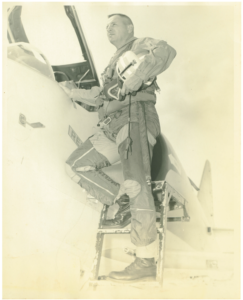
1965: Colonel Robert F. Warren VMA 331 CO.

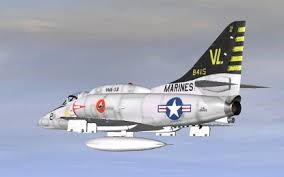
Below is the jet linked to Colonel Robert F. Warren:


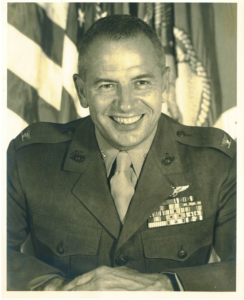
1969: Colonel Robert F. Warren.

Col. Robert F. Warren was honored into the Michigan Aviation Hall of Fame on May 21, 2011. This hall of fame is part of what is known as the Air Zoo, which described below:


About the Air Zoo

The Air Zoo is a highly charged, multi-sensory atmosphere that goes beyond anything you’ve ever seen. It’s like no place else on Earth!

The Air Zoo, founded as the Kalamazoo Aviation History Museum, is an aviation museum and indoor amusement park next to the Kalamazoo-Battle Creek International Airport in Portage, Michigan. The Air Zoo holds many historical and rare aircraft, including the world’s fastest air-breathing aircraft, the SR-71B Blackbird. Many of its antique planes are airworthy. Among its other attractions are a 180-degree Theater that projects a 4-D simulation of a B-17 bombing mission during World War II. There are also various amusement park-style rides, including Full-Motion Flight Simulators of a rocket trip to Mars, U.S. Navy F/A-18 Hornets, a stunt biplane, a hot air balloon, and more. Air Zoo is a Smithsonian Affiliate.

https://www.airzoo.org/

Voted the “Best Place to Take Out-of-Towners” and “Best Place to Spend a Day with Your Family” three years in a row, offering historical exhibits and educational activities.

Our Mission is to preserve the legacy of flight for present and future generations.

Our Vision is to be the number one aviation museum in the world.

Our Pledge is to provide the best experience possible to everyone, every time.


The below biographical material comes from the Michigan Aviation Hall of Fame:

Colonel Robert F. Warren, USMC, Retired

1923-

Colonel Robert F. Warren was born in Benton Harbor, Michigan in 1923 and went on to join Helicopter Experimental Squadron One in Quantico, Virginia where he instructed marine fixed-wing pilots transitioning to helicopters at the outbreak of the Korean War. Warren was one of three original officers assigned to Helicopter Squadron 161 (HMR-161), the first U.S. Military all-helicopter squadron.

Seven months after receiving its first helicopter, HMR-161 embarked on the USS Sitkoh Bay for Korea. Using the ship’s machine shops on route to Korea, Warren helped design and manufacture external sling hoists and quick-loading external cargo hooks which became the norm for helicopter operations for years to come.

Warren was awarded a Distinguished Flying Cross for Operation Blackbird, a night combat operation executed in complete darkness and considered the most hazardous by HMR-161 during its entire Korean combat tour.
On February 8, 1952, he rescued a downed pilot 40 miles behind enemy lines for which he was awarded a second Distinguished Flying Cross. In 14 years of helicopter flying, he never had a single accident, although he experienced complete engine failure twice. Both times he auto rotated to a safe landing.

Back in the U.S., Warren was promoted to major and selected as aide-de-camp to Medal of Honor winner General Christian Schilt, USMC. Upon Schilt’s retirement in 1957, Warren returned to Santa Ana where he joined HMM-363. He was in charge of a three helicopter special mission which transported President Dwight Eisenhower from the San Francisco International Airport to the Presidio.

In the U.S., he was promoted to lieutenant colonel and served as a helicopter tactics instructor in the Marine Corps Command and Staff College in Quantico for the next four years. He was then transferred to the Marine Corps Air Station in Beaufort, S.C. to transition to flying fixed-wing jets. Upon completion, he was assigned as commanding officer, Marine Attack Squadron-331 (VMA-331). Warren is the only pilot to have commanded both a Marine Corps helicopter squadron (HMH-363) and a Marine Corps jet attack squadron (VMA-331).

In June of 1968, he returned to California in command of a Marine helicopter air group comprising seven squadrons and more than 5,000 Marines. He retired in September, 1969 after 27 years of active duty flying. From 1981 to 1987 he was recalled to active duty and ordered to the Pentagon six times to serve on an advisory committee for the Secretary of the Navy.
Col. Robert F. Warren was enshrined into the Michigan Aviation Hall of Fame on May 21, 2011.

­­­­­­­­­­­­­­­­­­___________________________________

Currently available as an EBook.

Print Edition available October 1, 2021, but can be pre-ordered. 

Being a new release, please consider sharing  a book review with Amazon, Barnes & Noble and Goodreads – Thank you.


This BLOG POST presents Robert Warren and William Warren’s personal memories of their secret agent friend Sidney Mashbir, someone they both highly respected. 

Another BLOG POST highlights Colonel Kelvin Bailey, a mutual friend of Colonel Mashbir and Colonel Warren, who after retiring from his distinguished military aviation career, became the personal/corporate pilot for Walt Disney.


Filed Under: Mashbir Archives Tagged With: Colonel Mashbir, Colonel Mashbir Archives, Colonel Robert F. Warren, Colonel Robert Warren, Colonel Sidney Mashbir, Heroes of World War Two, Korean War, Marine Lt. William Warren, Michigan Aviation Hall of Fame, ONLY IN AMERICA, ONLY IN AMERICA By Robert (Bob) Warren, Robert F. Warren, Robert Warren, Sidney Mashbir, Stan S. Katz, Stan S. Katz blog, The Air Zoo, The Emperor and the Spy, TheEmperorAndTheSpy.com, Vietnam War, World War Two, WWII

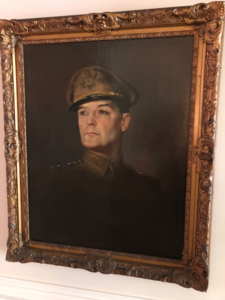
Colonel Sidney Mashbir’s widow Alice gifted her husband’s portrait of General MacArthur to his good friends Marine Captain William Warren and Marine Colonel Robert F. Warren…Robert and William shared their personal experiences with their friend Sidney.

April 11, 2020 by Stan S. Katz 1 Comment


Having studied and written about Colonel Sidney Mashbir, it was my good fortune when Robert Warren and his son William Warren contacted me in 2018 to discuss their close friendship with Colonel Mashbir many years earlier.

William and Robert generously shared various historical materials linked to Colonel Mashbir (1891-1973). This blog post will present a number of those items, as well as Robert and William’s recollections of Colonel Mashbir. Also included is biographic material about Robert and William Warren, who being younger than Mashbir, were inspired and influenced by Colonel Mashbir’s heroic dedication to our nation.

-The oil painting illustration of General Douglas MacArthur shown above is courtesy of the William Warren.


Further details about the General MacArthur oil painting.

Below is an email sent by William (aka Bill) dated April 17, 2018, giving more info about the history of the painting and why it was gifted to him.

“Stan, here are photographs of the portrait of General MacArthur.  I have provided three views, one where I stood back in order to give you an idea of the relative size of it.

According to Alice Mashbir, she thought that Sid would have wanted me to have this portrait as it was one of his most loved things.  The portrait hung over his mantle at his house in Emerald Bay (Laguna Beach).  Also according to Alice, Sid acquired this portrait from an art store in New York (City I think) and it was a big secret about what he may have paid for it.  It was apparently commissioned by General MacArthur’s wife.  The story goes that when she discovered an infidelity she threw champagne at the portrait.  That may be true since one can clearly see very faint dribbles of something.

The artist of the portrait was Julian Lamar.  I am not sure when it was painted.  A bit about Julian Lamar:

Born Julian Kitchen Lamar Miller in Augusta, Georgia, he shortened his name to Lamar in 1922 to honor his mother’s family and to make his name more memorable as an artist. Although he began painting as a child, his family encouraged him to attend the United States Military Academy, from which he graduated in 1918. After the Armistice, he resigned his commission to concentrate on his career as an artist. Lamar lived for a while in Chicago, then moved to New York in 1920.

He maintained an active studio in New York, but traveled extensively to paint his subjects in their native surroundings. He painted many prominent figures, including Prime Minister Winston Churchill; President Franklin D. Roosevelt; Franklin H. Martin, President, American College of Surgeons; and Governor Frank Dixon, Alabama. He was also an accomplished landscape painter.

You can Google him…there is a lot of information about him on the web.

Enjoy Stan.  I will forward documents this afternoon.

Bill Warren”


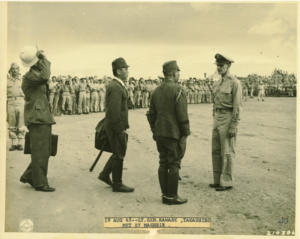
August 19, 1945, Lt. General Kawabe, Takashiro met by Mashbir.                Source of photo: courtesy of William Warren.                                      

Besides taking a decisive role in the winning of WWII, Colonel Mashbir also helped orchestrate the Japanese Surrender Signing Ceremony, officially ending the conflict. In the above photo, Mashbir receives the Japanese Surrender Signing Arrangement committee in Manila, Philippines. They would work together to organize the details for the surrender.

The term V-J Day represents both the initial announcement of Japan’s surrender on the afternoon of August 15, 1945 in Japan, and because of time zone differences, August 14, 1945 when it was announced in the United States and the rest of the Americas and Eastern Pacific Islands. V-J Day is also represented as September 2, 1945, when the actual signing of the surrender document occurred, officially ending World War II.


A Gift to Colonel Mashbir from General MacArthur

The Photo inscription reveals Mashbir’s significant role in winning World War Two.


“To Mashbir”


“With admiration and cordial regard from his old comrade-in-arms.”


“Douglas MacArthur”


“Tokyo – 1945”   


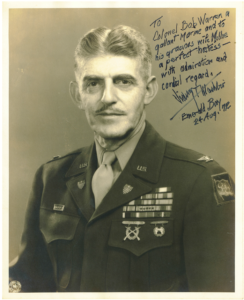
Twenty seven years later, in 1972, the below inscribed portrait photo of Colonel Mashbir was respectfully gifted to his good friend Robert Warren, who Mashbir addressed as:

“Colonel Bob Warren, a gallant Marine”.


Robert’s son, William, has added the below description linked to this photo.

“Here is a photo of Sid with an inscription to my Dad and Mother (Millie).  Mother passed away in January 2010, but she, my Dad, Sid and Alice became good friends over the years.  This photo is dated 1972.  There are two photos of my Dad that I thought you might like to have, one was his official USMC photo taken in 1969 I think and the other where he is posed on the jet was taken, I think, in 1965 (see below).  He was then a Lt. Colonel and was the Commanding Officer of the Marine Attack Squadron, VMA-331 based in Beaufort, SC.  The squadron flew the Douglas A-4 Skyhawk.  A side note, one of the previous Commanding Officers of VMA-331 was Lt. Colonel Don Conroy who was the “Great Santini” character in Pat Conroy’s novel of the same name.” 


­­­­­­­­­­­­­­­­______________________________


Presented below is further Information about Colonel Mashbir and other topics gathered during an interview with Colonel Robert F. Warren – May 18, 2018.

Colonel Robert F. Warren proudly mentioned that his son William had been an infantry platoon leader in Viet Nam, and that the survival rate for that position averaged only 4-6 months. Thank God he made it back.

Robert stated he spent many hours with Mashbir and recalled that Mashbir was angry with General Willoughby, who was General MacArthur’s chief of staff GHQ during WWII. Robert said that Mashbir would mockingly imitate Willoughby’s accent. Mashbir’s anger stemmed from his feeling that Willoughby had often prevented Mashbir from directly delivering urgent strategic information to MacArthur, and that Willoughby regularly took credit for many of Mashbir’s ideas.

Below are a number of other comments Colonel Warren made related to Colonel Mashbir.

-When Mashbir returned to the Imperial Hotel after surviving the Great Kanto Earthquake of 1923, the Hotel Manager Inmaru (sp?) responded as if, “He couldn’t be more surprised if he’d seen the Buddha step out of Hell.”

-Robert clarified a matter linked to the historical novel about Colonel Mashbir, titled The Emperor and the Spy. Robert said that Mashbir’s good friend James Moriarty (Marine) was sent to China first, then to Japan.

-Sidney Mashbir’s son Forrester (his older son) became the manager of entertainment at the Sands Hotel/Casino in Las Vegas.

-Robert met Don Mashbir (Sidney’s younger son) and Don’s wife Rosa.

-Sid told Don that Sid didn’t want heroics to keep him alive when he got near the end.

-Sidney Mashbir’s home was in Emerald Bay, in Laguna Beach, which has beautiful views.

-Sid came to Robert’s military retirement party.

-Sid started the Pan-Pacific Club of Tokyo. Robert said, “Sid had a strong positive feeling for the whole nation of Japan.”

-Robert stated, “Sid had respect for the top levels of the Japanese hierarchy who were against war; they were almost prisoners of the military or they were eliminated altogether.”

-When Mashbir was leaving Japan, he laid on the floor of the ship, so as not to see Mt. Fuji, because he was superstitious that if you do not wish to return to Japan, you should not look back at that magnificent mountain view.


William Warren wrote the below letter:

“I have just ordered two copies of your book [The Emperor and the Spy], one for my father and one for myself. Both of us had the pleasure of calling Colonel Mashbir our friend. I personally spent many, many hours with Colonel Mashbir at his home in Laguna Beach. He and his second wife, Alice were host to me on many, many weekends when I was a young Lieutenant in the US Marine Corps. Sid also invited me to the Army and Navy Club in Washington DC where I believe he was a charter member. He was a most amazing man and one of my all-time heroes!! After Sid’s death, Alice sent me the original oil painting of General MacArthur that was one of his prized possessions. This portrait hung over the mantel in his Laguna Beach home. Alice told me that Sid would have wanted me to have this portrait and that I was to forever keep this in my family, never giving it to a museum or selling it. That portrait still hangs in my home today. Alice also gave me a copy of Sid’s book, “I was an American Spy” and she endorsed the book for me.

I have not yet read your book, but would love to keep in touch with you. Thank you for honoring this great man.

(William) Bill Warren, 9026 Mossy Hill Lane, Indian Land, SC 29707.”


Presented below are William Warren’s comments after reading this novel:

“Review of “The Emperor and the Spy”

“A true story of intrigue, history and a little known American hero.”

By Bill Warren on May 27, 2018

“I had the good fortune to have met Colonel Sidney Mashbir when I was a newly minted Lieutenant in the Marine Corps. It was my distinct honor to have spent hours and hours with him over the years, visiting him both in his home in Laguna Beach, California and at the Army and Navy Club in Washington, DC where he enjoyed the status as a charter member. During those visits, Colonel Mashbir related hundreds of stories and showed me untold number of documents and I think I spent hundreds of hours listening to him. I am not sure what cemented the relationship I had with this fascinating hero, but I treasured every moment and consider him to have been among my very best friends, mentor and teacher. I am both in awe of and pleased with Stan S. Katz who recognized a real hero of our country and that he undertook the mission to write this book. His research for The Emperor and the Spy, appears to be meticulous and he tells a story that NEEDS to be told. Not many would ever have guessed that Colonel Mashbir served with General Pershing in Mexico. Likewise, who would have believed that Colonel Mashbir would have become so endeared with, respected by and maintained a secret alliance with the royal family of Japan prior to World War II. The Colonel indeed had a special relationship with Prince Tokugawa, the Emperor Hirohito and their families. Through these relationships, Colonel Mashbir made a valiant attempt to avert WWII in the Pacific. That is just part of the story. The other part is the intelligence work performed for General Douglas MacArthur during the war that, without a doubt, shortened the war with Japan. Even after the war, Colonel Mashbir utilized his deep understanding of the Japanese and his friendship with many of its leaders to make major contributions to the peaceful occupation of Japan and without those efforts, the outcome of post-war Japan would have been a completely different country.

Stan Katz skillfully weaves this story into a very readable and exciting historical fictionalized novel. His facts, based on the stories told to me by Colonel Mashbir are genuine and because of the nature of Colonel’s work, are irrefutable. Stan easily stands with Bernard Cornwell, Jeff Sharra and Michael Sharra in his skill constructing a superb story around historical facts and with Brad Meltzer in his ability to develop historical characters while keeping the adventure exciting. If you like historical novels and want to learn about a real American hero, you will find it in this magnificent book.” Note: On May 13th, 2018, Bill Warren called his father Robert and related, “That his Dad had read the first half of The Emperor and the Spy, and was thoroughly enjoying it.”


Another Interview with William Warren linked to Colonel Mashbir.

William described Sidney Mashbir as the consummate gentlemen. Rarely, if ever, did he hear him raise his voice. William commented that I had captured the essence of the man in The Emperor and the Spy, and that he thought Sidney and I would have gotten along well, which made my day. 

William confirmed what his father Robert had told him, that during WWII, Mashbir hated General Willoughby and they had numerous confrontations/tussles. William felt that Willoughby outranked Mashbir and Mashbir had to take it. “Mashbir couldn’t stand the man.” William said, “Willoughby might have blocked Mashbir from getting directly to General MacArthur, but Mashbir probably violated the chain of command to get to General MacArthur on occasion.”

William stated I got the story right in the novel, that when recruiting the Nisei for the WWII intelligence organization ATIS, it helped that they could both speak and read the language. Speaking Japanese is relatively easy, but reading it is much more difficult.

William said he thought that MacArthur felt somewhat abandoned in the Pacific theater, with most of the military resources going to the European theater of war.


THESE BOOKS OFFER FURTHER INSIGHTS INTO THE FASCINATING AND EXCITING EXPLOITS OF COLONEL MASHBIR.


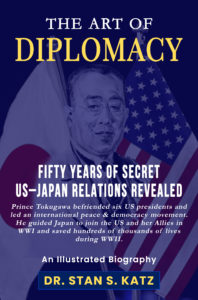
This biography highlights one of Colonel Mashbir’s most influential Japanese allies, Prince Tokugawa Iesato.

During the 1920s and ’30s, Mashbir and Tokugawa heroically strove to maintain the goodwill between their nations. 

Available in Print and Kindle EBook


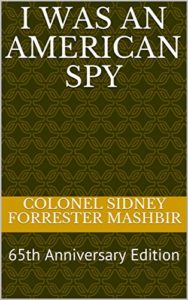
EBOOK REPUBLICATION OF COLONEL MASHBIR’S 1953 AUTOBIOGRAPHY


PARTING NOTE:

It was a pleasure meeting Robert and William Warren, two impressive gentlemen who proudly served our nation.

Colonel Robert F. Warren wrote a screenplay, and in association with U.S. military historian and writer, Navy Lt. Charles Wyatt, they completed an adaptation of that screenplay into a short novel titled: The Elephants of Trabong – This dramatic and engaging story is linked to Robert’s experiences during the Viet Nam War, where his assignment was to win the hearts and minds of the Vietnamese citizenry thru improving the economic life in their villages. It would definitely make a great movie!

*Representatives of the film industry can receive a synopsis of the screenplay and novel thru the below contacts:

William Warren:   [email protected]

Colonel Robert F. Warren also wrote an autobiography on his personal life story & military experiences in three wars. 

Blog link on the website for more information about Colonel Warren and his autobiography “ONLY IN MY AMERICA”.


Filed Under: Mashbir Archives Tagged With: Alice Mashbir, Allied Translator and Interpreter Section, American Spies, Army and Navy Club, Army and Navy Club in Washington DC, ATIS, Bernard Cornwell, Brad Meltzer, Charles Willoughby, Charles Wyatt, CIA, Colonel Mashbir, Colonel Mashbir Archives, Colonel Robert F. Warren, Colonel Robert Warren, Colonel Sidney Forrester Mashbir, Colonel Sidney Mashbir, Don Mashbir, Donald Mashbir, Douglas MacArthur, Dwight D. Eisenhower, first U.S. Military all-helicopter squadron, Forrester Mashbir, General Charles Willoughby, General Douglas MacArthur, General MacArthur, General Pershing, General Pershing in Mexico, General Willoughby, Great Kanto Earthquake, Helicopter Squadron 161, Heroes of World War Two, History of the CIA, HMH-363, Hotel Manager Inmaru, https://www.airzoo.org/, James Moriarty, Japanese Surrender Signing Ceremony, Jeff Sharra, Julian Kitchen Lamar Miller, Julian Lamar, Kalamazoo Aviation History Museum, Kelvin Bailey, Korean War, Lieutenant Charles Wyatt, Lord Louis Mountbatten, Lt. Colonel Don Conroy, Lt. General Kawabe, Marine Attack Squadron-331, Marine Corps League, Marine Corps League Toys for Tots, Mashbir Archive, Mashbir Archives, Michael Sharra, Michigan Aviation Hall of Fame, Mickey Mouse One, ONLY IN AMERICA, ONLY IN AMERICA By Robert (Bob) Warren, Pan-Pacific Club of Tokyo, Sands Hotel/Casino in Las Vegas, Sidney F. Mashbi, Sidney Mashbir, South Korean President Syngman Rhee, Stan S. Katz, Stan S. Katz blog, Takashiro, The Air Zoo, The Elephants of Trabong, The Emperor and the Spy, Toys for Tots, V-J Day, Viet Nam War, Vietnam War, VMA-331, Walt Disney, Walt Disney and Toys for Tots, William Warren, Willoughby, World War Two, WWII

Copyright © 2026 Stan S. Katz