Stan. S. Katz

Author of The Emperor and the Spy

  • Home
  • Author
  • Books
  • Reviews
  • Educators
  • News
  • Audiobook & Timeline
  • Mashbir Archives
  • Tokugawa Archives
  • Contact
Follow Stan on FacebookFollow Stan on TwitterFollow Stan on GoodreadsFollow Stan on RSS

Sign Up for Future Blogs Linked to Colonel Mashbir and Japanese History

Read the Intro Posts

INTRODUCTION TO THE ART OF PEACE

WELCOME!

Recent Posts

  • San Diego Jewish Journal Holocaust Remembrance Edition May 2016 highlights the historical novel, The Emperor and the Spy and the outstanding achievements of Colonel Sidney Mashbir.
  • The Emperor and the Spy, was one of two books highlighted during academic/diplomatic event sponsored by the Prime Minister’s Office of Japan and hosted by San Diego World Affairs Council
  • Osher Lifelong Education Institute – UCSD Presentation. Remarkable story, the alliance between a patriotic U.S. Intelligence Agent, Colonel Sidney Mashbir, and a humanitarian Japanese International Statesman, Prince Iyesato Tokugawa, who heroically delayed and attempted to prevent WWII in the Pacific.
  • Tokugawa & Komatsu, Forgotten Heroes – Until his passing in 1940, Prince Iyesato Tokugawa held back WWII in the Pacific – Tokugawa’s diplomatic legacy lived on after WWII ended, when his protégé, Takashi Komatsu, guided the US and Japan to again become friends and allies.
  • Have you ever wondered how US and Japan re-established their friendship and alliance following the trauma of WWII? Here’s a new biography that honors an amazing Japanese American statesman, Takashi Komatsu, who guided this major achievement.

Archives

San Diego Jewish Journal Holocaust Remembrance Edition May 2016 highlights the historical novel, The Emperor and the Spy and the outstanding achievements of Colonel Sidney Mashbir.

May 29, 2025 by Stan S. Katz Leave a Comment

The first page of article has a photo of General Douglas MacArthur.

It was gifted to Colonel Sidney Mashbir and has an inscription from MacArthur to Mashbir.

This inscription gives a sense of the magnitude of Mashbir’s contributions to the Allies’ Victory in Pacific during WWII.

The inscription reads:

To Mashbir

With admiration and cordial regard from his old comrade-in-arms.

Douglas MacArthur

Tokyo – 1945


The Antiquarian and the Creative Writing

by Natalie Jacobs April 29, 2016

Sixteen years ago, Stan Katz had never written a book. The longtime owner of several antiquarian bookstores, Katz knew a lot about books, and had an extensive collection of classics. But he never considered writing one himself, until he heard the story of Colonel Sidney Mashbir.

It was 1999 when someone came into one of Katz’s bookstores with a box of photos and documents.

“I didn’t have any idea what I was really looking at other than it looked really interesting,” he says from his home office in Oceanside.

Katz could immediately gather that the documents were related to intelligence before and during World War II.

“My mom was an Auschwitz survivor and so was her sister. I’ve long had an interest in WWII and what was going on and how it came to be. And then all of a sudden I had the papers of a spy who was very integral in winning WWII, I found out.”

And so began Stan Katz’s investigation into the life and work of Colonel Mashbir, a little-known historical figure from a dense and complicated time period. To help decipher the personal letters and photos from the box he acquired that day in his bookstore, Katz purchased Mashbir’s autobiography, itself an antiquarian rarity (Mashbir’s son later gave Katz the rights to it).

That he had no experience with creative writing didn’t stop Katz from exploring possible ways to use this information, which he immediately felt touched on an important and untold story about a great but mostly forgotten man. Katz spent about a year working on a screenplay, but it didn’t have the “fullness” Katz was looking for. So he settled on an historical novel. But why fictionalize the story if it is so compelling?

“First of all,” he says, “when it comes to spies, you never know the whole story. What happened was, over and over again, I was told by [Mashbir’s] son, by others, that history, in a lot of people’s mind, is boring, it doesn’t engage people.”

To Katz, this was primarily a spy story.

“I would come up with an action-packed espionage novel that’s 70 percent nonfictional in nature, 30 percent fictionalized.”

Katz says he tried to remain true to history even in the fictionalized parts, which required research into people and events that branched off from Mashbir himself. Take, for example, Charles Lindbergh.

“Whether he spoke to Mashbir or not at certain points,” Katz says, “wasn’t as significant as [the fact that Lindbergh] was leading an isolationist movement in America to prevent us from going into WWII. You’ll understand that Henry Ford and Charles Lindbergh were leading a massive effort to keep us out of WWII, regardless of what the Jews were going through.”

So instead of a screenplay, in order to explore the depth of not only this figure Mashbir but also the complications of the WWII era, Katz wrote a 500-page novel called “The Emperor and the Spy, The Secret Alliance to End WWII.” The editing process alone took five years.

Sidney Mashbir was Jewish, and very early on in the book, Katz has Mashbir confront that Jewish identity. He’s young and in the Arizona guard, about to embark on a mission to bring the Mexican revolutionary Poncho Villa to a meeting with General John J. Pershing. One of his colleagues says, “Mashbir, is that Jewish?” Mashbir brushes it off, ignoring the question.

“His grandfather was very Jewish Orthodox,” Katz explains. “He forced Mashbir’s mother to move from Tucson where there weren’t that many Jews at the time [late 1800s], to New York to marry a Jewish Russian immigrant. They married, they have a very unhappy marriage. They go back to the Southwest, they try to make it work but Mashbir sees this constant conflict between his Jewish parents and his grandfather who is Orthodox.

“I have to interpret this,” Katz concludes, from his interviews with Mashbir’s son and other genealogical research.

“He got into the military first in 1904. How were Jews treated in our country? How were they seen? Most wouldn’t even be broadcasting that they’re Jewish.”

After a series of military starts and stops, in 1942 General Douglas MacArthur tapped Mashbir to lead the Allied Translator and Interpreter Section (ATIS) within the Southwest Pacific Area. This was a group of nearly 5,000 intelligence agents working to investigate Japanese war crimes.

Katz pulls out a narrow pamphlet filled with names. It’s a list of all the Japanese enemies identified by ATIS; Mashbir’s personal copy.

Katz discovered that Mashbir’s greatest ally in the Japanese government was Emperor Hirohito’s right-hand man, Prince Iyesato Tokugawa.

“There was an intimacy between Mashbir and Tokugawa,” Katz says, holding up a greeting card sent to Mashbir from Tokugawa, and flipping to a photo of the two at a “prestigious luncheon” in Japan.

“[Mashbir] said Prince Tokugawa was so important that if he hadn’t died, the Japanese would not have allied with the Axis Powers. [Mashbir] said that in his autobiography.”

Katz makes the connection that three months after Tokugawa died, in June of 1940, Japan allied with Germany.

“What Mashbir and the war in the Pacific taught was there was a rising fanaticism who felt they were superior to other races and other creeds and they were going to take over by force. The story depicts how the counter effort was – here are individuals, statesmen, who are trying to use cultural, art, science, music interchange, student exchanges, all these different means to create bridges between people so as to prevent conflict and not let militant extremists, close-minded, narrow-minded people, take over.”

For Katz, the fact that Mashbir himself was ultimately unsuccessful in that effort does not diminish his legacy or the importance of diplomacy.

“Mashbir’s insight into the Japanese culture was such that he was able to guide General MacArthur and other leaders, when the war ended, how best to treat occupied Japan and how best to lead it so that it could become the democratic country that we could be allies with.

“We went into a country like Iraq,” Katz says, bringing the argument to present day, “without really understanding the culture, the leadership, how to move forward, and the country fell apart into civil war. The same thing could have happened in Japan.”

Since publishing “The Emperor and the Spy,” Katz has also completed a 300-page online timeline, which chronicles Mashbir and many of the people he came in contact with throughout his life. That document includes rarely seen photographs of Japanese leaders and members of the U.S. military and general society, from documents that Katz has added to his personal collection throughout the years. One of his goals for the book is to see it used in high school and college courses.

“One of these days, it will be used in teaching a very strong message about why the state of Israel happened, how the Holocaust preceded, and about an American Jewish spy who had major impacts in us winning a war. I think he’ll be a household name.”

Katz’s next book project will be a biography on Prince Tokugawa.

Colonel Sidney Mashbir is buried at Fort Rosecrans in Point Loma. Details on the fictionalized account of his life can be found online at TheEmperorAndTheSpy.com


The second page of article shown below may be hard to read.

For easier reading, the above Transcription was given.


Front cover: May 2016 San Diego Jewish Journal Holocaust Remembrance Edition


BELOW is a Letter to the Publisher of San Diego Jewish Journal, Mark Moss. This letter led to the above magazine article being written.

Dear Dr. Mark Moss,

I hope all is well.

It’s been years since we last met. We have some mutual friends. We spoke to one another at a couple of festive gatherings. Just like yourself, I’m a Dentist whose career went in a very different direction.

Last time we spoke, I mentioned an historical novel I was working on, that had strong connections to Jewish History. You kindly offered to include an announcement or an article linked to the release of this book in the San Diego Jewish Journal.

After sixteen years of writing and research this novel and a website linked to it, are finally completed.

Below are some of the details of this project:

-The title of the novel is, The Emperor and the Spy. It is quite unique, in that it was inspired by my acquisition of the secret personal papers, official documents, and photographs of an American Military Intelligence Officer.

This novel has a strong Jewish theme for various reasons:

1- I’m Jewish and my mother was an Auschwitz survivor.

2- The novel depicts the events leading up to and during the Holocaust, and emphasizes the need for the creation of the State of Israel.

3- The main protagonist in the novel is an unsung hero, an Intelligence agent of Jewish heritage, named Colonel Sidney Mashbir. This master spy allied with top Japanese leaders during the 1920s and 1930s, including members of the Japanese Royal Family. They valiantly attempted to prevent hostilities in Asia, and prevent conflict between their two nations and the outbreak of WWII.

4-Regrettably, when WWII erupted, this intelligence agent of Jewish Heritage, took a major role in defeating the Axis Powers in the Pacific Theater of War. The significant role he took in winning that war will bring pride to the Jewish community, as well as recognition and respect from the general American Public. Colonel Mashbir and the large intelligence organization, ATIS (Allied Translator and Interpreter Section), that he commanded shortened that war by two years!

5- It was surprisingly to discover that one of the peace-loving Japanese leaders who allied with this spy (who is prominently highlighted in the novel), took a pivotal role in the creation of demilitarized “safe zones” in China, that helped save the lives of tens of thousands of Jewish refugees fleeing the Holocaust. These “safe zones” also provided haven to hundreds of thousands of Chinese civilians during the years leading up to and during WWII.  This Japanese statesman, Prince Iyesato Tokugawa, an unsung humanitarian hero, put his life in great danger resisting the militarists in his own country and elsewhere, who wanted war.

6- An extensively documented 125 page Application in the name of Prince Iyesato Tokugawa has been created. This application is going to be sent to the commemorative organization in Israel, Yad Vashem. The goal being, that this Japanese statesman receive the honorary recognition of Righteous Among the Nations. This information will also be sent to other humanitarian organizations such as the U.N. to acknowledge this amazing individual.

You’re invited to explore the website, TheEmperorAndTheSpy.com to learn more. This website displays many of the historical documents that inspired the novel.

Please let me know how we might proceed to bring out this story in the San Diego Jewish Journal, honoring unsung heroes from the past.

Thank you so much for your time and attention,

Stan S. Katz

P.S.

Attached to this Letter is the following:

The National Veterans’ Organization, JAVA (Japanese American Veterans Association), reviewed my website’s historical materials and read the novel. They wished to show their support by highlighting the Release of the novel and the website on Page 17 of their 2016 Summer Quarterly Newsletter. That article is included with this email.



Filed Under: Mashbir Archives Tagged With: Colonel Mashbir, Colonel Sidney Forrester Mashbir, Colonel Sidney Mashbir, Dr. Stan Katz, Holocaust, Holocaust History, Japan and the Holocaust, Jews fleeing Holocaust, Mark Moss, Natalie Jacobs, Prince Iyesato Tokugawa, Prince Iyesato Tokugawa Archives, Prince Tokugawa, Prince Tokugawa Iesato, Publisher of San Diego Jewish Journal, San Diego Jewish Journal, Sidney Mashbir, Stan S. Katz, Stan S. Katz archives, Stan S. Katz blog, The Antiquarian and the Creative Writing, US Japan relations

Osher Lifelong Education Institute – UCSD Presentation. Remarkable story, the alliance between a patriotic U.S. Intelligence Agent, Colonel Sidney Mashbir, and a humanitarian Japanese International Statesman, Prince Iyesato Tokugawa, who heroically delayed and attempted to prevent WWII in the Pacific.

November 20, 2024 by Stan S. Katz Leave a Comment

Osher Lifelong Education Institute – University of California San Diego

January 8th, 2020 the author of historical novel The Emperor and the Spy & the biography The Art of Peace gave a presentation on significant unknown events linked to U.S. Japan relations during the first half of the twentieth century. Highlighted is the fascinating career of the the intelligence agent, Colonel Mashbir, and the outstanding diplomatic and political achievements of Prince Iyesato Tokugawa. Spotlighted is the close friendship and alliance of Colonel Mashbir and Prince Tokugawa.T

The below one hour video that was followed by a one hour non-recorded question and answer session with inquiries from the one hundred attendees.  Hope you enjoy.

Filed Under: Mashbir Archives Tagged With: 1934 USC Bestows Honorary Doctor of Laws Degree on Prince Tokugawa, 25th Anniversary of Rotary International, Apache, Apache language, Arizona Military Heroes, Baron Eiichi Shibusawa, Baron Shibusawa, Baron Shibusawa Eiichi, Cherry Blossom Festival, Colonel Mashbir, Colonel Mashbir Archives, Colonel Sidney Forrester Mashbir, Donald Mashbir, Douglas MacArthur, Eiichi Shibusawa, Eiichi Shibusawa 1909 Delegation, Emperor Hirohito, FDR, Fruedenthal Family History, General John J. Pershing, General Joseph Pershing, General MacArthur, General Pershing, General Pershing in Mexico, Heir to the last Tokugawa Shogun, Heroes of World War Two, History of the Cherry Blossom Festival in Washington D.C., History of the National Cherry Blossom Festival, History of USC, Iemasa Tokugawa, Iesato Tokugawa, Japan in World War One, Japanese Racism at USC, Japanese Royal Family, Jewish History, Kikuko Tokugawa, Lincoln Essay Contests, National Cherry Blossom Festival, Osher Lifelong Learning Institute: Extension of UCSD, Pershing and Pancho Villa, President Franklin D. Roosevelt, President Franklin Delano Roosevelt, Prince and Princess Takamatsu's World Tour, Prince Iyesato Tokugawa, Prince Takamatsu, Princess Takamatsu, Racism at USC, Rotary History, Rotary International History, ROTC History, Safe Zones, Saving Jews during WWII, Shanghai Ghetto, Shibusawa Archives, Shibusawa Eiichi Memorial Foundation, Shibusawa Eiichi Memorial Foundation / Museum, Shogun History, Sidney F. Mashbir, Stan S. Katz, Stan S. Katz archives, Stan S. Katz blog, Suzanne Orcutt, Syracuse University History, Syracuse University ROTC, The art of diplomacy, The Art of Diplomacy biography, The Art of Peace, The Art of Peace biography, The Emperor and the Spy, Tokugawa Shogun Dynasty, Tokugawa Shogun History, Tokugawa Yoshinobu, Tucson Heroes, Tucson History, University of Arizona ROTC, Unknown Japanese History, USC and Japan, Washington Naval Arms Conference, WWII and Japan

Have you ever wondered how US and Japan re-established their friendship and alliance following the trauma of WWII? Here’s a new biography that honors an amazing Japanese American statesman, Takashi Komatsu, who guided this major achievement.

October 11, 2024 by Stan S. Katz Leave a Comment


The Cherry Tree Weeps for Me: A Quest for The Dawn of Peace chronicles one man’s lifelong pursuit of peace before and after the Pacific War. Takashi Komatsu’s incredible story is told alongside Japan’s pre- and post–WWII history and the country’s remarkable rebirth as a vibrant democratic global economic powerhouse. Komatsu’s life journey from a 12-year-old immigrant living in New York City’s YMCA  to his delivery of Harvard’s 1911 commencement address—proves that real life can be stranger than fiction.

Komatsu’s rose to become the head of a large shipping company in Japan, allied with Prince Tokugawa heir to the last Shogun and the US Ambassador to Japan Joseph Grew, and became a respected international businessman and statesman. Risking incarceration and assassination, Komatsu made choices that defied military rulers and right-wing extremists as they edged Japan toward war and devoured a democracy.

Within days of the war’s end, inconceivable events led General MacArthur, the Supreme Commander of the Occupation Forces, to seek Komatsu’s aid to help rebuild Japan and restore amity with the United States. Repairing friendship between the two countries was complex and daunting. Komatsu went far beyond this, forging relationships with US presidents, ambassadors, scholars, philanthropists, and leaders in the public and private sectors of both Japan and the United States. His legacy is a powerful reminder of the importance of tenacity, empathy, and understanding in international affairs, offering an intimate view of US/Japanese relations during the first 70 years of the 20th Century.

If you enjoy books like Malcolm Gladwell’s The Bomber Mafia, you’ll love The Cherry Tree Weeps for Me. Find out what transpired after the devastation and one man’s unsung influence that restored a stolen democracy.


About the Author

Born during World War II in Moline, Illinois, James Mikel Wilson grew up in the lingering dark shadows of that era. His father and uncles fought in WWII, moved on with their lives, and rarely ever discussed it.

Over four decades, Wilson’s work in international marketing and personal travel took him to five continents, thirty-three countries, and forty-seven states. He craved to understand the history, culture, and politics of each place visited. Wilson’s lingering itch to better grasp the fuses that sparked WW II in Europe and Asia led to two meticulously researched books.

His first book, Churchill and Roosevelt: The Big Sleepover at the White House (2015), earned an Author Academy Award. Wilson was invited to participate in a book signing during America’s National Churchill Museum’s 50th-anniversary celebration. In 2020, the International Churchill Society’s annual meeting in London featured the book and a reading of Alliance, a stageplay version of the book.

All book sale proceeds from “The Cherry Tree Weeps for Me: A Quest for The Dawn of Peace” will be donated to Monmouth College, located in Monmouth, Illinois, the alma mater of the Author and of Takashi Komatsu.


Publication date November 1st, 2024.

Available through the links below:

Amazon eBook: https://www.amazon.com/dp/B0DHV1RPHH  

Amazon Paperback: : https://www.amazon.com/dp/1662952775

Barnes and Noble: https://www.barnesandnoble.com/w/9781662952777     On this site, enter the author name James Mikel Wilson or Book Title and then select eBook or paperback.


READER PRAISE FOR THIS BOOK

“James Mikel Wilson’s The Cherry Tree Weeps for Me is a gripping journey through time. With the skill of a seasoned storyteller, Wilson paints a vivid portrait of a man who straddled two worlds, from Takashi Komatsu’s beginnings as a twelve-year-old boy venturing overseas to seek his destiny to his pivotal role in shaping Japanese-American relations in the wake of World War II. Meticulously researched and utterly absorbing, Wilson’s book delves deep into the complexities of Komatsu’s life. What emerges is a tale of resilience, sacrifice, and unwavering dedication to peace and democracy. The Cherry Tree Weeps for Me is not just a historical account; it is a testament to the power of compassion, courage, and diplomacy in the face of adversity, a poignant story that lingers in the mind long after the final page is turned.”

—Monte Francis. Multiple Emmy Award-winning journalist and News Presenter, France 24; Author of Ice and Bone and By Their Fathers Hand.


“Wilson puts on full display in this book his liberal arts education to tell the story not only of the unsung hero, Takashi Komatsu, who was educated at Wilson’s and my alma mater, but of the history of the relationship between Japan and the United States. Wilson ties together these threads and alerts us to the incredible coincidences. These included living next door to a curious younger boy in Monmouth, Illinois, who would later become responsible for one-half of the US occupation of Japan and, by happenstance, cross paths with Komatsu in Tokyo after 35 years of separation. They would collaborate to begin reconstruction, and their sons would become Monmouth College classmates after the war.”

—Dan Cotter. Author of The Chief Justices –The Seventeen Men of the Center Seat; Member of the Board of Trustees of Monmouth College, and 2024–25 President of the National Board of Bar Presidents.


“Unearthing the obscure life of an unsung hero, Wilson’s newest book masterfully unravels how Komatsu emerges as a catalyst for unity and prosperity in post-WWII Japan. The Cherry Tree Weeps for Me provokes introspection of the age-old quandary of ‘what next’ after conflict termination. Perhaps Wilson employs Komatsu’s character and actions to inspire Americans during this time of extreme political divisiveness and mistrust. Will we forsake revenge and retribution by uniting to fortify peace, democracy, and prosperity? If so, who will emerge as our Komatsu?”

—Colonel Kay A. Smith. Colonel, USAF (Retired).


“James Mikel Wilson’s book takes us on a wonderful deep dive into the incredible life of Takashi Komatsu and his dedication to peace and friendship between the US and Japan. I particularly enjoyed Wilson’s exploration of Shofuso House, which I have had the privilege of experiencing firsthand. It is a living symbol of the enduring friendship between the two nations, largely thanks to Komatsu’s efforts. In the years following the San Francisco Peace Treaty, Komatsu played a pivotal role in fostering cultural exchange and understanding between the US and Japan, including his work with John D. Rockefeller III to bring Shofuso to life. This traditional Japanese house and garden, originally exhibited at the Museum of Modern Art in NYC and now permanently displayed in Philadelphia, captivated American audiences and reignited interest in Japan’s rich heritage.”

—Alan Wilkis. Artist (Big Data), Music Producer, and Composer for Film and TV.


“I applaud James Mikel Wilson for his insightful narrative of Takashi Komatsu. When conflicts end, like the current Russian-Ukrainian War, who will be the artist of peace to bring warring partners past the residual anger to cooperation and perhaps friendship? Komatsu was such a man, and his impact seems incomprehensible.”

—Dr. Stan S. Katz. Author of The Art of Diplomacy and former San Diego World Affairs Council Board Member.                                                                   

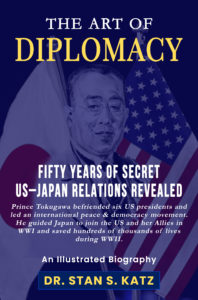
*The Art of Diplomacy is the illustrated biography of Prince Iyesato Tokugawa (1863-1940), an international statesman who promoted peace and democracy. Tokugawa was so influential that it was only after his passing in 1940, that militants were able to push Japan into joining the Axis Powers during WWII. Prince Tokugawa allied with and mentored Takashi Komatsu.  Tokugawa’s peace-loving legacy would live on after WWII, through the creative efforts of Takashi Komatsu, who took a pivotal role in bringing the US and Japan together again as friends and allies.


“I was absolutely blown away by the volume of Wilson’s research on Japan’s geopolitical history and the details of Takashi Komatsu’s life—particularly how they intersected with important global events. Komatsu’s influence on the early years of Japan’s post-WW II recovery and renewed friendship with the US is still felt today, as evidenced by their strong strategic and economic alliances. Wilson’s book illustrates that real life can be as captivating as fiction.”

—Jeff Rankin. Retired Editor and Historian, Monmouth College.


Wilson’s new book helps readers understand how Takashi Komatsu was influenced by his mentors in the US and Japan. These influences played a major role in his ability to form alliances and work as a catalyst to building the Japanese economy and the strong economic ties between Japan and the US. —Gary Randazzo. Sr Lecturer, C.T. College of Business, University of Houston; Former EVP and General Manager, San Francisco Chronicle and Sr. VP Houston Chronicle.


BELOW IS A MESSAGE FROM THE AUTHOR:

To guide others to discover Komatsu’s unheralded contributions to peace, I respectfully ask that you share this announcement with family, friends, and acquaintances so they can know how this remarkable man shaped our history.

I would also appreciate your posting a reader review on Amazon or Goodreads to help others learn about Komatsu and his astonishing true story. Amazon elevates the visibility of a new book based on sales and the number of reviews posted.

I hope you enjoy the front cover of The Cherry Tree Weeps For Me. After researching hundreds of images and dozens of photographers, I selected one of Kunihito Ohtsubo’s stunning photos. He graciously allowed me to use his work for the cover. Ohtsubo is among Japan’s finest photographers and has my sincere gratitude and appreciation. (Instagram @kunihito_ohtsubo)

Sincerely,

Jim

James Mikel Wilson

Houston, TX

Author: www.jamesmikelwilson.com

Instagram: @jamesmikelwilson


Below is a link to the Harvard Magazine Jan.-Feb. 2026 article titled: A Congenial Voice in Japanese-American Relations, about Takashi Komatsu and Prince Tokugawa.

https://www.harvardmagazine.com/alumni/harvard-takashi-komatsu-japanese-american-relations

Filed Under: Tokugawa Archives Tagged With: A Congenial Voice in Japanese-American Relations, Alan Wilkis, Ambassador Grew, Baron Shibusawa, Baron Shibusawa Eiichi, Colonel Kay A. Smith, Dan Cotter, Dr. Stan Katz, Eiichi Shibusawa, Gary Randazzo, General MacArthur, Harvard Law School, Harvard Magazine, Harvard Magazine and Takashi Komatsu, Harvard Magazine Jan.-Feb. 2026, Harvard University and Takashi Komatsu, Henry Kissinger and Japan, Historical biography, International diplomacy, James Mikel Wilson, James Wilson, Japanese / American History, Japanese History, Jeff Rankin, John D. Rockefeller and Japan, John D. Rockefeller III, Kissinger and Japan, Komatsu Takashi, Kunihito Ohtsubo, Monmouth College, Monte Francis, Post-WWII History, Prince Iyesato Tokugawa, Prince Tokugawa, Prince Tokugawa and Ambassador Grew, Prince Tokugawa Iesato, Prince Tokugawa Iesato Archives, Rockefeller Family and Japan, San Diego World Affairs Council, Shofuso House, Stan S. Katz, Stan S. Katz archives, Stan S. Katz blog, Takashi Komatsu, The art of diplomacy, The Art of Diplomacy biography, The Art of Peace biography, The Cherry Tree Weeps for Me: A Quest for The Dawn of Peace

Prince Tokugawa as President of the Red Cross Society of Japan, working with US Ambassador Joseph Grew and Jesuit Priest Jacquinot, helped save tens of thousands of Jewish European refugees fleeing the Holocaust and hundreds of thousands of Chinese civilians.

January 26, 2024 by Stan S. Katz Leave a Comment


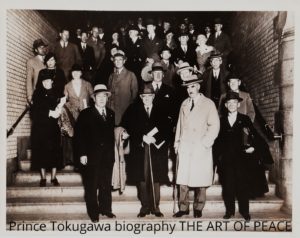
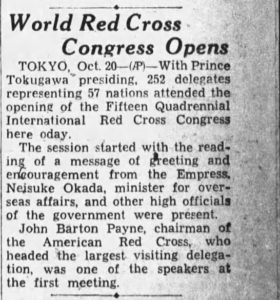
For decades, Prince Tokugawa Iesato (aka Prince Iyesato Tokugawa – 1863-1940) devoted his life to maintaining peace in Asia and specifically preventing Japan from coming into conflict with China. Tokugawa saw the clouds of war growing in Europe, as well as the militants in his own country pushing Japan towards conflict with China. He resisted these aggressions and wished to protect as many innocent lives as he could. As president of the Japanese Red Cross Society, Prince Tokugawa presided over the 1934 International Red Cross Conference in Tokyo (aka XVth International Conference of the Red Cross), where he urged the delegates to “Serve for Humanity.” It was at this gathering, where there was the first known example in history for the international creation of demilitarized Safe Zones, where civilians could find shelter, as outside warring armies fought one another.

The above October 1934 Press photo presents the American delegates to the conference held in Tokyo. Front row: U.S. Ambassador Joseph C. Grew (in light overcoat); on Grew’s right, holding papers and a cane, is Judge John Barton Payne, Chairman of the American Red Cross. (The other Red Cross representatives are not listed.) Ambassador Grew and Judge Barton Payne were close allies of Prince Tokugawa. This was the important conference, where the foundation for Safe Zones in Japanese controlled Chinese cities, such as Shanghai, were established, which helped save so many Chinese and Jewish lives. Up till now, Prince Tokugawa has not been recognized for his guiding role in the creation of these Safe Zones.


October 20th, 1934, Oakland Tribune (Oakland, California)

Prince Tokugawa presided over the 1934 International Red Cross Conference held in Tokyo, where for the first time in history the concept of creating civilian/refugee Safe Zones in war-torn areas was established. Prince Tokugawa promoted these safe havens which continued to exist throughout WWII. Credit also goes out to the President of the Chinese Red Cross Society Zhengyan Wang (another spelling Zhengyuan Wang 卢敏课题组) 


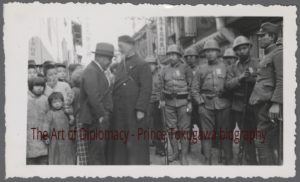
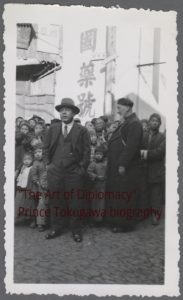
The above and below photo are courtesy of The Archive of the Jesuits in Canada / Archives des Jésuites au Canada  http://jesuitarchives.ca.

The photos were supplied specifically for use in this blog post.

The photos had the below description in French:

“Dans la zone “Jacquinot” avec le consul Japonais”

Below is the English translation:

“In the “Jacquinot” zone [Shanghai, China] with the Japanese consul.”

The date of these photos is estimated to be circa 1937-1940.


In these photos the bearded gentlemen in the French beret is a kind-hearted and heroic Jesuit Priest, Robert Jacquinot de Besange, who spent many years serving in China. He is conversing with one of Prince Tokugawa’s Japanese government representatives.

Father Jacquinot, with Prince Tokugawa’s strong support guided the Japanese military and their Chinese military counter-parts to agree to avoid conflict in these demilitarized Safe Zones.


Once WWII ended, there was the strong desire on the part of both the US and Japan to leave the recent dark war period behind them and expediently move forward again as allies. For this reason, Prince Tokugawa his supporters have become forgotten international heroes, who deserve recognition.

THE ART OF DIPLOMACY AND THE ART OF PEACE versions of Prince Tokugawa’s biography highlight Tokugawa’s significant involvement during the 1920s and 1930s in preventing the growing anti-Semitism in Europe from spreading to Japan and negatively influencing Japan’s treatment of Jews. A great debt is owed to Prince Tokugawa, by many, whose relatives were rescued by this noble individual.

These books also offer important lessons in creative intercultural and political relations for our current and future leaders.

Hopefully, these new insights will help heal some of hard residual feelings in Asia linked to events from WWII.


PRINT & KINDLE EDITION


EXPANDED EBOOK EDITION


                       Praise


Paul Ringwood U.S. Navy Commander (retired) wrote:

“Amazing little known history. I enjoyed every chapter.”


Kazuo Kodama, former Ambassador of Japan to the United Nations wrote:

“I wish you all the best & best of luck on your new book on ‘’Tokugawa Iesato.”


Professor Benjamin Uchiyama, Ph.D. History, University of Southern California wrote:

“This is a really interesting and understudied topic.”


Suzette Heiman, Director of Planning and Communications – The Missouri School of Journalism at University of Missouri [The first school of Journalism in the U.S.] wrote:

“We look forward to adding this biography to the School’s library collection. Your goal to reach high school and college students with this information is an ambitious – but important – goal.”


Toru Shigehara: Head Librarian/Information Resources Center Shibusawa Eiichi Memorial Foundation and Museum wrote:

“We appreciate your kindness and all the work you have done to promote understanding of Shibusawa Eiichi and US-Japan relations as a whole. I wish you all the best in your current and future endeavors. With gratitude,”


Bill Davison – President of the North County Chapter of the San Diego World Affairs Council wrote:

“Entertaining and Educational! This wonderful book will almost certainly broaden your perspective on US-Japanese relationships.”


Professor Claire Langham, former President of the East-West Center of Southern California wrote:

“The importance of preventing war is rarely given recognition through literature and in accounts of history.  It can be every bit as exciting as glorified accounts of war and certainly a better approach.”


Dr. Gerald Margolis, former Deputy Director of Operations of the University of Pennsylvania’s Museum, the Executive Director of the World Religions Museum in Taipei, Taiwan (1996-97), the Founding Director of the Museum of Tolerance in Los Angeles (1987-96) and the Director of the Simon Wiesenthal Center in Los Angeles (1983-96). Dr. Margolis offers the below description of my books/research:

“Once again, I am impressed by your diligence and adventurous engagement with a difficult subject. Your work is all about discovery. You seek out different tracks – I think you might wish to explore academic University departments that cover diplomacy, and the craft of international relations.”


Filed Under: Tokugawa Archives Tagged With: Bill Davison, Chinese History, Chinese Red Cross Society, Diplomacy, Dr. Gerald Margolis, Historical biography, History of Jews in China, Holocaust, Humanitarian efforts, International diplomacy, International Friendship, International Relations, Jacquinot, Jacquinot Safe Zone, Jacquinot Zone, Japan China relations, Japan Society of New York City Archives, Japanese History, Jesuit Priest saves Chinese lives History, Jewish History, Jews fleeing Holocaust, Kazuo Kodama, Kazuo Kodama Ambassador of Japan to the European Union, Kazuo Kodama Ambassador of Japan to the United Nations, Museum of Tolerance in Los Angeles, North County Chapter of the San Diego World Affairs Council, Paul Ringwood U.S. Navy Commander, President of the Chinese Red Cross Society, President of the Chinese Red Cross Society Zhengyan Wang, Prince Iyesato Tokugawa, Prince Tokugawa, Prince Tokugawa Archives, Prince Tokugawa Iesato, Prince Tokugawa Iesato Archives, Professor Claire Langham, Red Cross Society of Japan, Safe Zones, Saving Chinese lives, Saving Jewish Lives, Shanghai Ghetto, Shanghai Safe Zone, Simon Wiesenthal Center, Stan S. Katz, Stan S. Katz blog, Suzette Heiman, Taiwan, The Archive of the Jesuits in Canada, The Archive of the Jesuits in Canada / Archives des Jésuites au Canada, The ArchiveArchives des Jésuites au Canada, The art of diplomacy, The Art of Peace, The Missouri School of Journalism at University of Missouri, Tokugawa Archives, U.S. Japan relations, U.S.-Japan History, University of Pennsylvania’s Museum, US Japan relations, World Religions Museum in Taipei, WWII, Zhengyan Wang, Zhengyuan Wang, 中国红十字会), 卢敏课题组

For Highlighting the Legacy of Great Leaders who Strove for Peace & Democracy and Fought Against Racism, Author/Historian Dr. Stan S. Katz was nominated for the Dr. Martin Luther King, Jr., Community Service Award

February 13, 2023 by Stan S. Katz 6 Comments

Dear Friends,

Here is an illustrated article which honors the memories of significant Black, Asian, and Caucasian historical figures who creatively and peacefully utilized the intercultural exchange of art, music, education, and diplomacy as well as working through the political and legal systems to improve race relations – International disrespect and racism has often been a catalyst towards conflict. By gaining new insights from history, we discover better answers for dealing with our challenging issues of today.

Over the past twenty years, I’ve written historical works which honor significant, but often forgotten individuals who devoted their lives to promoting peace, democracy, and strove to confront racism. Based largely on this, in combination with volunteer activities and membership in public affairs organizations, such as the San Diego World Affairs Council, I was nominated for the Dr. Martin Luther King, Jr. Community Service Award. The below article highlights the Award Ceremony and Prayer Breakfast honoring the memory of MLK, and gives an introduction to the historical work I’ve written, including some rare photos discovered during my research.

Dr. Martin Luther King, Jr. Community Service Award for 2023

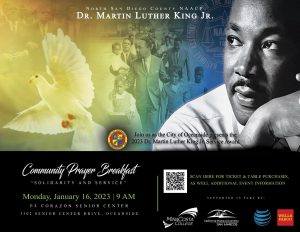
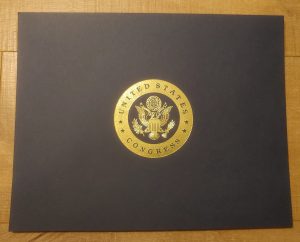
Above is the Front Cover of the Event Booklet distributed at this Community Prayer Breakfast and Award Event. It contains short bios of the nominees for the award, and includes descriptions of the speakers and honors various organizations that supported this inspiring gathering.

Sponsored by City of Oceanside and North San Diego County NAACP

Award Ceremony took place on MLK Day, January 16th, 2023.

This article was written by Dr. Stan S. Katz, who felt gratitude and was emotionally touched to be one of the nominees.


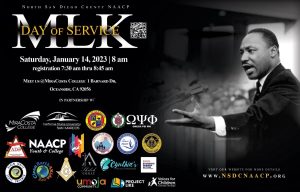
Below is the Back Cover of the Event Booklet – During the weekend prior to the above event, members of the North San Diego County NAACP working in partnership with other community organizations, held a DAY OF SERVICE to honor the memory of Dr. King – Volunteers came together to to help those in need in our community.


US Congressman Mike Levin gives a stirring speech, describing how he once personally accompanied US Congressman John Lewis (1940 – 2020) over the Edmund Pettus Bridge in Selma, Alabama. This was done in commemoration for that important historical event in the movement towards a more inclusive democracy and equal treatment of the races. Levin stated this important moment helped shape his social values to improve the treatment of all of our nation’s citizens. John Lewis  was often called the conscience of the congress.

Uplifting speeches were also given by Senator Catherine Blakespear, District 38, California State Legislature, and Mayor Esther Sanchez of the City of Oceanside.


The Dr. Martin Luther King, Jr. Community Service Award is an annual award given to a resident of the City of Oceanside or member of the U.S. Armed Forces stationed at Marine Corps Base (MCB) Camp Pendleton. The award is given to a resident who exemplifies the ideals and teachings of Dr. Martin Luther King, Jr. who worked to advance civil rights, equal education, labor, and voter rights and who fought racial inequality through non-violence and civil disobedience. The Community Service Award began thirty years ago as a way to recognize persons in the community who have given time and energy through volunteerism to improve community life, develop positive relations in the community, and enhance the lives of individuals. The award has no restrictions as to race, ethnicity, gender, or type of service and is open to any resident of Oceanside or MCB Camp Pendleton. The North San Diego County Chapter of the NAACP partners with the City of Oceanside in presenting this Community Award.

All nominees for the 2023 Dr. Martin Luther King, Jr. Community Service Award receive the following:

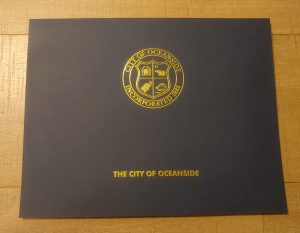
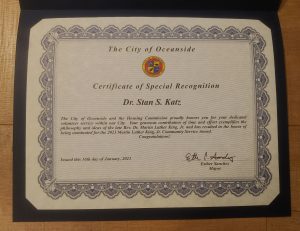
– A Certificate of Special Recognition from the City of Oceanside, issued January 16th, 2023 from Esther Sanchez Mayor

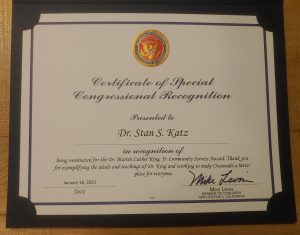
– A Certificate of Special Congressional Recognition from Mike Levin, Member of the U.S. Congress 49th District, California, issued January 16th, 2023

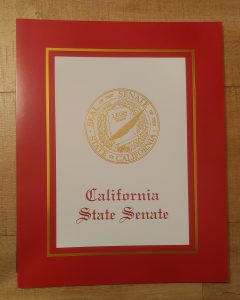
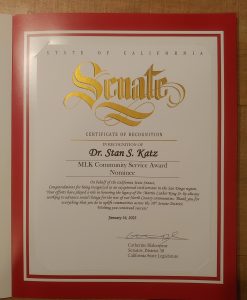
– A Certificate of Recognition on behalf of the California State Senate, from Catherine Blakespear Senator, District 38, issued January 16th, 2023


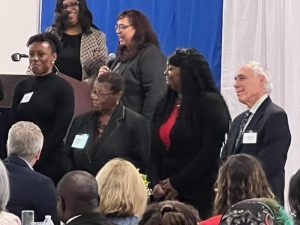
Upon the stage, behind the podium, in the brown jacket is Inez Williams, Events Chairman for the North San Diego County NAACP – Holding the microphone is Mayor Esther Sanchez of the City of Oceanside – In front of them are four of the five nominees for the 2023 Dr. Martin Luther King, Jr. Community Service Award. Mrs. Karen Williams Graham was one of the nominees, but is out of the frame of the above photo. The four nominees present in the above photo from left to right: Captain Lakyra Pharms; Eleanor Juanita Evans; Satia O. Austin; and Dr. Stan S. Katz.


Satia O. Austin receives the Dr. King Community Service Award.

Then Mayor Esther Sanchez presents the proclamation for Dr. King Day of Service and Community Breakfast Weekend, with special acknowledgement to NSDC NAACP, MiraCosta College Service Learning and Beatriz “Bea” Palmer.


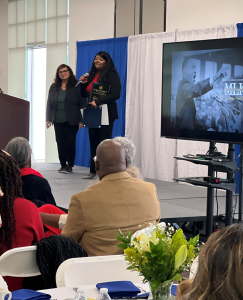
Satia O. Austin, after winning the Dr. Martin Luther King, Jr. 2023 Community Service Award, gives an acceptance speech describing her passion to help others in our community. A most inspiring woman.


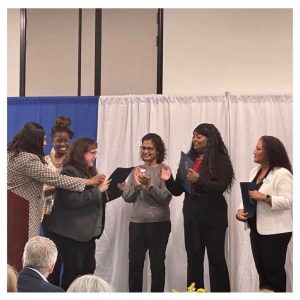
All of the Dr. Martin Luther King, Jr. Community Service Award nominees received Certificates of Recognition from US Congressman Mike Levin, California State Senator Catherine Blakespear, and Oceanside Mayor Esther Sanchez.


Over the past twenty years, I’ve done historical research and written books honor great individuals who promoted peace and democracy, and sought to eliminate racism. Below are books I’ve written linked to these goals. My nomination for the MLK Community Service Award from the City of Oceanside and the NSDC NAACP was based on these books and research, as well as community volunteer service I’ve given over many years.

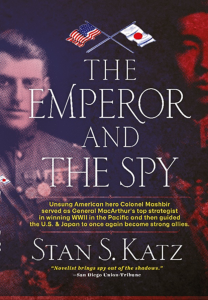
This historical novel reveals the thrilling adventures of a brilliant US Army Intelligence Agent, Colonel Sidney Mashbir (1891-1973). Mashbir’s fascinating career in espionage began in the American Southwest during the early 1900’s, maintaining stability along the U.S.- Mexico border during the Mexican Revolution.

During the 1920s, Mashbir moved to Japan and became a Japanese linguist. Throughout that decade and through the 1930s, he befriended some of the most influential Japanese leaders. And together, at great personal risk, they heroically resisted militarists pushing towards war. Instead, Mashbir and his Japanese allies creatively supported goodwill between the US and Japan, delaying and almost preventing WWII in the Pacific – However, that conflict could not be avoided.

The novel highlights the great contributions that Japanese Americans gave to their adopted nation during the war, despite the discrimination and injustices they faced in the United States prior to, and then greatly magnified during those war years. When 120,000 mainly Japanese American US citizens were incarcerated in internment camps, when they had done nothing wrong. Often with the loss of their possessions and the major disruption of their personal, educational, vocational lives. It was a dark moment in US History.

As for Colonel Sidney Mashbir, with the outbreak of war, he became General MacArthur’s top military strategy advisor in winning that conflict. And once it was over, he helped guide the US and Japan to once again become strong allies.

Mashbir often worked with his Navy buddy, the future Rear Admiral and Deputy Chief of Naval Intelligence, Ellis Zacharias (1890 – 1961). These good friends were early pioneers in the creation of the CIA.

To learn more, you’re invited to visit: TheEmperorAndTheSpy.com


-Colonel Mashbir’s most influential Japanese ally and close friend was Prince Iesato Tokugawa – aka Iyesato Tokugawa (1863-1940). Tokugawa was the leading advocate of Japan’s international peace and democracy movement during the first four decades of the 20th Century.

For 30 of those years, he served as President of Japan’s upper house of congress, the House of Peers. I felt privileged to have the opportunity to write about this unsung hero and humanitarian, who deserved a biography highlighting his fascinating life and outstanding accomplishments.

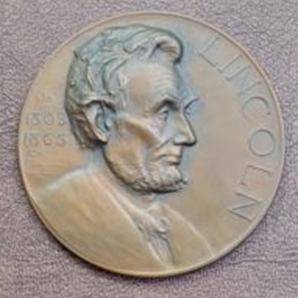
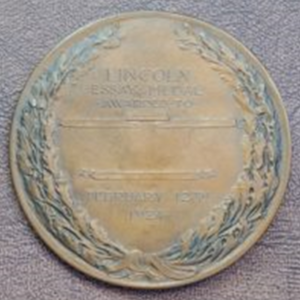
During the 1920s and 1930s Prince Tokugawa incorporated Lincoln Essay Contests into all Japanese Public Schools and Colleges to Fight Racism and Honor the Values of President Lincoln. Recognition was given to the students who best described those values.

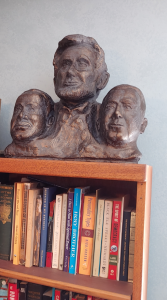
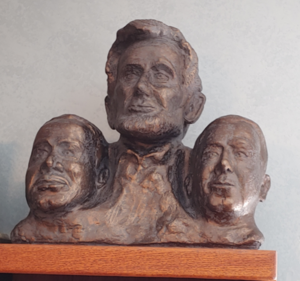
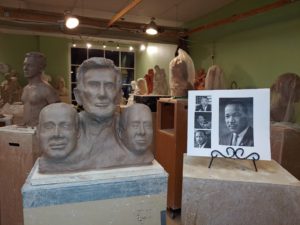
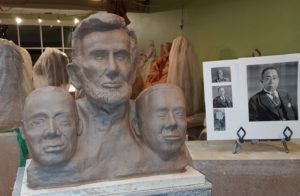
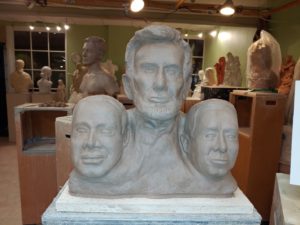
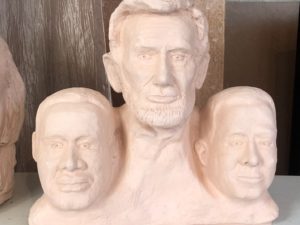
I created the below sculpture in order to capture and honor the essence of three significant Men of Peace, who promoted Human Dignity and Racial Equality,

President Abraham Lincoln (February 12, 1809 – April 15, 1865)

Dr. Martin Luther King, Jr. (January 15, 1929 – April 4, 1968)

Prince Iyesato Tokugawa (徳川 家達, August 24, 1863 – June 5, 1940)


Tokugawa loved his own Japanese culture. He also came to love the peoples and cultures of the West. This was despite the anti-Asian and anti-Black racism he often saw during his travels across the US. Prince Tokugawa, like Dr. King, recognized the common brotherhood of humanity.

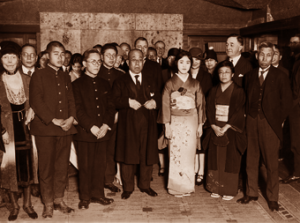
Photo: February 19, 1929 Award Presentation for the student winners of the Third Lincoln Essay Contest which was held at the Imperial Hotel, Tokyo. Prince Tokugawa was the President of the America-Japan Society which sponsored the event.

Prince Tokugawa (front center) and Count Aisuke Kabayama (at far right). This illustration is courtesy of the America-Japan Society. This fine organization, located in Japan, was founded in 1917 and continues to this day to promote amity and mutual understanding between the Japanese and American people. Prince Tokugawa was its 2nd president from 1924 until his passing in 1940. To learn more, here is the internet link to the America-Japan Society:    http://ajstokyo.org/en-home/


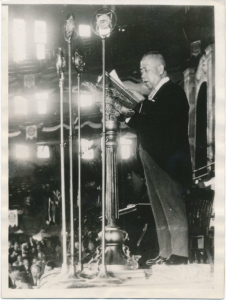
In 1930, Tokugawa was selected as the Keynote Speaker at the 25th Anniversary Celebration for Rotary International held in Chicago. There, he presented a speech encouraging peaceful international relations to 15,000 fellow Rotarians gathered from around the world.

The New York Times, June 27, 1930, press photo: “Japanese Prince Addresses Rotarian Convention: In an address of international importance, before 15,000 Rotarians assembled in Chicago for their Silver Anniversary Jubilee.” The following are two excerpts his inspiring speech, which was titled ‘National Aspirations.’

“Japan’s foremost aspiration is to cultivate the arts of peace and live at peace with her neighbors, near or distant, great or small.”

“Peace is a continuous process. Like liberty, peace demands “eternal vigilance” as its price. To the goal of peace, there can be no short cut.”


Prince Tokugawa was to be the Heir to the last powerful ruling Shogun. However, when that 265 year old dynasty ended in 1868, he instead took to the world stage as an international statesman. As a Renaissance man and adept diplomat, he creatively shared his passion for the arts, music, culture, science, athletic sports, and nature to establish bridges of friendship and understanding between the East and the West, while also promoting mutual respect within Asia. He is a fine role model for our current leaders dealing with the urgent issues of today that require international cooperation to solve.

Tokugawa supported higher education and a greater voice for women in public affairs. And despite his major influence, he maintained his humility. Often working behind the scenes, remaining unrecognized for many of his important achievements. Colonel Mashbir described Tokugawa as the true hidden power behind the Japanese Imperial Throne, and that he was so influential, that it was only after his passing in 1940, that militants were able to push Japan towards war with the Allies.

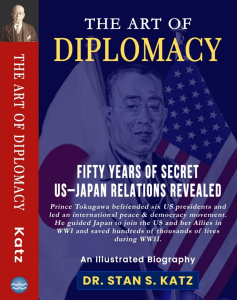
Two versions of the Prince Tokugawa’s biography were written: The Art of Diplomacy & The Art of Peace.

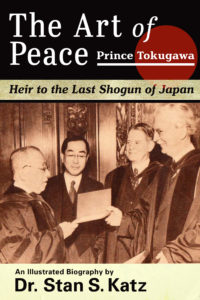
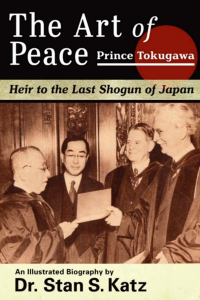
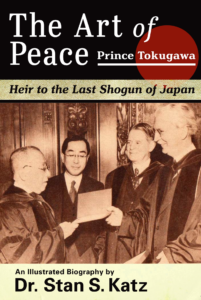
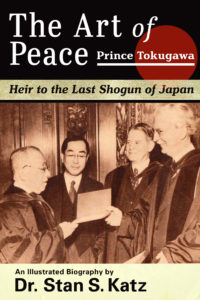
The Art of Peace book cover displays a 1934 photo of Tokugawa receiving an Honorary Doctor of Law Degree from the President of the University of Southern California for his lifelong philanthropic & academic contributions and for his promotion of respectful East / West relations. Tokugawa’s son is also in the photo, as is the President of USC’s Board of Directors. The following year, USC presented the same honorary award to President FDR.


To encourage respect between Japan and China, Prince Tokugawa and his influential Japanese industrialist ally & friend, Baron Shibusawa, incorporated Chinese literature courses into Japan’s colleges with hopes it would encourage better inter-cultural understanding and prevent conflict.


However, WWII could be delayed, but not prevented. So as to save innocent civilian lives, Prince Tokugawa, as President of the Red Cross Society of Japan, served as Chairman of the 1934 International Red Cross Conference held in Tokyo – During that significant global gathering, they approved the establishment of demilitarized “safe zones” in war-torn China, which prior to, and during WWII, provided refuge for tens of thousands of European Jews fleeing the Holocaust and also offered safety for hundreds of thousands of Chinese civilians.

  • One would hope that recognition of this major Japanese humanitarian achievement might help improve current strained relations between China and Japan, leading to greater regional stability, cooperation, and amity.


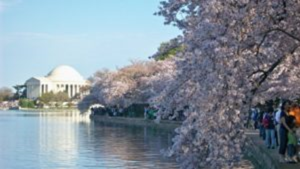
And to establish an ongoing legacy of U.S. – Japan friendship, Prince Tokugawa guided the Japanese gifting of cherry blossom trees to the U.S. in 1912, into becoming the National Cherry Blossom Festival in 1935. This delightful yearly celebration continues to this day in Washington, D.C., and is one of our nation’s largest and most popular international goodwill events.


The Legacy of Prince Tokugawa’s Respect for Human Equality linked to President Abraham Lincoln Lives On

Prince Tokugawa went beyond judging others by their race, creed, or color, as revealed by his sponsorship of Lincoln Essay Contests in all Japanese public schools and universities during the 1920s and ’30s. He would be delighted to know of the continued friendship between the U.S. and Japan, and that future Japanese and U.S. leaders would join together to recognize the importance of President Lincoln’s universal message. Perhaps, someday, Essay Contests will be sponsored in schools of the U.S., Japan, and other nations, honoring the fine values of Iesato Tokugawa.

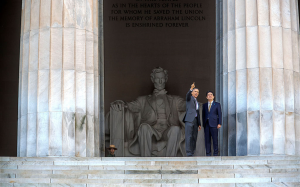
April 27, 2015: U.S. President Barack Obama and Prime Minister of Japan Shinzo Abe tour the Lincoln Memorial. They are looking towards the Washington Monument on the National Mall in Washington, D.C. Prime Minister Abe was in Washington, D.C. for meetings with President Obama. Abe also attended a state dinner in his honor at the White House the following night. A U.S. administration official described the above photo as follows:

“This is an opportunity before the formal events tomorrow to spend time together one-on-one at a place of historical significance for the United States, as this month marks both the 150th anniversary of the Civil War’s end as well as President Lincoln’s passing…”

The above photo and description of the diplomatic meeting between President Obama and Prime Minister Abe, comes from the conclusion of the Prince Tokugawa biography. The goal of my books is that they bring inspiring leaders from the past, back to life, igniting an interest, even a passion for history. To be enjoyed by the general public and shared in academic curriculum.


MORE INFORMATION ABOUT THE DR. MARTIN LUTHER KING, JR. EVENT

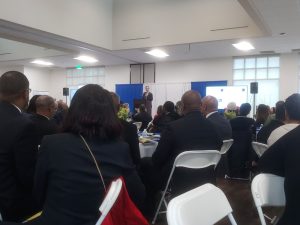
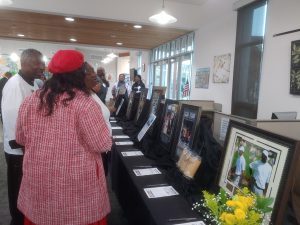
It was inspiring seeing the 300 attendees to the Dr. King Community Prayer Breakfast. Many of these individuals are active in organizations that work to create a more positive and inclusive community where we look out for one another with friendship and respect. In the below photo, Silent Auction items are on display – Proceeds going to support the many fine services given by the North San Diego County Chapter of the NAACP.

During this gathering:

Two talented high school teenagers were recognized as part of this wonderful event. One sang an emotionally connecting song, another contributed artwork for the Silent Auction Fundraiser for the NSDC NAACP.

There was also an impressive 7 year old girl who expressively danced on the front stage as uplifting music was played, the audience came to their feet in applause.

The breakfast was delicious and the company friendly and welcoming to one another.

Representatives of Mira Costa College, also the Captain and several City of Oceanside police officers were in attendance. Other City of Oceanside officials and other San Diego community groups were also represented.

A Reverend gave a meaningful prayer of appreciation before a delightful breakfast was served.


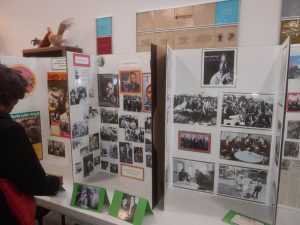
Gary Rossell (shown below), and his wife Carolyn, are founders of the Rossell African-American History Awareness Museum. They regularly travel around the county to bring their beautifully illustrated and inspiring exhibits to public social justice commemorative events, such as this Dr. Martin Luther King, Jr. community gathering.


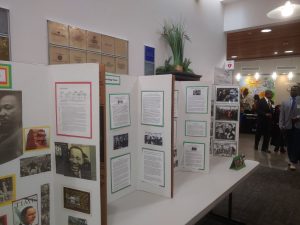
Carolyn Rossell (above, her side view to the camera), along with her husband, Gary, created this wonderfully inspiring educational exhibit.

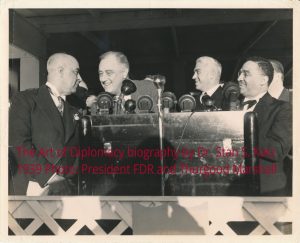
I showed Gary and Carolyn Rossell the rare 1939 photo below. This Photo was discovered and identified while doing historical research that honors the legacy of Thurgood Marshall (Marshall is at far right in photo).

Gary and Carolyn expressed great interest in utilizing this unique piece of history as part of an upcoming exhibit to honor the accomplishments of Thurgood Marshall, our nation’s first Black US Supreme Court Judge.

Marshall took a major role in gaining equal rights for all citizens in our nation and was a driving force in the growth of the NAACP. In the above photo, the 31 year attorney Marshall allies with President FDR to advance the treatment of Black Workers. Marshall was then on the Legal staff of the NAACP. The following year, 1940, he was selected Chief of the NAACP Legal Defense and Educational Fund, which was created to mount a legal assault against segregation. Marshall became one of our nation’s leading judicial voices. He argued 32 cases before the U.S. Supreme Court, winning 29.

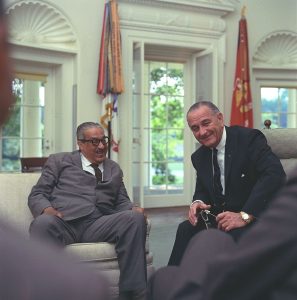
June 13th, 1967: Thurgood Marshall meets in friendship and mutual respect with President Lyndon B. Johnson in the Oval Office of the White House on the day that Marshall was nominated by Johnson to serve on the Supreme Court. Photo courtesy of the LBJ Museum & Library


Acknowledgments

  • It was a pleasure to meet Joe Farmer, who was seated at my same table. In 2009, he was the recipient of the Dr. Martin Luther King, Jr. Community Service Award. During his 40 years of service at Camp Pendleton, he oversaw upkeep and maintenance. In addition, he served as Commissioner of Housing for the City of Oceanside.
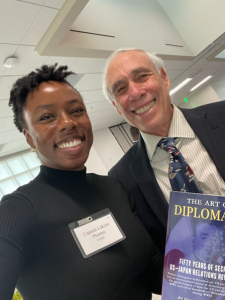
  • Also seated at our table was US Marine Captain Lakyra Pharms (shown below), one of the five nominees for the 2023 award.

During the event, I gifted a copy of the illustrated biography, The Art of Diplomacy to Captain Lakyra Pharms. Lakyra suggested we take a photo, and above is results. Lakyra’s significant community achievements, as that of the other nominees are included in the Event booklet shown at the top of this article, which was distributed at the event. Lakyra mentioned the future possibility of going towards a career in the diplomatic service.

Several of the above photos of the MLK Community Service Award nominees were kindly provided by Joseph Farmer, the 2009 Recipient of the Dr. Martin Luther King, Jr. Community Service Award.

Thanks also go to Bea Palmer, an active member of the NAACP, who helped bring about this MLK commemorative event. Bea Palmer is Vice-President – Board of Directors of “Operation HOPE” – North County San Diego, whose mission is to provide a safe environment for both families with children and single women who are experiencing homelessness and to help support them as they rebuild their lives and regain HOPE.” Bea Palmer is also actively involved at MiraCosta College, encouraging bright young students to engage with and improve their community.

Below is a link to learn more about Bea Palmer and the MiraCosta College Service Learning program mentioned above:   https://hub.miracosta.edu/meet/profile.aspx?id=65

I also had the pleasure of meeting Margery Pierce, who took an active part in setting up this MLK event. She was the Director of Neighborhood Services for the City of Oceanside.

Appreciation goes out to the representatives of the North San Diego County NAACP for supporting this community event. “The NAACP’s mission is to achieve equity, political rights, and social inclusion by advancing policies and practices that expand human and civil rights, eliminate discrimination, and accelerate the well-being, education, and economic security of Black people and all persons of color.”

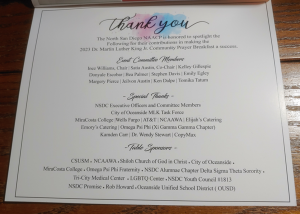
There were many other individuals and organizations who took a significant role in making this wonderful event come to life. Gratitude goes out to all of them! The following illustration was the last page of the booklet that was distributed at this gathering. It highlights many of those who generously supported this event.


Filed Under: Tokugawa Archives Tagged With: Anti-Asian Racism, Anti-Black Racism, Beatriz “Bea” Palmer, Black History, Black History Month, Black Supreme Court Judge, Captain Lakyra Pharms, Carolyn Rossell, Colonel Mashbir, Colonel Mashbir Archives, Diplomacy of Peace, Dr. Katz, Dr. King Community Prayer Breakfast, Dr. Martin Luther King, Dr. Martin Luther King Jr. Community Service Award, Eleanor Juanita Evans, Emperor Hirohito, FDR, Gary Rossell, History of the NAACP, Japan History, Jean Rossell, Joseph Farmer, Margery Pierce, Mayor Esther Sanchez, MiraCosta College, MiraCosta College Service Learning, MLK Day, Mrs. Karen Williams Graham, NSDC NAACP, Oceanside, Operation HOPE” - North County San Diego, Peace Diplomacy, President Lyndon B. Johnson, Prince Iyemasa Tokugawa, Prince Iyesato Tokugawa, Prince Iyesato Tokugawa Archives, Prince Tokugawa, Representative John Lewis, Representative Mike Levin, Rossell African-American History Awareness Museum, Satia O. Austin, Senator Catherine Blakespear, Stan S. Katz, Stan S. Katz archives, Stan S. Katz blog, Stan S. Katz nominated for Dr. Martin Luther King Jr. Community Service Award, Takashi Komatsu, The art of diplomacy, The Art of Diplomacy biography, The Art of Peace, The Art of Peace biography, The Emperor and the Spy, Thurgood Marshall, U.S.-Japan History, US Congressman Mike Levin, US Supreme Court

Establishing the “Prince Tokugawa US Japan Memorial Fund” – promoting peace, democracy, and a love of music.

September 29, 2021 by Stan S. Katz Leave a Comment

A MEMORIAL FUND THAT ENCOURAGES PEACE, DEMOCRACY, AND A LOVE OF MUSIC.

Your suggestions are welcome. 

[email protected]

*****************************************************************************


Prince Tokugawa Iesato (aka Prince Iyesato Tokugawa, 1863-1940) 

Potential names for the foundation:

Tokugawa US Japan Memorial Fund: honoring the memory of Prince Tokugawa, promoting global peace and democracy, and a love for music in children. 

Tokugawa Memorial Fund: honoring the memory of Prince Tokugawa, promoting global peace and democracy, and a love for music in children. 


MISSION STATEMENT:

This non-profit memorial fund would emphasize the strong continuing alliance between the US and Japan, and the broader message of international peace and democracy. Grants would be given to organizations and individuals who have contributed to these admirable goals.

Based on Prince Tokugawa’s strong connections to the visual arts and music, the theme for this foundation might also go the route of supporting children’s access to the wonderful world of music. Prince Tokugawa encouraged the sharing of Japanese music with the Western world, and brought an appreciation to Japan of music from the West.

It is believed there would be strong support for this memorial fund from a wide array of individuals and businesses who encourage the ongoing amity between the US and Japan. 

This memorial fund would give recognition to the educational / political affairs organization the San Diego World Affairs Council (SDWAC) and its national organization, the World Affairs Councils of America (WACA), the largest non-profit, non-partisan, educational/political affairs organization in the United States.

Prince Tokugawa held distinguished leading roles in many diplomatic organizations during his career, some of these organizations continue to this day. There are also other more recent Japanese and US Japan international goodwill organizations who might well have interest in assisting in the launching of a memorial fund that honors one of Japan’s great humanitarian statesmen.

Below is a growing initial list of organizations in the fields of education/diplomacy/cultural exchange, who would be contacted. 

–Japan Society of New York

–America-Japan Society headquartered in Tokyo.

–Sasakawa Peace Foundation USA

–East West Center

–Praemium Imperiale: Honors the memory of Prince Takamatsu (who was the nephew of Prince Tokugawa).

–Tokugawa Art Museum in Japan

–Tokugawa History Museum in Japan

-National Museum of American Diplomacy – A Museum in Development. Located at the U.S. Department of State in Washington, D.C., the National Museum of American Diplomacy is a public-private partnership between the State Department and the Diplomacy Center Foundation. For the first time, visitors will have a unique experience at the only museum in the United States dedicated to the subject of diplomacy. No other museum brings diplomatic history to the forefront in its exhibits; no other institution is solely dedicated to collecting the artifacts of diplomacy.


POSSIBLE DISTRIBUTION OF GRANTS FROM THIS FOUNDATION

– 50% would on a yearly basis go to a non-profit organization such as Classics For Kids, which is an educational performing arts organization dedicated to inspire children through the experience of live music, generate creativity, academic success, and cultural understanding. Classics For Kids would oversee the Tokugawa Memorial Fund.

– The other 50% would on a yearly basis be gifted to non-profit organizations and/or individuals in recognition of their efforts to promote better international understanding, peace, and democracy. A ceremony honoring the recipients might be part of this gifting process.

For instance:

*10% might go to US Japan international goodwill organization, such as a student exchange program between Japan and the U.S.

*10% going to the World Affairs Councils of America to support their ongoing efforts to promote better international understanding.

*10% going to the San Diego World Affairs Council, a local chapter of the World Affairs Councils of America.

*10% going to the San Diego Diplomacy Council.
*10% going to a different nonprofit goodwill organization each year. Chosen by the administrators of the memorial fund.


Overview of some of Prince Tokugawa’s leadership positions and noble achievements

Prince Iyesato Tokugawa (1863-1940) was a Renaissance man, an adept diplomat and politician, who shared his passion for the arts, music, science, and nature to create cultural and political bridges between the East and the West, while also promoting mutual respect within Asia. He is was in many ways the leading diplomatic face of Japan during the first four decades of the 20th Century. Tokugawa befriended six US presidents and many other world leaders in the pursuit of peace. If not for his untimely passing in 1940, Japan would not have become an adversary of the Allies in WWII. 

However, during the aftermath of WWII, there was a joint US Japan political goal to expediently leave the war years behind them and reestablish a strong US Japan Alliance. And in that process, Prince Tokugawa’s amazing legacy has been forgotten and almost erased from history. It is hoped that by honoring the memory of this great statesman that it will result in a reduction of international tensions in Asia that are still linked to Japan’s role in WWII.

A man ahead of his time, Prince Tokugawa supported higher education and a greater voice for women in public affairs, and despite his powerful influence, he maintained his humility, often working behind the scenes, remaining unrecognized for many of his significant achievements.

Based on his adept domestic and international leadership skills, Prince Tokugawa would make a fine role model for our current leaders dealing with the urgent issues of today that require international cooperative efforts to solve. Below is a list of some of his prominent positions and accomplishments: 

–President of the Upper House of the Japanese Congress for thirty years.

–President of the Red Cross Society of Japan

–President of the Japanese Medical Association

–Took a pivotal role in establishing the  National Cherry Blossom Festival, the largest international goodwill celebration in the US Capital.
–Honorary Member of Rotary International, he was the Keynote Speaker at the 25th Anniversary of Rotary International, attended by 15,000 attendees from around the world. 
–President of the America-Japan Society

-Held many other Honorary positions with other organizations.

-Promoted the sharing/exchange of art and music, and even athletic sporting events to encourage international goodwill. 

-With the goal of preventing wars during the 1920s, Tokugawa took a leading role in the Washington Naval Conference, promoting the first international military arms limitations conference in history.

–Prince Tokugawa strove to maintain peace with China. When hostilities arose, he wished to protect innocent lives. Tokugawa led the Red Cross Society of Japan and the Red Cross International Conference to create demilitarized Safe Zones in Japanese controlled regions of China, such as in the city Shanghai. These safe havens helped save the lives of hundreds of thousands of Chinese civilians and tens of thousands of Jewish refugees fleeing the Holocaust in Europe.


–Lincoln Essay Contests in all Japanese public schools and public universities. Prince Tokugawa was quite aware of the discrimination that the Western powers had towards Asians during the age of colonialism and up into the first few decades of the 20th Century. Tokugawa, himself, had a British education and respected the many of the values of the Western nations. However, in order to eliminate their anti-Asian prejudices, Tokugawa guided Japan to set the example by sharing the humanitarian principle of treating others, as he would wish others to treat his fellow Asians. To achieve this, he incorporated Lincoln Essay Contests into all Japanese public schools and public universities. The goal of these writing contests was to honor the values of Abraham Lincoln in his efforts to eliminate racism against Blacks.

Prince Tokugawa honoring the university winners of the Lincoln Essay Contest during the 1920s

Photo courtesy of the Japan Society of New York.

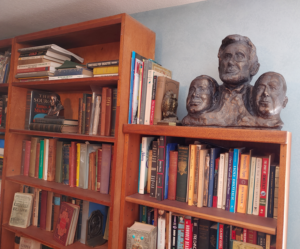
In recognition of Prince Tokugawa’s efforts to combat racism, the below bronze sculpture was created by the Stan S. Katz, the author of Prince Tokugawa’s biography. Replicas of this sculpture will be gifted to international goodwill organizations that wish to honor the memory of Prince Tokugawa. Prince Tokugawa is shown accompanied by President Abraham Lincoln and Dr. Martin Luther King Jr.


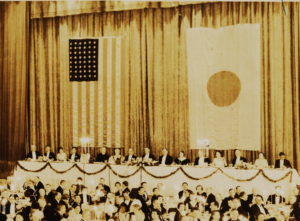
Japan Society’s Annual Dinner event honors Prince Tokugawa – Feb. 27, 1934. This diplomatic goodwill gathering took place at the Waldorf-Astoria Hotel, New York City. This photo is a segment of a much larger photo, where over 200 attendees showed their esteem for Prince Tokugawa during his visit to the US.

[Source of this rare photo: TheEmperorAndTheSpy.com website ]


In 1935 Prince Tokugawa invited thousands of educators from around the world to visit Japan for a one week academic conference. The goal to create a school curriculum that would encourage respectful treatment of other cultures and international peace.


One of Prince Tokugawa‘s closest Japanese allies in promoting international goodwill was Baron Shibusawa Eiichi (aka Baron Eiichi Shibusawa, 1840-1931).

Shibusawa was great humanitarian. He is also known as the “Father of the Japanese Modern Economy and Japanese Capitalism.”

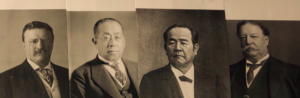
Presented above are two of the half dozen US Presidents that Prince Tokugawa and Baron Shibusawa allied with to promote US Japan goodwill: Theodore Roosevelt and William Howard Taft. 


Among his many creative efforts during the 1920s and ’30s to maintain friendship between Japan and the US, Prince Tokugawa allied with US military intelligence agent Colonel Sidney Mashbir during the 1920s and ’30s.

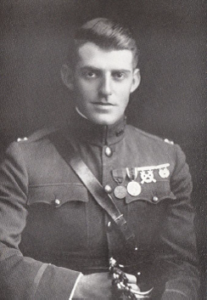
 Colonel Sidney Mashbir (1891-1973)

For more information about the alliance between Prince Tokugawa and this US intelligence agent, below is a link to a one hour YouTube video presentation given to Osher Lifelong Education Institute – University of California San Diego – January 8th, 2020.

https://www.youtube.com/watch?v=lu45j0XoO6k&t=9s


DESPITE PRINCE TOKUGAWA’S MAJOR ACCOMPLISHMENTS, HE HAS REMAINED RELATIVELY UNKNOWN, UNTIL NOW.

His biography is Available in two versions:

THE ART OF DIPLOMACY & THE ART OF PEACE

Future plans include the translation of the this biography into Japanese, and perhaps other languages.


PRINT & KINDLE EDITION


EXPANDED EBOOK EDITION

THE ART OF PEACE book cover presents a recently discovered photograph of Prince Tokugawa receiving an Honorary Doctor of Laws Degree from the University of Southern California (USC), during a special luncheon given March 19th, 1934 in Los Angeles.

The Los Angeles Times stated that this honorary degree was given to Prince Tokugawa:

“In recognition of distinguished service in international statesmanship,” and for his “support of many philanthropic and educational movements.”

In accepting the honor, Tokugawa respectfully said,

“He wished to receive this honor in the name of the Japanese people as a whole rather than as a personal distinction.”

The Los Angeles Times also stated that a banquet dinner was to be hosted that evening, by the Japan-America Society of Los Angeles, to honor Prince Tokugawa’s visit. The Governor of California and the former Mayor of Los Angeles planned to attend.


       Praise for the biography


Paul Ringwood U.S. Navy Commander (retired) wrote:

“Amazing little known history. I enjoyed every chapter.”


Kazuo Kodama, former Ambassador of Japan to the United Nations wrote:

“I wish you all the best & best of luck on your new book on ‘’Tokugawa Iesato.”


Professor Benjamin Uchiyama, Ph.D. History, University of Southern California wrote:

“This is a really interesting and understudied topic.”


Suzette Heiman, Director of Planning and Communications – The Missouri School of Journalism at University of Missouri [The first school of Journalism in the U.S.] wrote:

“We look forward to adding this biography to the School’s library collection. Your goal to reach high school and college students with this information is an ambitious – but important – goal.”


Toru Shigehara: Head Librarian/Information Resources Center Shibusawa Eiichi Memorial Foundation and Museum wrote:

“We appreciate your kindness and all the work you have done to promote understanding of Shibusawa Eiichi and US-Japan relations as a whole. I wish you all the best in your current and future endeavors. With gratitude,”


Bill Davison – President of the North County Chapter of the San Diego World Affairs Council wrote:

“Entertaining and Educational! This wonderful book will almost certainly broaden your perspective on US-Japanese relationships.”


Professor Claire Langham, former President of the East-West Center of Southern California wrote:

“The importance of preventing war is rarely given recognition through literature and in accounts of history.  It can be every bit as exciting as glorified accounts of war and certainly a better approach.”


-One half of author’s profits from Prince Tokugawa’s biography will be gifted to the Tokugawa US Japan Memorial Fund.


Filed Under: Tokugawa Archives Tagged With: 1934 Japan Society Annual Dinner, Abraham Lincoln, Abraham Lincoln and Japan, Ambassador Grew, Ambassador Katsuji Debuchi, America-Japan Society, Baron Eiichi Shibusawa, Baron Shibusawa, Baron Shibusawa Eiichi, Chinese History, Classics 4 Kids, Classics Four Kids, Colonel Mashbir, Colonel Mashbir Archives, Colonel Sidney Mashbir, Diplomacy, Dr. Martin Luther King, East-West Center, East-West Center of Southern California, Eiichi Shibusawa, General Douglas MacArthur, Historical biography, History of the Cherry Blossom Festival in Washington D.C., History of the Japan Society, History of the Japan Society of Manhattan, History of the Japan Society of New York, History of the National Cherry Blossom Festival, History of USC, Holocaust, International Friendship, International Relations, Iyemasa Tokugawa, Japan China relations, Japan History, Japan Society of Manhattan, Japan U.S. Relations, Kazuo Kodama, Kazuo Kodama Ambassador of Japan to the European Union, Kazuo Kodama Ambassador of Japan to the United Nations, Mashbir Archives, Missouri School of Journalism, North County Chapter of the San Diego World Affairs Council, Praemium Imperiale, President Abraham Lincoln, President Theodore Roosevelt, Prince Iyesato Tokugawa, Prince Takamatsu, Prince Tokugawa, Prince Tokugawa Archives, Prince Tokugawa Iesato, Prince Tokugawa Iesato Archives, Princess Takamatsu, Professor Claire Langham, San Diego World Affairs Council, Sasakawa Peace Foundation USA, SDWAC, Shibusawa Eiichi, Shibusawa Eiichi Memorial Foundation and Museum, Stan S. Katz, Stan S. Katz blog, Statue of Abraham Lincoln, Statue of Dr. Martin Luther King, Statue of Prince Tokugawa, Takashi Komatsu, The art of diplomacy, The Art of Diplomacy biography, The Art of Peace, The Art of Peace biography, The Emperor and the Spy, The Prince Tokugawa Foundation, The Prince Tokugawa US Japan Foundation, TheEmperorAndTheSpy.com, Theodore Roosevelt, Tokugawa Shogun History, U.S. Japan relations, U.S.-Japan History, US Japan relations, WACA, William Howard Taft, World War One, World War Two, 徳川 家達

Prince Tokugawa’s illustrated biography comes in two versions: THE ART OF PEACE digital edition & the Print and Kindle edition titled: THE ART OF DIPLOMACY.

March 1, 2021 by Stan S. Katz Leave a Comment

DIGITAL EBOOK EDITION


PRINT & KINDLE EDITION


“The Art of Peace” & “The Art of Diplomacy”

Both versions have many similarities.

“The Art of Peace,” however, has an additional 100 pages of historical notes to assist researchers.

To get a sense of the extensive historical material presented, presented below is the INDEX for “The Art of Peace” digital edition.

Note: When the letter ‘n’ follows page numbers and has a number after it – that tells you that that topic is presented within a Chapter note with that number.

AAS (American Antiquarian Society), 223

Abe, Shinzo, 580, 587–88, 600–605n25

Abraham Lincoln Commemorative Medal, 116

academic medals to Japanese students, 115

Academic WorldQuest™ (AWQ), 594n13

Academy of Motion Picture Arts and Sciences, 166

ACJ (American Center Japan), 484n3

Adachi, Mineichirō, 64n11, 591n5

Adrenalin®, 216n5

Aesthetic Dancers, 377

Akihito (Emperor of Japan), 269, 474, 478, 566, 568

Akihito (Empress of Japan), 566

Akitake Tokugawa Delegation, 186

Alaska-Yukon-Pacific Exposition, 189–191

Alger, Mrs. Russell A., 351n6

Alice in Asia The 1905 Taft Mission to Asia As told in Crowded Hours Reminiscences of Alice Roosevelt Longworth (exhibition), 37, 359, 381n3

Alice Roosevelt Longworth Collection, 382n3

Allenby, Edmund Field Marshal, 447-448

Military commander during WWI of Lawrence of Arabia

host to Crown Prince Hirohito in 1921

Allies, 21–22, 39–57, 101n3, 471

Amau, Mrs. Eiji, 341n4, 346n5

Ambrose, Edna, 351n6

America-Japan Society (AJS)

academic medals given to Japanese students, 115

American All-Stars luncheon, 406

continued today, 580

dinner honoring Garden Club, 319

Fiftieth Anniversary of Grant’s death, 114

Garden Club of America (GCA) visit, 314–356

honoring Montgomery Taylor, 421

Lincoln essay contest, 115–120

mission statement, 420n2

origins of, 595n14

Special Bulletin with Tokuda’s essay, 118

stone lantern gift, 174–180

American All-Star Baseball Team, 32, 405–7

American Antiquarian Society (AAS), 223

American Center Japan (ACJ), 484n3

American Hebrew and Jewish Messenger (journal), 511–15, 550–54n8

American Legation, 135n1, 483n3

American Minister to Japan, Harris, 184

American Pictorial (magazine), 67, 75–77

American pragmatism and Chinese modernization Importing the Missouri model of journalism education to modern China (Volz and Lee), 181n3

American Red Cross, 546n1

American School in Tokyo, 422

American Sports Congress, 173

American Stock Exchange, 31, 370

American Union Bank, 272

American Youth Hostel, 173

Anesaki, Masaharu, 162n5

Anglo-Japanese exposition. See Japanese-British Exhibition

Anti-Comintern Pact, 434

anti-Semitism, 508, 521, 537–39

Aoki, Setsuichi, 163n5, 343n4, 345n5, 589n1

Aoyama Funeral Hall, 498

Aoyama Gakuin University, 115

Arai, Gyoji, 344n5

Arai, Mrs. Ryoichiro, 342n4, 345n5

Arai, Mrs. Yoneo, 341n4, 345n5

Araki, Sadao, 311n8

Arc de Triomphe, 451

Arlington National Cemetery, 267, 296

Armenian genocide, 204–7, 217n8

Armenian Relief Committee of Japan, 206–7, 217n8

Armenian Weekly (magazine), 204–7, 217n8, 218n9

arms limitation treaty, 509

arms race, 67

. See also Washington Naval Conference (1921-22)

Arthur M. Sackler Gallery, 359, 382n3

Asabuki, Tsunekichi, 346n5

Asahi (newspaper), 59n5, 189, 386n14, 388n16

Asano, Jinshichi, 342n4

Asano, Ryozo, 162n5, 343n4

Asayama, Tominosuke, 344n5

asbarez.com, 218n10

Ashbury Park Press (newspaper), 312n10

Ashino, Kimiko, 341n4, 347n5

Ashton, Mr. and Mrs. James M., 352n6

assassination attempt, against Yuasa, 502

Associated Chambers of Commerce of the Pacific Coast, 189

Austin, Mrs. J. Alex, 350n6

Avenue des Champs-Élysées, 451

Awa Maru, S.S., 374

Axis Power allies, 435


Babbitt, Sarah Carter, 350n6

Babkenian, Vicken, 218n10

Bacon, Augustus Octavius, 29, 30, 372

Bakumatsu Osaka Castle, 18n1

Baldwin, Mrs. Karl, 87

Balfour, Arthur James, 80, 89

Ballantine, Joseph W., 137

Baltimore News-Post (newspaper), 429

Bank of Japan, 497, 505n2

bank runs, during Great Depression, 272

Barger, Edna, 351n6

Barnes, Mrs. John S., 353n6

Barreras Jr., Antonio, 97

baseball, 32, 405–7

Baseball Hall of Fame, 407

Bates, Frances C., 353n6

Battle of Tsushima Strait (1905), 24

Bedford Garden Club, Bedford Hills, NY, 349n6

Beebe, Mr. and Mrs. Marcus, 354n8

Benes, Eduard, 62n7

benevolence (jewel regalia), 486

Bennett, Richard B., 62n7

Besange, Robert Jacquinot de, 521–22

Betty (daughter of Joseph W. Ballantine), 137

Bickel, Karl, 279

Big Nine (chief delegates), 79

Billy, Robert de, 591n5

birthday anniversary of His Majesty the Emperor of Japan, 464

Bismarck, Otto von 12 Black Tuesday, 12

Black Tuesday, 272

Blood Brotherhood of Japan, 501

Boardman, Mabel T., 546n1

Boardman, Mrs. William J., 546n1

Board of Tourist Industry, 408

Bohr, Nils, 468, 484n4

Bolshevik Revolution, 74, 101n3

Bone, Scott C., 306n6

Borah, William, 274

Borden, Robert, 89

Bovard, Mrs. Oliver K., 352n6

Boyd, Lizzie E., 350n6

Brandegee, Frank B., 30, 372

Briand, Aristide, 80, 89, 546n1

Brooke, John M., 18n2, 20

Brookings, Robert S., 61n7

Brooks, Brian, 177–78

Brown, Mr. and Mrs. Theodore E., 351n6

Bruce, S. M., 306n6

Buat, Edmond, 546n1

Buchanan, James, 19

Buckingham Palace, 447

Buffalo Commercial (newspaper), 103n8

Buffalo Times (newspaper), 103n9

Bulkley, Jonathan, 352n6

Bulkley, Mrs. Jonathan, 318, 320, 348n6, 352n6

Buma, Mrs. Kyoichi, 328, 347n5

Bunker, Frank F., 306n6

Burleson, Albert S., 30, 372

Burlington Free Press (newspaper), 270n1

Burnett, Charles, 119, 456, 458

Burnham, David, 350n6

Burnham, Mrs. Claude G., 350n6

Bush, Laura, 393n21

Butler, Nicholas Murray, 62n7, 167, 255–58


Cabell, Mrs. Henry F., 352n6

Caldwell, Barbara, 379

calligraphy, 16, 210

Canada/Japan relations, 592n8

canned interviews, 34, 371, 386n15

Cannon, Joseph Gurney, 30, 372

Carlos and Malú Alvarez Academic WorldQuest National Competition, 594n13

Carmody, Dr. and Mrs. John, 354n8

Carnegie, Andrew, 33

Carnegie Endowment for International Peace, 33, 61n7, 257, 258, 372

Carnegie Institute, 33, 372

Carnegie Steel Corporation, 258

Carnegie Steel Mills, 33, 372

Carnets magazine, 248n2

Carpenter, Fred W., 58n2, 381n2

Carter, Thomas H., 30, 372

caste system, 121

Catonsville Garden Club, MD, 349n6

Cattler, M. Felician, 546n1

Century Publishing, NY, 221

Chamberlain to the Imperial Court, Tokugawa, 440

cherry blossoms

gift of trees, 32, 200, 334, 357–379, 392n21, 583

historical/cultural overview, 380n1

viewing party, 130

Washington, D.C., 261, 374

Chestnut Hill Garden Club, MA, 349n6

“Chicago–1930” (Marvin), 244, 248n2

Chicago Stadium, 242

Chicago Tribune (newspaper), 386n15

Chicago World’s Fair, 312n11, 404

Chichibu (prince), 444

Chichibu Maru, M.S., 315

Chida, Hiroshi, 109

children’s orphanages, 133

Chikako, Kazu-no-Miya, wife of Shogun Iemochi, 6

Chilton, Mrs. William E., 350n6

Chinda, Iwa, 374, 392n21

Chinda, Sutemi, 200, 203, 217n6, 374

Chinese-American citizens, 25

Chinese civilians, 508, 542–44

Chinese delegation, 89

Cho, Tsugiyoshi, 484n5

Choate, Joseph H., 61n7

Choate, Mabel, 348n6, 350n6

Chrysanthemum flower, 486

Cincinnati Garden Club, OH, 349n6

civil war, in Japan, 410

Civil War, U.S., 25, 104, 107–8, 116

Clark, E. Warren, 13–15, 20n4

Claudel, Paul, 274

Clear, W. J., 458

Cleveland Garden Club, OH, 349n6

Clinton, Hillary, 392n21

Cochran, George Ira, 165, 181n1, 571

Coe, Mrs. Henry E., 349n6

Cohasset Garden Club, MA, 349n6

Cold War, 436

colonialism, 23, 74, 125, 221

Columbia Broadcasting System, 62n7

Columbia University, 167, 257

Committee for the Advancement of the Negro Race (1906), 220

Committee on World Friendship Among Children, 138

communism, 250, 414, 443–46, 470

Congress Hall by Night, Japan-British Exhibition, 37

Connecticut Valley Garden Club, 349n6

Constitution (1889), 21

Continental Hall, 78

Coolidge, Calvin, 87, 273, 274, 306n6

Coolidge, Mrs. Calvin, 546n1

Coolidge, Mrs. Harold J., 351n6

cornerstone laying dedication ceremony, 422

Cornig, Mrs. Erastus, 354n8

Costin, Alex, 548n6

Country Life magazine, 249

Court of Progress, Japan-British Exhibition, 35

Craig, Malin, 268

Crane, Mrs. Carey, 341n4

Crane, Mrs. W. C., 346n5

Cross, Mary R., 348n6, 351n6

Cummings, Hugh S., 286

Curley, James Michael, 263


Daiichi Sankyo Company Ltd., 216n5

daimyo lords, 3

Dai Nihonshi (history book started by Mitsukuni), 598n19

Dan, Baroness Ino, 341n4, 346n5

Dan, Ino, 162n5, 343n4, 344n5, 345n5

Dan, Takuma, 490, 496, 499, 501, 505n2

dan system, 409

Darby, William L., 141, 160n2

Darrach, Mrs. William, 348n6, 350n6

Daughters of the American Revolution Memorial Hall, 73

Davis, Mrs. Livingston, 349n6

Davison, Henry P., 53, 54

Davison, Marion M., 337n3

Davison, Mrs. Chesebrough, 351n6

Dayton Garden Club, OH, 349n6

Deacon, Richard, 495

death threats and assassinations, 493–503, 505n2

Debuchi, Katsuji, 259–261, 274, 275, 426, 463–65

Debuchi, Mrs. Katsuji, 259, 261, 346n5

Debuchi, Takako, 341n4, 347n5

De Forest, J. H., 384n11

demilitarized areas. See safe zones

Den, Makoto, 344n5

Denby, Edwin, 93

Denby, Jr., Charles, 93, 94

Denby, Mrs. Charles, 546n1

Densho (educational organization), 128, 135n3

Densho Encyclopedia, 135n3

Department of Cinema, USC, 166

Depew, Chauncey, 29, 372

Dern, George H., 311n8

DeYoung, M. H., 32, 370

Dillingsworth, Lt., 458

diplomacy, 229–247

diplomatic/education events, 579–580

diplomatic mission sent by Shogun Iemochi, 6–7

disabilities, 129–133

disarmament movement. See Washington Naval Conference (1921-22)

discrimination, 123–25, 139, 160n2, 384n11, 424, 509

documentary films, 267, 270n4, 524–25, 547n5

Doi, Michio, 213n2

Doi, Mitsutomo, 589n1

Dolls of Friendship: The Story of a Goodwill Project between the Children of America and Japan, 138, 160n2

Dome of the U.S. Capitol, 73

Domoto, Insho, 163n6

Domoto, Tomiko, 340n4, 347n5

Dotzler, Carl (Karl), 590n3

Doughty, Mrs. L. G., 352n6

Duchess de Rohan, 57

Dunn, James Clement, 286

DuPont, Mrs. William K., 348n6, 353n6

Durrach, Mrs. W., 318

Dyer, Brainerd, 95

Early, Stephen T., 286

East & West Meeting, 198–202

Easthampton Garden Club, NY, 349n6

Eavesdropping on Hell Historical Guide to Western Communications Intelligence and the Holocaust, 1939-1945 (Hanyok), 537–39, 549n7

Edgar Thomson Steel Mills, 33, 372

Edison, Thomas Alva, 190

Edoff, Mrs. Frank J., 352n6

Edo Inheritance, The (Tsunenari), 598n20

Education Conference, Pan-Pacific, 168–173

Education for International Co-operation, 173

Edward (King of England), 58n1

Egypt, Egyptian Museum, the National Library, Arabian Fine Arts Gallery, the Citadel, the Mosque of Mohammed, 447-448

Eisenhower, Mamie, 392n21

Eliot, Charles W., 61n7

Elliott, Mrs. Stewart, 353n6

Ely, Joseph B., 263

Emmanuel III, Victor, 22

Emperor and the Spy, The (Heifetz), 142, 455, 478, 482, 533, 545, 580

Emperor Meiji Shrine, 427

Englewood Garden Club, NJ, 349n6

English, Mrs. Robert P., 349n6

Enlai, Zhou, 545

Enomoto, Mrs. Ryuichiro, 341n4, 347n5

enthronement, 463, 486–492

Enthronement (book), 488–89

Enthronement Edition, 488–492, 504n1, 505n2

Eppley, Marion, 351n6

Escape to the Rising Sun (film), 547n5

Esperanto, 173

Espy, Mr. and Mrs. Arthur, 349n6

ETA. See Suiheisha Society

Ethiopia, 508, 527–28

Eton College, 11–12

Evening Star (newspaper), 29, 59n4, 372, 387n16

Evening Sun (newspaper), 526

Exchange Club, The, 481, 485n6

Executive Committee, Exhibition Advisory Committee, 345n5

Exile Shanghai (film), 547n5

expansionism, American, 23


Fairchild, David, 363

Fairfield Garden Club, NY, 349n6

Family of Nations broadcast, 62n7

farm communities, 301

Farrington, Wallace R., 306n6

Father of Modern Japanese Banking and Capitalism. See Shibusawa, Eiichi

Favre, Guillaume, 520

Faymonville, P. R., 458

Feast of Peach Blossoms (Doll’s Festival), 137

Federal Council of Churches of Christ in America, 160n1

feudalism, 3

Field Museum of Natural History, 267

Fife, Mrs. Robert H., 318, 320, 348n6, 351n6

Fifteen Lectures on Showa Japan, Road to the Pacific War in Recent Historiography (Kiyotada), 506n3, 580, 593n12

Finley, John Huston, 225

first ladies, U.S., 392–93n21

First National Bank, 188

Fisher, Tony, 478, 481

Fishing Boat on a Dark Night (Buson), 158

Flame of Peace, 416

Fleisher, Benjamin W., 504n1

Fleisher, Mrs. B. W., 342n4, 346n5

Foch, Marshal, 262

Fock, D., 306n6

Fontainebleau Palace, 450

Forbes, W. Cameron, 397

Force, Mrs. R. C., 352n6

Ford, Alexander Hume, 304n6, 306n6, 309n7

Foster, Charles H., 546n1

Foster, John W., 61n7

Four Counties Garden Club, PA, 349n6

Four-Power Pacific Pact, 295

Four-Power Treaty, 75–77

Franca, Jose de Francisco de Horta Machado de, 80

France-Japan House, Tokyo, 570, 591n5

Franco, Afranio De Mello, 62n7

Frasconi, Antonio, 599n24

Frazar, E. W., 240, 241, 484n5

freedom of the press, 174–180

Freer Gallery of Art, 359, 382n3

French Consulate in Tokyo, 570

French-Japanese friendship, 570

Friendship Dolls, 137

Fuji, Chief Judge, 501

Fujita, Heitaro, 342n4

Fujita, Hisanori, 475

Fujiyama, Raita, 314, 342n4

Fujiye, N., 214n2

Fukui, Genjiro, 216n5

Fukui, Kikusaburo, 162n5, 163n6, 342n4

Fukui, Mrs. Kikusaburo, 342n4

Fukushima, Mrs. Kisaji, 341n4, 346n5

funeral service for Junnosuke Inouye, 498


Gallagher, Mrs. J. O., 352n6

Gallinger, Jacob Harold, 29, 30, 372

Games of the XII Olympiad, 408

garden, owned by Baron Iwasaki, 327

Garden Club of America (GCA)

additional history about, 353n7

commemorative books, 333, 336

delegates and their companions list, 348–353n6

Farewell Dinner, Kyoto, 326

General Committee members photo, 330–32

gift to Japan, 378

group photo individuals list, 339–343n4

leadership positions in the General Committee for Reception, 343n5

musical pieces, America-Japan Dinner, 337n2

Nijo Palace visit, 325

Photographic Diary, 317–332, 336, 337n1, 354–56n8

reception for visitors, 318

schedule of activities for delegates, 322–23

visit to Japan, 314–356

Yagi’s garden visit, 324

Garden Club of Oranges, East Orange, NJ, 351n6

Garden of Peace, Japan-British Exhibition, 36

gardens, Japanese

Alaska-Yukon Pacific Exposition, 191

created by Mr. Fujiyama, 314

Dr. Inazo Nitobe memorial, 574–78

Friendship Garden, San Diego, 583

Japanese-British Exhibition, 391n17

University of British Columbia, 574–78

Garrels, Mrs. Arthur, 342n4, 346n5

Garrett, John W., 80

Geddes, Aukland, 89

Gehrig, Lou, 405

gender equality, 126

General Gordon, USS, 540–41

GEO (Global Educational Outreach), 173

George, Lloyd, 449

George V (King of England), 22, 238, 250, 448

German-Soviet Nonaggression Pact, 434

Gigaku Mask, 152

Glessner, Mrs. J. G. M., 353n6

global economic depression, 230, 280, 294, 404, 441, 576

Godley, Mr. and Mrs. George McM., 352n6

Golden Gate International Exposition (1939), 412, 419

goodwill educational tour, 579

Gordon, Anna, 87

Grant, Ulysses S., 104–14

Grant Pine, 112

Grant’s Tour Around the World (Packard), 109–10

Grayson, Cary T., 528

Great Depression, 166, 250, 286, 300, 304n4

Great Falls Tribune(newspaper), 546n2

Great Kanto Earthquake, 119, 142, 437n1, 456–59, 483n3

Great White Fleet 25, 216n4

Greenwich Garden Club, CT, 350n6

Grew, Joseph Clark

American School in Tokyo dedication ceremony, 423

art exhibition assistance, 144

commemorative book, Garden Club, 333

Exhibition Advisory Committee, 162n5

feelings and compassion for Japan, 432–33

Garden Club gift reception, 378

Garden Club members photo, 330–32, 342n4

Garden Club patron, 343n5

Garden Club reception, 318

Helen Keller banquet, 130

honoring Montgomery Taylor, 421

International Red Cross Congress delegate, 519

Japanese-American Student Congress, 173

New York World’s Fair, 414, 416

Panay Incident, 428–432

personal history in Japan, 424–28

photo with Edith Roosevelt, 427

photo with wife, Alice, 425

relationship with Tokugawa, 421–433

Royal Couple reception, 250

tea with representatives after Garden Club gift acceptance, 334

toast, America-Japan Society dinner, 320

Grew, Mrs. Joseph Clark, 318, 333, 334, 342n4, 343n5, 425, 427

Griffith, Josephine, 351n6

Griffith, Mr. and Mrs. G. M., 351n6

Guardian, The (newspaper), 452

Gulick, Sidney, 139, 160n1


Hafford, Lida, 87

Hagiwara, Mrs. Junko, 346n5

Haile Selassie (Emperor of Ethiopia), 528

Hairenik Weekly (magazine), 218n9

Hale, Eugene, 29, 372

Hamaguchi, Osachi, 506n3

Hamarikyu Palace, 112

hanami (cherry-tree viewing parties), 362, 380n1

hanging scrolls, 16, 18n1, 155, 210

Hanihara, Masanao, 95

Hanyok, Robert J., 537–39

Hara, Hani, 72, 510

Hara, Rinnosuke, 214n2

Hara, Ryuta, 213n2

Hara, T., 63n10

Haraguchi, Mrs. Takeo, 341n4, 347n5

Harding, Warren G., 68, 73, 81, 87, 88, 93

Harper (civilian volunteer), 458

Harris, H.T.B., 30

Harris, Paul P., 229, 237, 238, 240, 247

Harris, Townsend, 104, 135n1, 176, 184, 225, 414

Harris Treaty, 135n1, 184

Hartford Garden Club, CT, 350n6

Harvard University, 146–159, 267

Hasegawa, Manjiro, 589n1

Hashimoto, Kansetsu, 163n6

Hashimoto, Kwansetsu, 154

Hatch, Mrs. Roger Conant, 349n6

Hawaiian Star (newspaper), 215n2

Hawkinson, Lily Oyzelle, 99n1

Hayakawa, S., 64n10

Hayashi, Kiroku, 72, 130

headquarters, Japanese Red Cross Society, 528

Hearn, Lafcadio, 132

Hearst, William Randolph, 298–300, 311n9

Heifetz, Jascha, 132, 142–43

Heiman, Suzette, 182n4

Heine, Wilhelm, 4

Hencken, Mr. and Mrs. William F., 350n6

Herald-Palladium (newspaper), 124

Herring, H.J., 95

Hibaya Park, 88

Hibiya, Heizayemon, 213n2

Hibiya Public Hall, Tokyo, 131

Hickey, Joe, 458

Hideyoshi, Toyotomi, 380n1

Hill, James Jerome, 190

Hindenburg, Paul von, 252

Hiraga, Jun, 115

Hirao, Mrs. Taro, 341n4, 347n5

Hirobumi, Ito, 21

Hirohito (Emperor of Japan)

death threats towards, 503

Dern visit to, 311n8

Enthronement, 463, 486–492

George V (King of England) and, 448-449

Grew and, 424

Keller meeting, 130

lineage of, 38

Lloyd George and, 449

MacArthur and, 474–75

mentorship of, 9, 439–453

Nagako and, 453

photo (1902), 443

photo in ceremonial robes, 487

Taisho and, 444

Tokugawa and, 289, 568

visits the Vatican, and is later thanked by a representative of the Pope Benedict XV, 446

visits with Prince of Italy Umberto II and with the King of Italy Victor Emmanuel III, 446

visits Egypt, Sphinx, Pyramid of Giza, 447-448

1921-1922 travels: The Crown Prince’s European Tour by Count Yoshinori Futara & Setsuzo Sawada, 448

Hirohito, Japan’s Compassionate Emperor (Isamu), 506n3

Hirooka, Yaye, 340n4, 346n5

Hiroshima Peace Memorial, 588, 600–605n25

Hirota, Koki, 310–11n8, 414

Hisamatsu, Sen-ichi, 589n1

History of the Pan-Pacific Union, A (Hawkinson), 99n1

Hitchcock, Frank Harris, 30, 372

Hitler, Adolf, 252, 434, 509, 521

Hitotsubashi University, 188

Holbrook, Mr. and Mrs. Gerlad, 354n8

Holland Olympic Summer Games (1928), 570, 591n5

Holland Tunnel, 31, 370

Holocaust, 537–39, 549n7

Honolulu Garden Club, HI, 350n6

Honolulu Star-Bulletin (newspaper), 121, 245, 303n2, 312n11, 484n5

Honorary Degree of Doctor of Laws from the University of Southern California, 165

Honorary Presidents of the Pan-Pacific Union, 306n6

Hooker, Adelaide F., 350n6

Hooker, Helen H., 350n6

Hooker, Mrs. Elon H., 350n6

Hoopes, Mrs. MacMillan, 353n6

Hoover, Herbert, 242, 250, 259, 274, 275, 276, 424

Hoover, Lou Henry, 259

Horikoshi, Zenjuro, 214n2

Horinouchi, Kensuke, 342n4, 344n5

Horinouchi, Mrs. Kensuke, 342n4, 345n5

Hornbeck, Stanley K., 286

Horses in a Field (Buson), 159

Hosaka, Junji, 163n6

Hosokawa, Moritatsu, 162n5, 163n6

Houghton, Mrs. Clement, 348n6

House of Peers, 91, 121, 508, 529, 572

Houston, Herbert S., 414

Houston Garden Club, TX, 350n6

Howard, Egme, 274

Howe, Mrs. George, 352n6

Hughes, Charles Evans

biographical note, 100n2

group photo, Washington Naval Conference, 68

Pan-Pacific Union and, 306n6

Washington Naval Conference and, 68–69, 80, 89, 95

Hull, Cordell and Mrs., 288

Hume, Mr. and Mrs. George E., 351n6

Huntington Wilson, Francis Mairs, 30, 372


Ichikawa, Beian, 157

Ichioka, Yuji, 127

Iida, J., 42

Ikeda, Seihin, 163n6

Ikematsu, Tokikazu, 347n5

Illustrated Catalogue of a Special Loan Exhibition of Art Treasures from Japan, 146–159, 161n4

ILO (International Labor Organization), 310n8

Imai, Gosuke, 343n4

Imamura, Mrs. Sakio, 347n5

Imamura, Sakio, 344n5

Imperial Hotel, Tokyo

America-Japan Society Dinner, 319

American All-Stars gathering, 406

Jascha Heifetz’ tour, 143

Lincoln Essay Contest, 115

luncheon honoring Mashbir, 468

postcard photo, 483n3

temporary American embassy, 456, 483n3

Imperial Household, 159, 163n6

Imperial Japanese Army, 500

Imperial Japanese Navy, 500

Imperial Regalia of Japan, 486

Inahata, Mrs. Jiro, 347n5

Independence Hall, 262

Independent (journal), 384n11

Inoue, Nissio, 501

Inoue, Saburo, 163n6

Inoue, Tatsukuro, 163n6

Inouye, Junnosuke, 490, 497, 501, 505n2

Inouye, K., 99n1

Inouye, Katsunosuke, 58n3, 382n4

Inouye, Mrs. Shin, 346n5

Inouye, Tadashiro, 468

inspection tour to Europe and America (1933), 280

Institute of World Affairs, 166

international arms limitation. See Washington Naval Conference (1921-22)

International Conference on Social Work (1936), 301

international cooperation, 272–77

International Famine Relief, 89

international friendship, 141, 165, 581

international gala events, 412–19

International Labor Organization (ILO), 310n8

International Near East Relief Association, 217n8

International Olympic Committee, 408, 420n3, 569

International Red Cross Conference, 507, 519–521, 523

International Red Cross Refugee Committee, 547n4

international shuttle diplomacy, 586

International Student Exchange Programs, 571

international trade, 280, 294, 304n5, 309n8, 576

Interpretation of the Life of Viscount Shibusawa, An (Obata), 213n1, 218n12

Introduction and Eulogy for Viscount Shibusawa from Tokugawa, 211

Inukai, Tsuyoshi, 63n10, 500

invitations, 463–66

Isamu, Kanaji, 506n3

Ise, Den-ichi, 163n6

Ishibashi, Tamenosuke, 214n2

Ishihara, Zensaburo, 342n4, 344n5

Ishiwara, George, 574, 577

isolationist movement, 435

Issei (first Japanese immigrants), 127–28

Ito, Jirozaemon, 342n4

Ito, Morimatsu, 213n2

Iwahara, Kenzo, 194, 213n2

Iwahara, Taku, 409

Iwahashi, Takeo, 129

Iwamoto, Yoinosuke, 214n2

Iwasaki, Koyata, 163n6, 327

I Was an American Spy (Mashbir), 455, 483n2, 533–34

Iwashita, K. T., 59n6

Iwaya, S., 214n2

Iyenaga, Toyokichi, 219n13, 227


Jacquinot A Forgotten Hero (film), 548n5

Jacquinot de Besange, Robert, 547n4

Jacquinot Safe Zone Wartime Refugees in Shanghai (Ristaino), 521–22

James River Garden Club, VA, 350n6

Janklowicz-Mann, Dana, 524

Japan-America Society, 580, 595n15

Japan-British Exhibition, 386n14, 391n17

Japan Committee of the International Conference on Social Work, 301, 313n12

Japanese (Inter-Allied) WWI Victory Medal, 43

Japanese Advertiser (newspaper), 490, 504n1

Japanese Amateur Athletic Federation, 410

Japanese American National Museum, 582, 599n22

Japanese-Americans, 384n11

Japanese-American Student Congress, 173

Japanese and the Jews, The (Kane), 511–15, 550–54n8

Japanese Art, 144–159

Japanese baseball card, 406

Japanese-British Exhibition, 35–37, 59n5, 373, 388n16

Japanese Chamber of Commerce and Industry, 188

Japanese Children’s Home (aka Shonien), 133

Japanese-Chinese conflict, 517, 521, 533–34

Japanese delegations, 386n14, 388n16

Alaska-Yukon Pacific Exposition, 189–191

illustration of (1872), 107

Japanese-British Exhibition (1910), 59n5

list of, 195–96

London Naval Conference, 275

Japanese Diet Declaration (1938), 508, 536–38

Japanese Embassy, in the U.S. 5–6, 18n2, 365

Japanese Friendship Garden, San Diego, 583

Japanese gardens

Alaska-Yukon Pacific Exposition, 189–191

created by Mr. Fujiyama, 314

Dr. Inazo Nitobe memorial, 574–78

Friendship Garden, San Diego, 583

Japanese-British Exhibition, 391n17

Japanese Government Railways, 408

Japanese Olympic Committee, 408

Japanese Olympics Committee, 569

Japanese Parliament, 68

Japanese Red Cross Hospital, 57

Japanese Red Cross of Hawaii, 245

Japanese Red Cross Society

assistance to Ethiopia, 527–28

assistance to Russia, 283

brochures, 518, 554–560n9

continuation of, 567

efforts to assist Allies during WWI, 53–54

headquarters, 528

International Red Cross Society, 507

Shibusawa and, 188

Tokugawa and, 92, 507, 516–521

Japanese-Russian relations, 295

Japanese Women’s Betterment Association, 86

Japanese Women’s Peace Movement, 86–87

Japanese WWI Victory Medal, 42

Japan Foundation, 564, 590n2

Japan Institute, 128

Japan Society, 32, 295, 370, 596n16

Japan Society newsletter, 527–28

Japan Society of New York, 278

Japan Society publication, Tokugawa’s speech to Lindberghs, 398–401

Japan Society’s Annual Dinner (1934), 32–33, 290–93

Jeanes, Mrs. Henry S., 350n6

Jenkins, Ralph, 546n1

“Jewish Question,” 509

Jewish refugees, 507–8, 525, 536, 540–41, 544–45, 547n4

Jews, 299, 507–15, 521, 525, 536, 538, 547n4

Jingye Asylum, 542

Jito (Empress of Japan), 380n1

Joan Kroc Institute of Peace and Justice, 579–580, 593n13, 594n13

John Paul Jones Memorial, 393n21

Johnson, Lady Bird, 392n21

Johnson, Mrs. Homer H., 352n6

Johnston, Mary E., 353n6

Joint Committee of Disaster Relief of Shanghai Charity Groups, 542

joint stocks, 188

journalism education, 181n3

Joya, Mock, 380n1

J-School. See Missouri School of Journalism

judo, 409, 420n3

Jusserand, Jules, 89


Kabayama, A., 341n4

Kabayama, Aisuke, 275, 341n4

Kabayama, Ayske, 162n5, 589n1

Kadono, Mrs. Chokiuro, 342n4, 345n5

Kadono, Tominosuke, 214n2

Kagami, Takeo, 344n5

Kagawa, Toyoshiko, 173

Kageyania, K., 53

Kahn, Otto, 142, 161n3

Kai-shek, Chiang, 209

Kaishu, Katsu

cautious approach to media, 63n8

Clark and, 20n4

Emperor Meiji and, 38

escort of Iemochi delegation, 6–7, 18n2

Hirohito and, 443

military influence on Tokugawa, 34

National Diet Library, 20n3

photo (c1890), 9

photo with Tokugawa (c1897), 13

portrait (c1860), 6

Red Cross delegation, 53

Tokugawa and, 9

Kakinuma, T., 64n10

Kamenosuke. See Tokugawa, Iyesato

Kanawha Garden Club, Charleston, WV, 350n6

Kanda, Naibu, 194, 213n2

Kane, Joseph Nathan, 511–15, 550–54n8

Kaneko, Kentaro, 87, 162n5, 215n4, 289, 595n14

Kanemitsu, Tsuneo, 163n6

Kan-in (prince), 440

Kanno, Kinnosuke, 213n2

Kano, Jigorō, 409, 420n3

Kanrin Maru warship, 6–7, 18n2

Kasumigaseki Detached Palace, Tokyo, 318

Kato, Kyohei, 343n4

Kato, Takaaki, 63n10

Kato, Tomosaburo, 69–72, 87, 95, 509, 510

Katsuda, Tetsu, 347n5

Katsura, Taro, 134, 566

Katsuta, Tetsu, 342n4

Katz Awa. See Kaishu, Katsu

Katz Awa “The Bismarck of Japan” or the Story of a Noble Life (Clark), 13–14

Kawada, Taka, 185

Kawai, Yahachi, 484n5

Kawasaki, Y., 63n10

Kawashima, Yoshiyuki, 311n8

Kazama, Mrs. Shichiei, 328, 347n5

KBS (Kokusai Bunka Shinkokai). See Society for International Cultural Relations

Kean, John, 29, 372

Keaton, Buster, 266

Keiki. See Tokugawa, Yoshinobu

Keith, Mrs. Joseph L., 353n6

Keller, Helen, 129–133, 136n5, 428

Kellogg, Frank, 274

Kellogg-Briand Pact, 273–74, 278, 303n1

Kempei Tai, A History of the Japanese Secret Service (Deacon), 495

kendo, 420n3

Kenilworth Garden Club, IL, 350n6

Keresit, Jacques, 248n2

Kikkawa, Motomitsu, 163n6

Kikuchi, Miya Sannomiya, 126–28, 135n4

Kikusawa, Suyemaro, 344n5

Kimura, A., 175, 236

King, Martin Luther, Jr., 120

King, W. L. MacKenzie, 306n6

Kingsley, Darwin P., 489–492

Kinoshita, Michio, 344n5

Kiyoo, Kawamura, 12

Kiyooka, Eiichi, 342n4

Kiyooka, Mrs. Eiichi, 347n5

Kiyose (representative of the Asahi newspaper), 388n16

Kiyotada, Tsutsui, 506n3, 593n12

Kiyotaka, Count Kuroda, 21

Kiyozumi Park, Tokyo, 334, 378

KleinSmid, Rufus Bernhard von, 166, 571

Knox, Philander Chase

1910 dinner event, 30

cherry blossom tree gift, 366

event honoring Emperor Meiji, 38

Pershing and, 38–39

portrait (c1910), 30

Sherman luncheon, 29

Shibusawa mission, 198

Tokugawa and, 372, 387n16

Kobayashi, Ichizo, 158, 163n6

Kobayashi, Mrs. Nobuko, 328, 347n5

Kodama, Kazuo, 482

Koiki, Kunizo, 214n2

Koizumi, Shinzo, 589n1

Kokusai Bunka (journal), 564

Kokusai Bunka Shinkokai (Society for International Cultural Relations), 128, 144, 327, 564

Komai, Taku, 328, 347n5

Komatsu, Mrs. Takashi, 341n4, 346n5

Komatsu, Takashi, 144, 162n5, 344n5, 345n5

Komei (Emperor of Japan), 6

Komoriya, Chicuko, 115

Komura, Jutaro, 64n11

Komuro, Mrs. Mieko, 346n5

Kondo, Baron, 64n10

Konoe, Fumimaro. See Konoye, Fumimaro

Konoye (princess), 343n5

Konoye, Atsumaro, 92

Konoye, Fumimaro

Diet opening in Tokyo (1934), 531–32

essay contest judge, 589n1

exhibition advisory committee, 162n5

Garden Club patron, 343n5

House of Peers president, 529–533

international relations promotion with son, 535

“Prince at Princeton” article, 548n6

targeted by extremists, 493

Konoye, Fumitaka, 535

Konoye, Hiro, 239

Konoye, Hiroko, 592n6

Korostovetz, Ivan Yakovlevich, 64n11

Kosaka, Kris, 102n7

Kristallnacht, 536

Kroda, Kiyoshi, 589n1

Kumagaye, Taizo, 214n2

Kun, Tsao, 306n6

Kuninomiya family, 477

Kurihama landing, 4

Kuriyama, Mrs. Shigeru, 342n4, 346n5

Kuroda, Kiyoshi, 63n10, 162n5, 343n4, 345n5

Kurusu, Jaye, 341n4, 347n5

Kurusu, Mrs. Saburo, 342n4, 346n5

Kusanagi (sword), 486

Kushida, Manzo, 64n10, 343n4, 490, 505n2

Kuwaki, Ayao, 589n1

Kyoto Imperial University, 159, 163n6


LaBoiteaux, Mrs. Isaac, 350n6

Ladies Committee, Garden Club, 345n5

Ladies’ Committee in Kyoto, 328, 347n5

La Guardia, Fiorello, 416

Lansdale, Mrs. Philip, 353n6

Lansing, Robert, 203

Lapham, Mr. and Mrs. Henry G., 349n6

Lasker, Bruno, 304n4

Last Refuge: The Story of Jewish Refugees in Shanghai (film), 547n5

Lawrence of Arabia, 448

League of Blood, 496, 499–500, 505, 505n2

League of Nations, 73, 281, 424

League of Nations Association of Japan, 211, 239, 294

League of Red Cross Societies, 54, 517

Leavenworth Weekly Times (newspaper), 384n6

Lee, Arthur (Lord of Fareham), 89

Lee, Chin-Chuan, 181n3

lenders of art, 1936 exhibition, 163n6

Lenox Garden Club, New York, NY, 350n6

letter from President Harding, Washington Naval Conference, 82

Lewiston Daily Sun Journal (newspaper), 263

Liberty Bell, 262

Life and Adventure in Japan (Clark), 20n4

Lighthouse organization, 129

Ligne, Albert de, 274

Lincoln, Abraham, 104–8, 120, 587

Lincoln Centennial Association, 117

Lincoln Essay Contests, 115–120, 587

Lincoln Financial Foundation, Sumiko Tokuda Collection, 119

Lincoln Memorial, 587

Lindbergh, Anne, 395–403

Lindbergh, Charles A., 394–403

lion sculptures, 177–180

Lodge, Henry Cabot, 29, 89, 372

Loehr, Gustave E., 229

London Economic Conference, 304n5

London House of Parliament (color lithograph), 565, 590n3

London Naval Conference, 251, 275, 423, 466

London Naval Treaty, 230

Longfellow, Henry Wadsworth, 267

Longworth, Alice Roosevelt, 27, 358, 381n3

Los Angeles Examiner (newspaper), 430

Los Angeles Herald (newspaper), 215n2

Los Angeles Times (newspaper), 103n9, 299

Lothrop, Mrs. W. S. H., 351n6

Lowe, Mrs. Herbert, 349n6

Lowell, Lawrence, 267

Lunete (river park), 363


MacArthur, Douglas, 288, 471–75

Machida, Tokunosuke, 214n2

Mack, Connie, 406

Mackay, Clarence H., 217n7

MacKenzie, N A. M. (Norman), 574, 577–78

Mackey, Harry A., 262

MacMaster, William, 194

MacVeagh, Charles, 99n1, 115, 138, 184

MacWhite, Michael, 274

Madison Square Garden, 32

Maeda, Toshitame, 163n6

Maeyama, Hisakichi, 163n6

Maki, Mrs. Kaoru, 341n4, 347n5

Makino, Nobuaki, 496

Makita, Tamaki, 163n6

Manjiro, John, 18n2

Mann, Amir, 524

Mano, B., 236

Maple Club, Tokyo, 402

Marchienne, Emile de Cartier de, 80

Mardis, J.C., 94

Martin, Mrs. J. Willis, 353n7

Martin, T. M., 458

Martino, Goacomo De, 274

Marvin, Dwight Edwards, 244, 248n2

Masaoki, Shinmi, 18n2

Mashbir, Donald, 483n2, 485n6

Mashbir, Sidney Forrester, 454–482

Allied surrender documents signing, 473

Exchange Club photo, 481

group photo (1937), 484n5

I Was an American Spy autobiography, 483n2, 484n4, 533–34

Jewish heritage, 545

keepsakes, 459–466

luncheon honoring (1937), 468

Pan Pacific luncheon, 468

Pan-Pacific Union, 309n7

personal papers discovery, 439

photo (1923), 454

Rotary member, 246

Royal Couple greeting, 250

secret private meetings, MacArthur and Hirohito, 475

Volunteer Workers American Relief in Japan, 456

Massey, W. F., 306n6

mass media, American, 298–300

Masuda, Meiroku, 114

Masuda, Takashi, 163n6

Matsubara, Yuriko, 341n4, 347n5

Matsuda, Genji, 318

Matsudaira, Mrs. Tsuneo, 179

Matsudaira, Raijyu, 529

Matsudaira, Tsunao, 72, 160n2

Matsudaira, Tsuneo, 141, 176, 179

Matsugata, Masayoshi, 58n3, 194, 382n4

Matsukata, Kojiro, 213n2

Matsukata, Mrs. Shokuma, 346n5

Matsukata, Shosaku, 164n6

Matsumiya, Mrs. Kazuya, 342n4, 347n5

Matsumura, Toshio, 214n2

Matsunaga, Yasuzaemon, 155, 164n6

Matsuura, Chinjiro, 138

Matsuyama, C., 63n10

Maus, Marion Perry, 194

Mayer, Louis B., 265

Mayer, Mrs. Louis B., 265

Mayer, Warren, 182n4

Mayezawa, N., 484n5

Mayflower, USS, 24

Mayflower Hotel, Washington DC, 288, 463, 464

Mazaki, Jinzaburo, 311n8

McArthur, Clifton, 194

McArthur, Miss (Women’s Peace Movement), 87

McCollum, A.H., 458

McCormac, Mrs. H.B., 353n6

McDowell, Mrs. William F., 87

McIntosh, Burr, 382n3

McIntyre, Marvin H., 286

McMillan, Mrs. J. William, 349n6

McNaughton, Mrs. Lynn, 354n8

McReynolds, Sam D., 286

media relations, 63n8, 298–300

medical care, 134, 566

Meiji (Emperor of Japan)

death of, 38, 374

Grant meeting, 112–13

Kaishu and, 9

mask gift, 152

medical care and, 134, 566

Meiji Restoration, 1–8, 187

photo (c1894), 9

Shibusawa and, 188

Washington and, 87

Meiji Constitution, 21

Meiji Restoration (1868), 1–8, 187

Meiji Shrine, 427

Memorial Hall of the Daughters of the American Revolution, 83

Memphis Garden Club, TX, 350n6

merchant class, 3

Metcalf, Mrs. Frederick, 352n6

Metro-Goldwyn-Mayer Studios. See MGM Studios

Mexican American War, 56

MGM Studios, 265–66, 298–300, 311n9

Michigan Garden Club, MI, 350n6

Michizane, Sugawara, 156

Middleton Garden Club, CT, 351n6

Midzuno, Kokichi, 32, 58n1, 213n2, 360, 370

Mihara, Mrs. Shigekichi, 346n5

Mihara, Shigekichi, 164n6, 342n4, 344n5, 589n1

militants

arms limitation and, 74

China expansion, 434

Kaishu and, 15

Nazi alliance, 521

Olympic bid and, 410–12

Panay Incident, 428

Tokugawa against, 517

Tokugawa and, 283

Treaty of Portsmouth, 24

Tripartite Pact, 435

violence, 486–501

Washington Naval Conference and, 100n3

Millbrook Garden Club, New York, NY, 351n6

Million Dollar Train, 190

Milton Garden Club, Milton, MA, 351n6

Minami, Takajiro, 213n2

Minnesota (ship), 189

Miroku Bosatsu sculpture, 154

Mishima, Mrs. Hajime, 341n4, 346n5

Missouri, USS, 473

Missouri model of journalism education, 181n3

Missouri School of Journalism, 174–180

Mitchell, Edward A., 546n1

Mito Tokugawa family, 597n19

Mitsubishi Bank, 505n2

Mitsui, Mrs. Benzo, 341n4, 346n5

Mitsui, Mrs. Takaatsu, 342n4, 347n5

Mitsui Financial Group, 499, 505

Miura, Hajime, 341n4

Miwa, Mrs. Zembei, 341n4

Miwa, Zembei, 341n4

Miya, Mataichi, 342n4, 345n5

Miyaga, Michio, 131

Miyajima, Mikinosuke, 589n1

Miyaoka, Mrs. Tsunejiro, 341n4, 346n5

Mizoguchi, Munchiko, 162n5

Mizoguchi, Teijiro, 164n6

Mizuno, Kokichi, 32, 370

Mizuno, Mrs. Kyosuke, 341n4, 346n5

Mizuno, Toshikata, 259

Monadnock Garden Club, Boston, MA, 351n6

Money, Hernando, 29, 372

Montague, Mrs. Gilbert, 351n6

Morgan, Mrs. James F., 350n6

Morgan, Mrs. Randal, 353n6

Morgenthau, Henry, 204

Mori, Kanosuke, 577–78

Morimura, Baroness Ichizaemon, 346n5

Morimura, Ichizaemon, 344n5

Morinja, Miss (Women’s Peace Movement), 87

Morris, Roland S., 293

Moss, Robert F., 458, 484n5

Motley, Mrs. George, 352n6

Motono, Ichiro, 63n10

Mt. Desert Garden Club, New York, NY, 351n6

Mt Sterling Advocate (newspaper), 384n10

Mt. Vernon, VA, 267, 371, 387n16

Mukojima Park, 362, 383n5

Muller, Mrs. J., 347n5

Murakoshi, Kuniyasu, 321

Murayama, Nagataka, 164n6

Museum of Fine Arts, Boston, 144, 582, 598n21

music, Tokugawa’s passion for, 142

musical pieces performed, America-Japan Dinner event (1935), 337n2

Mussolini, Benito, 434, 528

Muto, Kinta, 164n6


NAACP (National Association for the Advancement of Colored People), 220

Nagai, Asako, 341n4, 347n5

Nagai, Matsuzo, 589n1

Nagai, Mrs. Matsuzo, 342n4, 346n5

Nagai, Setsuko, 340n4, 347n5

Nagako, Empress, 130, 440–41, 453, 476–78, 520

Nagako Empress of Japan (Koyama), 476–78

Nagashima, Yoshiharu, 344n5

Nagata, Hidejiro, 397, 403

Nagel, Charles, 30, 372

Nagoya Castle, 407

Nagoya Museum of Fine Arts, 582, 598n21

Naito, Y., 53

NAJAS (National Association of Japan-America Societies), 595n15

Nakabashi, Tokugoro, 213n2

Nakamura, Teru, 342n4

Nakamura, Teruko, 347n5

Nakanishi, Rokusaburo, 68

Nakano, Buei, 63n10, 194, 213n2

Nassau Weekly (newspaper), 548n6

National Aspirations speech, 231–36

National Association of Japan-America Societies (NAJAS), 595n15

National Cherry Blossom Festival, 374, 379, 392n21

National Conference of State Societies’ Princess Program, 392n21

National Council of Churches, 160n1

National Diet Library, 20n3

National Security Agency (NSA) publication, 536

National Student Committee for the Limitation of Armaments, 93–95

National Tribune (newspaper), 384n7

Navohoff, 64n11

Nazi Germany, 434, 521, 525

Nedzu, Kaichiro, 213n2

Neill, John W., 574, 577–78

Netherlands, Olympic Games (1928), 570, 591n5

Neville, Edwin L., 311n8

Neville, Mrs. Edwin L., 342n4, 346n5

New Canaan Garden Club, CT, 351n6

New Deal Administration, 286

Newport Garden Club, New York, NY, 351n6

New Republic (magazine), 226

Newsom, M. Eugene, 240

New York Daily Tribune (newspaper), 26, 31, 367–69

New York Times (newspaper)

Columbia University visit, Tokugawa, 167

Dern and U.S.-Japan relations, 311n8

dinner honoring Tokugawa by Saito, 288

Garden Club gift to Japan, 334

Hirota meeting Roosevelt in Hawaii, 310n8

Hughes article, 100n2

international trade, Japan, 309n8

invitation to Roosevelt to visit Japan, 287

Japanese-American Student Congress, 173

Japan Society dinner, 293–94

Japan’s Olympics bid (1940), 410

Keller article, 130, 136n5

Lawrenceville, NJ visit, 530

Lindberghs’ reception, 396

luncheon given by Roosevelt for Tokugawa, 392n20

New York City visit, Tokugawa, 278–79

New York World’s Fair, 414

Nippon Club luncheon, 287–88

Oshima and Olympics, 410

photo, Tokugawa addressing Rotarian Convention, 231

Roosevelt luncheon for Tokugawa, 288

Roosevelt on Japan in WWI, 55

Taft on U.S.-Japan relations, 58n3, 382n4

Tokugawa and extremists, 493

Tokugawa arrival (1910), 442

Tokugawa’s death, 563

Tokugawa’s health, 562

Tokugawa’s radio address, 281–83

Washington Naval Conference, 70, 101n4

Wilson meets Shibusawa article, 203

New York Tribune (newspaper), 59n5, 386n14

New York World’s Fair (1939), 412

Nezu, Kaichiro, 153, 156, 164n6

Niagara, USS, 20n2

Nichibei Shimbun (newspaper), 127

Nicholas, Elizabeth, 352n6

Nicholas II (Emperor of Russia), 24

Nichols, Mrs. Joseph Longworth, 353n6

Niiro, Chunosuke, 164n6

Niiya, Brian, 128, 135n3

Nijo Palace, Kyoto, 325

Ninagawa, Arata, 53, 54–55

Nippon Club, 217n5, 287–88

Nippon Youth Assembly Hall, 137

Nishi, Mrs. Haruhiko, 342n4, 346n5

Nishida, Mrs. Ikutaro, 328, 347n5

Nishida, Rihachi, 347n5

Nishiike, Naruyoshi, 214n2

Nishimura, Ayako, 341n4, 347n5

Nishimura, Jihei, 213n2

Nishimura, Mrs. Kiyoshi, 342n4, 346n5

Nishimura, Shotaro, 216n5

Nishiwaki, Kenji, 164n6

Nitobe, Inazo, 280–81, 574–78, 593n10

Nixon, Richard, 545

Noanett Garden Club, Milton, MA, 351n6

Nobel Peace Prize, 34, 62n7, 66n11, 209

Nomura, Kichisaburō, 421

Nomura, Mrs. Yozo, 341n4

Nomura, Yozo, 345n5

Norimasa, Muragaki, 18n2

North Shore Garden Club, Boston, MA, 351n6

North to the Orient (A. Lindbergh), 403

NSA (National Security Agency) publication, 536

Numano, Y., 213n2


Oakland Tribune (newspaper), 520

Obama, Barack, 587–88, 600–605n25

Obama, Michelle, 393n21

Obata, Kyugoro, 213n1, 218n12

obituary announcement, Tokugawa, 590n4

O’Brien, Thomas J., 58n3, 382n4

Office of Public Buildings and Grounds (OPBG), 362–64

Official Welcoming Ceremony for American Friendship Dolls, 137–141

Ogden Standard (newspaper), 215n2

Ohama, Mrs. Tadakazu, 347n5

Ohashi, S., 64n10

Ohashi, Shintaro, 164n6

Ohtani, Kahei, 213n2

Oiwa, Isao, 342n4

Oiwa, Mrs. Isao, 342n4

Okabe, Nagakage, 341n4, 344n5, 589n1

Okabe, Viscountess Nagakage, 346n5

Okada, Ken-ichi, 318, 344n5

Okada, Ryuichi, 343n4

Okahashi, Jisuke, 164n6

Okamoto, Mrs. Suemasa, 341n4, 346n5

Okazaki , Masaya, 164n6

Okura, Kishichiro, 64n10, 164n6

Oliver, John D., 306n6

Olympics

Amsterdam Games (1928), 570, 591n5

Nagano Games (1998), 569

Organizing Committee, 410

Sapporo Games (1972), 569

Tokyo Games (1940), 173, 408–12, 569

Tokyo Games (1964), 569

Onishi, Ichiro, 344n5

Ono, Hideko, 347n5

Ooi, Bokusin, 213n2

Ooka, I., 63n10

OPBG (Office of Public Buildings and Grounds), 362–64

Opening of Japan, 3

Oregon Statesman Journal (newspaper), 311n9

Orlando Sentinel (newspaper), 420n1

Osawa, Mrs. Tokutaro, 328, 347n5

Osawa, Tokutaro, 344n5, 346n5, 347n5

Oshima, Matahiko, 410

Osumi, Mineo, 421

Otani, K., 63n10

Otchiai, Kentaro, 64n11

Otsuka, Tsunekichi, 347n5

Outlook, The (magazine), 91–92

overpopulation, 438n6

Owen, Sydney, 215n3

Oyama, Iwao, 58n3, 382n4

Ozaki, Shinaye, 341n4, 347n5

Ozaki, Yei Theodora, 373, 391n18

Ozaki, Yukika, 340n4, 347n5

Ozaki, Yukio, 26, 32, 100n3, 367–370, 373, 385n12

Ozawa, K., 300


Pacific Conference, 304n4

Packard, J.F., 108

Pageant of the Ages performance, 326

Palmer, Frederick, 58n2, 381n2

Panama Railway, 19

Panay Incident, 428–432

Pan Pacific Educational Conference, 168–173

Pan Pacific luncheon, 468

Pan-Pacific Union, 99n1, 287, 304n6

Pan-Pacific University, 245

Paris World Exposition (1867), 187

Park, Maude Wood, 87

Parliament of Great Britain, 565

Parsell, Diana, 383n5

Pasadena Garden Club, Pasadena, CA, 351n6

Paul, Mrs. Theodore S., 351n6

Payne, John Barton, 286, 507, 519, 520, 546n1

Payne, Sereno E., 30, 372

Pearce, G.F., 89

Pearl Harbor, 56, 424, 436

Pendleton, Ellen Fitz, 267

Pennsylvania Avenue, 260, 389

Pepper, Mrs. Franklin, 351n6

Perkins, George Walbridge, 217n7

Perry, James DeWolf, 4, 293

Perry, Matthew C., 3–4, 334, 424

Perry, Matthew C. 3, 100n3

Perry, Oliver Hazard, 334, 424

Pershing, John Joseph, 38–39, 374

Phelps, Eleanor, 94

Philadelphia Garden Club, PA, 351n6

Philadelphia Inquirer (newspaper), 63n9, 270n3

Phillips, William, 286

Phoenix image, 504n1

Photographic Diary of the Visit of the Garden Club of America to Japan, at the Invitation of Prince Iyesato Tokugawa, May 13 to June, 1935, 317–332, 337n1

Photographic Diary of the Visit of the Garden Club of America to Japan at the Invitation of His Excellency Shigeru Yoshida May 10th to May 23rd 1961, 336, 354n8, 355–56n8

Piedmont Garden Club, Piedmont, CA, 352n6

Pierre hotel, 278, 303n3

Piscataqua Garden Club, MI, 351n6

Pittman, Key, 286

Pittsburgh Chamber of Commerce, 33, 372

Pittsburgh Press (newspaper), 59n6

Place to Save Your Life, A (film), 548n5

Plancon, Georges, 64n11

Platt, Mrs. Charles III, 351n6

Poincare, Raymond, 22

politics, American, 27, 371

Pond, Mr. and Mrs. Samuel, 353n6

Population Connection, 438n6

population stabilization, 438n6

Portland Garden Club, Portland, OR, 352n6

Port of Last Resort: Zuflucht in Shanghai (film), 548n5

Portrait of Tokugawa Ieyasu (painting), 18n1

Portsmouth Peace Conference, 87

Potomac Park, 363, 374

Potomac Tidal Basin, 374, 393n21

Powhatan, USS, 19

Presidio military base, 268

Prince at Princeton, A (Costin), 548n6

Pritchett, Henry S., 62n7

Prittwitz, Freiderich von, 274

Privy Seal (Gyoji), 502–3, 506n4

Problems of the Pacific, 1933 economic conflict and control proceedings of the fifth conference of the Institute of Pacific Relations (Lasker and Holland), 304n4

Proclamation of the Japanese Constitution, 21

Proctor, Mrs. William Cooper, 349n6

Prologue magazine, 437n2

Public Broadcasting Service, 143

Putnam, Mrs. Henry St. Clair, 353n6


Queen of the 1937 Cherry Blossom Festival, 379

Quezon, Manuel, 288


racism, 25, 115, 120, 434, 509

radio broadcasts, 62n7, 281–83, 286, 471, 520, 586

Radio City Music Hall, 282

Rama VI (king of Siam), 306n6

Reception Committee in Kyoto, Garden Club, 347n5

Reception Committee Junior, Garden Club, 346n5

Reception Committee Senior, Garden Club, 346n5

Red Crescent Societies, 517

Red Cross, American, 119, 546n1

Red Cross, Japanese. See Japanese Red Cross Society

Red Cross, worldwide, 89

Red Cross Conference, International, 507

Red Cross Hospital, Japanese, 57

Red Cross of Hawaii, 245

Remembering Ulysses S. Grant’s visit to Japan (Chida), 109

Reno Gazette-Journal (newspaper), 303n2

Report on the Visit of the Garden Club of America to Honolulu Japan and China in the Spring of 1935 (Davison), 337n3

Reznikoff, John, 505n2

Richards, Mrs. Theodore W., 546n1

Ridgefield Garden Club, Ridgefield, CT, 352n6

Riegel, Mr. and Mrs. Benjamin Dewitt, 349n6

Righteous Among Nations Award, 541

Righter, Jane, 350n6

Rike, Mr. and Mrs. Frederick H., 349n6

Ristaino, Marcia R., 521, 547n3, 547n4

Roanoke, USS, 19

Robinson, Joseph T., 286

Rochester Garden Club, Rochester, NY, 352n6

Rockefeller Center, 128

Rogers, Mrs. Fred F., 341n4, 346n5

Rogers, Will, 238

Roosevelt, Alice, 27, 358, 381n3

Roosevelt, Edith, 427

Roosevelt, Eleanor, 286

Roosevelt, Franklin Delano

good-neighbor policy, 311n8

Hirota meeting in Honolulu, 310n8

International Red Cross Conference, 520

Keller and, 130

Konoye and, 530, 535

opening speech, World’s Fair, 415

portrait, 284

relationship with Tokugawa, 284–88, 360

Tokugawa visit (1934), 286–88, 376

University of Southern California and, 166, 571

World Fair invitations, 414

Roosevelt, Henry L., 288

Roosevelt, Mrs. Theodore, 288, 376

Roosevelt, Theodore

discrimination in California legislation, 384n11

East & West Meeting photo, 198–202

photograph (1909) with his daughter Alice, 37

photograph of, 55

postcard linked to Russo-Japanese War, 24

relationship with Tokugawa, 358

Rotary quote, 237

Russo-Japanese War, 215n4

Shibusawa delegation, 198–202

Statement on Japan in WWI, 55–56

Treaty of Portsmouth, 24, 64n11

Roosevelt, Theodore, Jr. (Colonel), 217n7, 287, 376, 427

Root, Elihu, 29, 34, 62n7, 89, 258, 372

Rosen, Roman von, 64n11

Ross, Phyllis Gregory, 574, 593n9

ROTARIAN magazine, 239

Rotary Club of Tokyo, 240

Rotary International, 229–247

25th Anniversary Convention, 229, 242

50th Anniversary Celebration (1955), 246

commemorative stamp, 247, 248n3

Conference (1930), 229–241, 244

Rotary Peace Centers, 247, 248n4

Roth, Almon E., 238

Rothschild, John, 94

Round Eyes in the Middle Kingdom (film), 548n5

Rowe, L.S., 306n6

Royal Geographical Society of London, 590n4

Ruhm, Mrs. Herman, 354n8

Russell, Lindsay, 32, 370

Russell, Mrs. James S., 318, 351n6

Russo-Japanese War, 24, 65n11, 87, 198, 215n4

Ruth, George “Babe,” 405–7

Rye Garden Club, Greenwich, Rye, NY, 352n6


‘Safe Zones,’ 507, 519, 521–23, 540–45, 547n4, 586

Sagers, John, 215n3

Sago (Emperor of Japan), 380n1

Saionji (prince), 496

Saiseikai Imperial Gift Foundation, 134, 566

Saito, Hiroshi, 162n5, 275, 288, 310n8, 379, 535

Saito, Masako, 379

Saito, Miyoko, 288

Saito, Mrs. Soichi, 340n4, 346n5

Saito, Sakiko, 379

Sakaguchi, Heibei, 214n2

Sakano, Mrs. Tsuneyoshi, 342n4, 346n5

Sakatani, Yoshiro, 63n10, 184, 345n5

Sakonji, Seizo, 275

sakura. See cherry blossoms

Salmond, Sir John, 89

samurai, 3

Sand Hills Garden Club, Augusta, GA, 352n6

San Diego Japanese Friendship Garden, 583, 599n23

San Diego Jewish Journal, Holocaust Remembrance Edition, 545

San Diego World Affairs Council (SDWAC), 579–580, 593n13

San Francisco Call (newspaper), 58n1, 214n2

San Francisco Chronicle (newspaper), 215n2

Sankyo Company, Ltd., 216n5

Sarraut, Albert, 89

Sastri, Srinivasa, 89, 546n1

Satake, Sakutaro, 213n2

Sato, I., 42

Sato, Naotake, 64n11

Satow, Mr. and Mrs. Toshito, 266

Savamura, S., 53

Sawada, Mrs. Setsuzo, 341n4, 346n5

Schanzer, Carlo, 80, 546n1

Schiele, Sylvester, 229

Schiff, Jacob Henry, 222

School of International Relations, 166

Schroeder, Seaton, 546n1

Scidmore, Eliza Ruhamah, 362–64, 383n5

Scott, Byron, 178

Scott, Mrs. Arthur Hoyt, 335, 349n6

scroll paintings, 16, 18n1, 155–56, 210

SDWAC (San Diego World Affairs Council), 579–580, 593n13

Seattle Chamber of Commerce, 189, 191

Seattle Garden Club, Seattle, WA, 352n6

Seattle Times (newspaper), 120

secret meetings, 474

Secret Missions: The Story of an Intelligence Officer (Zacharias), 270n2

Seitz, Don Carlos, 223, 224

Seko, Konosuke, 341n4, 346n5

Seko, Mineko, 341n4, 347n5

Seko, Yasuji, 236

Sellers, Mrs. Howard, 350n6

Sellers, Mrs. William F., 353n6

Senate, Tokugawa visit, 27

Sengoku, Masayuki de, 29, 59n6, 372, 386n15

Sewall, Mr. and Mrs. Cleveland, 350n6

Shaker Lakes Garden Club, Cleveland, OH, 352n6

Shanghai Ghetto (film), 524–25, 548n5

Sharp, Mrs. W. B., 350n6

Shaw, Albert, 223

Sherman, James Schoolcraft, 29, 38, 372, 387n16

Sherry’s Hotel, New York, 199–202

Shibusawa, Baroness, 189

Shibusawa, Eiichi

Alaska-Yukon-Pacific Exposition trip photo, 189–191

Armenian Weekly article photo, 204–7

banquet honoring (1915), 219n13

biography, 211, 218n12

Chiang Kai-shek and, 209

Col. Roosevelt luncheon, 217n7

as delegate, 27, 213n2, 360

East & West Meeting photo, 198–202

Friendship Dolls event, 138

Grant greeting, 108

hanging scroll with calligraphy, 210

Harris and, 229

Harris monument unveiling photo, 184

Honorary Vice-President of Pan-Pacific Union, 306n6

letter from, 208

Memorial Foundation and Museum, 218n11, 581, 597n17

monument built for Grant, 114

photo with Taka Kawada, 185

portrait during Europe tour, 187

portrait photo alongside photo of Tokugawa, 183

relationship with Tokugawa, 34, 183–88

signer of letter linked to Enthronement Edition, 490

sympathy booklet, 63n10

toast at Portland, Oregon reception banquet, 194

Wilson meeting, 203

Shibusawa delegation (1909), 213n2

Shibusawa Memorial Foundation and Museum, 209, 218n11, 581, 597n17

Shidehara, Kijuro

anniversary salutations of Washington Naval Conference, 95

biographical note, 101n5

delegates embarking, 71

group photo, Washington Naval Conference, 68

Jewish magazine interview, 515

signer of letter linked to Enthronement Edition, 490, 505n2

U.S. State Department visit, 72, 510

Washington Naval Conference, 87

Shidura, Baron (possibly Shidehara), 386n15

Shimada, S., 63n10

Shimanouchi, Henry Toshiro, 128

Shimmura, Izuru, 589n1

Shimoda, S., 63n10

Shimomura, Mrs. Sen, 157, 164n6

Shimpei, Goto, 490, 505n2

Shinjuku Imperial Gardens, 130

Shinto shrine, 2

Shiobara, Matasaku, 216n5

Shiohara, Mrs. Matasaku, 341n4

Shirasu, Mrs. Jiro, 340n4, 346n5

Shitara, H., 59n6

shogun rule, 3–4

Shōhō Kaishō stock company, 188

Shonien (Japanese Children’s Home), 133

Shōnii, Second Honour (ritsuryō rank), 188

Shorey, Hiram E., 229

Showa (Enlightened Peace), 453, 486

Shrewsbury Castle, 251

Shubert-Garrick Theater, 89, 546n1

Shuster, William Morgan, 219n13, 221

Simon, Joseph, 194

Simon, Sir John, 62n7, 565

Sino-Japanese War, 23, 65n11

Smith, Mrs. Benjamin Hodges, 350n6

Snyder, Frederic, 173

Society for International Cultural Relations (Kokusai Bunka Shinkokai), 128, 144, 314, 327, 564, 589n1

Soeda, J., 63n10

Sohda, Kinsaku, 213n2

Soldiers of Justice and Right postcard, 44

Southgate, Richard, 259

Southside Garden Club of Long Island, New York, NY, 352n6

Soviet-Chinese Nonaggression Treaty, 434

Soyejima, Michimasa, 409

Spalding, Dora N., 351n6

Spanish-American War, 23, 74, 430

Special Bulletin, America-Japan Society, 118

Spirit of St. Louis, The (monoplane), 394

Spoerri, J. Fuller, 95

Stalin, Joseph, 435

Stars and Stripes magazine, 109

State Seal of Japan (Kokuji), 502–3, 506n4

Stead, William Thomas, 223

Stimson, Henry L., 274

St. Louis Garden Club, St. Louis, MO, 352n6

Stoessinger, John George, 544–45

Stokowski, Leopold, 142

Stone, Jr., Charles B., 268

stone lantern sculpture, 174–180

Stout, Mrs. C. Frederick C., 353n6

Straight, Willard Dickerman, 219n13, 226

Sturges, Mrs. Clarence B., 348n6

Sugi, Eizaburo, 162n5

Sugihara, Chiune, 541, 544–45

Sugita, Tei-Ichi, 58n3, 381n2

Suiheisha Society, 121–25

Sullivan, Ann, 133

Sumitomo, Kichizaemon, 164n6

Sumiyoshi, Kawamura, 442

Summit Garden Club, Summit, NJ, 352n6

Sunday Star (newspaper), 392n19

Suzuki, Mrs. K., 346n5

Suzuki, Shuji, 343n4

Suzuki, Umetaro, 216n5

Suzuki violin learning system, 591n5

Swartley, Mr. and Mrs. John, 354n8

Sze, Alfred Saoke, 79, 80


table medals, 42

Tacoma Garden Club, Tacoma, WA, 352n6

Tadamasa, Oguri, 18n2

Tadao, Yamakawa, 275

Taft, Helen “Nellie” Herron, 361–64, 374, 392n21

Taft, Henry W., 281, 293

Taft, Mrs. Henry W., 281

Taft, William Howard

Asia voyage photo, 359

East & West Meeting photo, 198–202

Inauguration photo, 28

photo with Helen Taft, 361

Prince Tokugawa and, 371, 387n16

Red Cross meeting, 546n1

Shibusawa delegation, 190, 198

speaking at diplomatic event, 58n3, 382n4

Tokugawa and, 27

travels as Secretary of War, 358–360, 382n4

Taisho (Emperor of Japan), 22, 24, 38, 289, 444, 486

Tait, David, 458

Tajima, Mrs. Shigeji, 341n4, 346n5

Takagi, Fujiko, 341n4, 347n5

Takahira, Kogoro, 64n11

Takaishi, S., 214n2

Takaku, Jinnosuke, 345n5

Takamatsu, Kikuko

Akihito and, 269

Berlin luncheon, 252

Country Life ceremonial clothing photo, 249

Detroit, Michigan arrival, 264–65

England welcome, 251

Executive Palace, Germany visit, 252

Garden Party, 318

Liberty Bell photo, 262

MGM Studios visit, 265–66

New York welcome, 253–58

Presidio military base visit, 268

Washington, D.C. welcome, 259–261

Takamatsu, Nobuhito

Berlin luncheon, 252

Butler tour, 167

Country Life ceremonial clothing photo, 249

Detroit, Michigan arrival, 264–65

England welcome, 251

essay contest judge, 589n1

Executive Palace, Germany visit, 252

Garden Party, 318

International Goodwill Tour, 249–269

lender of art, 1936 exhibition, 163n6

Liberty Bell photo, 262

Mashbir 1930 reception, 465

MGM Studios visit, 265–66

New York welcome, 253–58

Presidio military base visit, 268

Washington, D.C. welcome, 259–261

Takamine, Jokichi

anti-discrimination statement, 384n11

biographical note, 216n5

cherry blossom tree gift, 364

East & West Meeting photo, 200

Japan Society luncheon, 32, 370

photo (c1912), 365

Shibusawa dinner (1915), 219n13

Takao, Toru, 72

Takarabe, Takeshi, 275

Takatsuji, Narazo, 214n2

Takeda, Enji, 163n5

Takeda, Yenji, 343n4, 345n5

Taki, Kumejiro, 214n2

Taki, Takichi, 343n4

Tale of the Genji (Shikibu), 598n19

Tamamushi Shrine, 153

Tamura, R. Tsuyoshi, 345n5

Tamura, Shinkichi, 214n2

Tamura, Tetsusuke, 341n4

Tamura, Tsuyoshi, 341n4

Tanabe, Muneo, 574, 577

Tanaka C. Photo Studio, 131

Tanaka, Giichi, 490, 505n2

Tanaka, Hozumi, 589n1

Tanaka, Kotaro, 589n1

Tanaka, T., 213n2

Tanakadate, Aikitu, 169

Tan’yū, Kano, 18n1

Tauruta, Eiko, 115

Taylor, Montgomery, 421

Teat, Admiral, 546n1

Temperance movement, 102n7

Temperance Society, 92

Temple of Kunozan, 2

Ten Years in Japan (Grew), 130, 426

Terada, Jinkichi, 164n6

Terada, S., 64n10

Terauchi, Hisaichi, 63n10

Terry, Mrs. James, 350n6

Tetsudo Hotel, Tokyo, 409

The Gardeners, Pennsylvania, 350n6

This Rotarian Age (Harris), 237

Thomas, Mrs. James R., 350n6

Thomson, Polly, 129

Three Sacred Treasures of Japan, 486

ticker tape parade for Lindbergh, 394

Time Magazine, 277

Time Magazine 144, 143, 238

Times, The (London), 386n13, 390n17

Tingkan, Tsai, 89

Tison, Alexander, 278

Toda, Yashichi, 164n6

Togasaki, Kiyoshi, 345n5

Togo, Baroness Yasushi, 341n4, 346n5

Togo, Mrs. Shigenori, 341n4, 346n5

Tokuda, Sumiko, 117–19

Tokugawa, Hope, 288

Tokugawa, Iemochi, 5–7, 104–5

Tokugawa, Ieyasu, 1, 2, 18n1, 597n19

Tokugawa, Iyemasa

Armenian Genocide and, 206–7

biographical note, 592n7

commemorative bronze plaque, 583

Dedication for Japanese Garden, 574–78

dinner honored by Ambassador Saito, 288

diplomatic positions, 70

Fiftieth anniversary photograph, 572

fire-bomb of Prince Tokugawa’s home, 494

Hearst meeting, 298–300

honorary degree from University of British Columbia, 592n8

inspection tour to Europe and America, 280

International Conference on Social Work, Japan Committee, 301

Japanese Red Cross delegation, 53

Lawrenceville, New Jersey visit, 530

observing father receiving honorary degree, 165

official dress photo (1929), 573

photograph with Shibusawa, 184

radio broadcaster, 283

Royal Couple greeting, 264–65

send off luncheon for Prince Tokugawa, 576

Tsunenari Tokugawa and, 598n20

Tokugawa, Iyesato

affinity for the West, 11–12

American Pictorial delegation announcement, 67

American Red Cross meeting, 546n1

American School in Tokyo dedication ceremony, 422

arrival announcement, visit 1910, 26

art/cultural exhibits, 582

art exhibition brought West, 144–159

autographed card, 97–98

baseball and, 405–7

canned interviews, 386n15

Carnegie Endowment for International Peace, 258

cautious approach to media, 34, 63n8

cherry blossom tree gift, 366–370

Chicago and Pittsburgh visit, 33–34

Chicago World’s Fair, 404

Clark and, 20n4

condolence booklet to Allies, 45–52

constitution anniversary postcard, 21

delegates embarking, 71

delivering dedication to Grant at Ueno Park, 114

Diet Declaration (1938), 536–38

diplomatic tour (1933-34), 375

Enthronement Edition, 490

exhibition advisory committee, 162n5

Fiftieth Anniversary photo, 572

Friendship Dolls Ceremony, 137

  1. Roosevelt and, 284

Garden Club of America, 314–336, 342n4, 343n5

Grew and, 421–433

group photo (1937), 484n5

Harris and, 240

Harris monument unveiling photo, 184

Hawaiian reception, 245

Hearst meeting, 298–300

Hearst meeting at MGM, 311n9

Hirohito and, 476

Hirohito visit, 441, 568

Honolulu visit, 312n11

honorary degree from USC, 165, 571

honoring Montgomery Taylor, 421

Hoover and, 276

House of Peers selection, 529–533

human rights and, 104, 121–25

inspection tour to Europe and America (1933), 280

international shuttle diplomacy, 586

introduction/eulogy for Shibusawa, 211

Japanese-American Student Congress, 173

Japanese Red Cross Society and, 516–521

Japan Society of New York 1934 visit, 290–93

Jewish refugees and, 507–15

Kaishu and, 9, 13–15

Keller reception committee, 130

legacy events, 579–580

Lincoln Centenary Essay Contest, 115–120

Lincoln Essay Contests, 587

Lindbergh recognition, 355–407

lineage of, 1

luncheon given by Roosevelt, 286

Mashbir’s invitation response, 459

militants and, 493–503

music passion, 142

Nagako and, 440

Newsom and, 240

New York visits, 31–33, 367–370

New York World’s Fair, 414

Olympic bid (1940), 408–12

Olympic Games and, 569

orphanage visit, 133

painting (c1877), 12

Panay Incident, 428–432

Pan Pacific Educational Conference opening address, 169

Pan-Pacific Union, 99n1, 306n6, 309n7

Payne meeting photo, 507

photo (1934), 483n1

photo with wife and children (1918), 572

Pittsburgh visit, 59n6

portrait (c1867), 5

portrait (c1894), 17

portrait photo (1921), 90, 561

portrait photo alongside photo of Shibusawa, 183

Prince of Peace description, 526

promoting peace today, 581–82

radio broadcasts, 62n7, 520

Rotarian Age quote, 237

ROTARIAN magazine article, 239

Rotary International Conference, 229–241

Royal Couple reception, 249–250

safe zones and, 521–23

Saiseikai Imperial Gift Foundation and, 134, 566

send-off luncheon, 576

Shibusawa and, 183–88, 581

signer of Washington Naval Conference, 89

supporting Suiheisha members, 122

sympathy booklet, 63n10

Taft diplomatic event, 58n3, 382n4

tea with representatives after Garden Club gift acceptance, 334

Tomb of the Unknown Soldier, 296–97

Tomosaburo and, 69

U.S. State Department visit, 72, 510

visit to U.S. (1910), 26–37, 366–373

visit to U.S. (1930), 276–79

Washington, D.C. visit, 27, 371–72, 386n13

Washington Naval Conference and, 67–98

Western view of, 91–92

women’s rights and, 126–28

World Federation of Education Association, 168

yellow peril and, 63n9

Yoshinobu and, 17

youth and guidance, 5–8

Tokugawa, Kazu, 167, 441, 483n1, 568

Tokugawa, Kikuko. See Takamatsu, Kikuko

Tokugawa, Kuniyuki, 597n19

Tokugawa, Marchioness Yorisada, 318, 332, 342n4, 345n5

Tokugawa, Marquis, 318

Tokugawa, Marquises Yorisada, 591n5

Tokugawa, Mitsukuni, 597n19

Tokugawa, Muneyoshi, 164n6

Tokugawa, Toyo, 281, 297, 300

Tokugawa, Tsunenari, 592n7, 598n20

Tokugawa, Yorifusa, 597n19

Tokugawa, Yorisada, 332, 342n4, 343n5, 589n1, 591n5

Tokugawa, Yoshichika, 164n6

Tokugawa, Yoshinobu

cautious approach to media, 63n8

Clark and, 20n4

guiding role with Iyesato, 17

Kamenosuke adoption, 5

photograph, 186

portrait (c1867), 5

portrait with Iyesato, 17

Princess Takamatsu and, 250

Shibusawa and, 185–87

Tokugawa Art Museum, 17, 582, 597n18

Tokugawa Iesato (painting), 12

Tokugawa Memorial Foundation, 17, 582, 598n20

Tokugawa Museum Foundation, 17, 582, 597n19

Tokugawa Shogunate, 1–8, 17, 185–87, 380n1, 582, 598n20

Tokuzawa, Kenko, 340n4, 347n5

Tokyo District Court, 501

Tokyo Harbor, 473

Tokyo Imperial Household Museum, 163n6

Tokyo Imperial School of Art, 163n6

Tokyo Imperial University, 169

Tokyo Keizai University, 188

Tokyo School for the Blind. See University of Tsukuba School for the Blind

Tokyo Stock Exchange, 188

Tomb of the Unknown Soldier, 267, 296–97, 451

Tomosaburo, Kato, 69, 102n6

Topping, Mrs. Henry, 87

Torei Ningyo (Dolls of Gratitude), 139

Toyama, Motoichi, 164n6

Train, Russell, 259

Trans-Siberian Railway, 37

Treadway, Mrs. Lyman, 352n6

Treaty for the Limitation and Reduction of Naval Armament. See London Naval Treaty

Treaty of Friendship, Commerce, and Navigation (1860), 6

Treaty of Friendship and Commerce (1930), 527

Treaty of Portsmouth, 24, 64n11

Tripartite Pact, 435–36

Triple Intervention, 65n11

Tsuchihashi, Kahei, 164n6

Tsuchiya, M., 59n5, 386n14

Tsuda, Noritake, 163n5, 343n4, 345n5

Tsuda English College, 117

Tsuji, Zennosuke, 589n1

Twenty-sixth Centennial International Essay Contest Commemorating Founding of Japanese Empire, 564


Uchida, Yasuya, 29, 281, 372, 576

Ueno Park, Tokyo, 112, 114, 406

Umberto II, 446

Umezono, Tokuhiko, 328, 347n5

Underwood, Oscar W., 89

UNICEF (United Nations Children’s Fund), 584, 599n24

United Nations, 584

United Press, 279

United States

American Legation, 135n1, 483n3

Civil War, 25, 104, 107–8, 116

embassy, 407, 455, 456

expansionism, 23

first ladies, 392–93n21

mass media, 298–300

official visit (1912), 39

politics, 23–25, 371

Red Cross Conference delegates, 546n1

United States Capitol Dome, 73

United States/Japan relations

America-Japan Society, 420n2

Dern on, 311n8

early engagement, 6–7

Harris and, 414

Knox and Pershing visit, 38–39

Lincoln and Grant, 104–25

Mashbir and, 459

Roosevelt and, 55–56

Russo-Japanese War resolution and, 215n4

Shibusawa and Straight discussion, 219n13

Shibusawa delegation, 189–203

Taft on, 58n3, 382n4

Tokugawa on, 293–300

United States Military Academy, 267

United States Naval Academy, 267

United States Stock Market Crash (1929), 230, 272

University of Arizona, 166

University of British Columbia, 573, 592n8

University of Pennsylvania, 262

University of Southern California (USC), 100n1, 165–66, 571

University of Tsukuba School for the Blind, 130

untouchables, 3

USC (University of Southern California), 100n1, 165–66, 571

Ushizuka, Torataro, 334, 345n5, 378, 409


Valadou, Joan, 570

Valentine, Myra, 351n6

Valley Forge, 262

valor (sword regalia), 486

Vandenberg, Arthur H., 286

van Karnebeek, H.A., 80

Vernou, Walter N., 286

Versailles Peace Conference (1919), 87, 426

Veverka, Ferdinand, 274

victory medals, WWI, 42–43

Villard, Oswald Garrison, 219n13, 220

Vincent, Elizabeth, 94

vitamin B1 (Orizanin®), 216n5

Viviani, René, 89

Volunteer Workers American Relief in Japan, 456–58

Volz, Yong Z., 181n3

Vories, William Merrell, 422

voting rights, of Japanese women, 126


WACA (World Affairs Councils of America), 593n13

Wada, T., 64n10

Wakatsuki, Reijiro, 275, 498

Waldorf-Astoria Hotel, 290–93

Walker, James, 255

Walker, Miriam D., 351n6

Walsh, J. M., 352n6

Walsh, Mrs. Edward J., 348n6, 352n6

War Council of the American Red Cross, 54

Ward, Horace B., 95

Warren, Charles B., 87, 264

Warren, Mrs. Benjamin, 348n6, 350n6

War Zone Refugee Relief Committee, 542

Washington, Booker T., 220

Washington, George, 87, 267, 415

Washington Monument, 363

Washington Naval Conference (1921-22)

acquired historical items, 96–98

additional details about, 70–85

American University students and, 93–95

against anti-Semitism, 508

articles, 101n4

continued study of, 586

foundation for, 68

group photos from, 79–80

Japanese general public and, 88

Japanese views of, 87

Jewish magazine interview, 509

militants against, 100n3

one year after, 95

Pan-Pacific Union, 99n1

photo from Memorial Hall, 83

photo of Japanese Parliament delegation, 68

Red Cross Societies comparison, 516

signing ceremony, 89

Tokugawa and, 67–98

Washington Naval Treaty, 251, 424

women’s peace movement and, 86–87

Washington. Presentation of the Japanese Embassy to the President and Cabinet, in the East Room of the Executive Mansion (Taylor; engraving), 135n2

Washington Times (newspaper), 516, 546n1

Watanabe, Akira, 164n6

Watanabe, Kwazan, 157

Watase, Torajiro, 214n2

Watson, Edwin M., 286

WCTU (Woman’s Christian Temperance Union), 86–87, 102n7

Webster, Mrs. Charles, 354n8

Weeders, The (Garden Club), Philadelphia, PA, 353n6, 353n7

welcoming toasts, Portland, Oregon reception banquet, 194

Wellesley College, 267

Welsh, John, 95

West Point (United States Military Academy), 267

“What the Japanese have stood for in the World War” (T. Roosevelt), 55–56

Wheeler, Edward Jewitt, 223, 228

White, Mrs. William B., 352n6

White, Mrs. Windsor T., 349n6

White Man’s Burden (Kipling), 25, 424

Why War? Essays and Addresses on War and Peace (Butler), 258

Wild West Show, Madison Square Garden, 32

Wiley College, 166

Willard hotel, 387–390n16

Williams, Francis L., 350n6

Williams, Mr. and Mrs. Nelson B., 349n6

Williams, Mrs. Francis D., 350n6

Williams, Walter, 174, 178

Wilmington Garden Club, Wilmington, DE, 353n6

Wilson, Hugh, 535

Wilson, Margaret, 54

Wilson, Woodrow, 22, 54, 203, 237, 306n6

Winans, Mrs. Carlton G., 352n6

Winchester and Clarke County Garden Club, Winchester, VA, 353n6

Wirt, Lincoln L., 205–6, 217n8

wisdom (mirror regalia), 486

Witsell, Edward, 458

Witte, M., 64n11

Wolseley, Frances, 391n17

Woman’s Christian Temperance Union (WCTU), 86–87, 102n7

women

voting rights in Japan, 126

Women’s College, 115

women’s rights in Japan, 126–28

Wood, Leonard, 306n6

Wood, Mrs. Erskine, 352n6

Woodside-Atherton Garden Club, Woodside and Atherton CA, 353n6

Woodward, Robert S., 62n7

Worcester Garden Club, Worcester, MA, 353n6

World Affairs Councils of America (WACA), 593n13

world economic depression, 272, 301

World Federation of Education Associations, 168–173

World’s Sunday School Convention, 92

World War I

aftermath, 101n3, 250

aid of France, 451

Japanese participation, 39–57

Japanese Red Cross Society, 516

Japan joins Allies, 21–22

U.S.-Japan relations and, 23–25

victory medals, 38

World War II

end of, 508

Hiroshima remembrance, 588

Holocaust, 549n7

Japanese American history, 135n3, 135n4

Jewish treatment, 509

Safe Zones, 521–23

surrender, 473

Tripartite Pact and, 435–36

Wright, Frank Lloyd, 484n3

WWI Alliance postcard illustration, 24


Yada, Mrs. Chonosuke, 341n4, 346n5

Yagi, Hiroshi, 324, 342n4

Yajima, Kajiko, 87–88

Yamamoto, Eriko, 127

Yamamoto, Isoroku, 275

Yamashika, Seika, 504n1

Yanagita, K., 63n10

Yasakani no Magatama jewel, 486

Yashiro, Yukio, 162n5, 589n1

Yasuda, Z., 63n10

Yasuda, Zenjiro, 164n6

Yata no Kagami mirror, 486

Yatsuta Maru liner, 425

“Yellow Journalism,” 298

“Yellow Peril,” 39, 63n9, 298

YMCA, 173

Yokohama Harbor, 329

Yoshida (musician), 131

Yoshida, Kazuko, 341n4, 347n5

Yoshida, Mrs. Shigeru, 332, 342n4, 345n5

Yoshida, Mrs. Tamotsu, 341n4, 347n5

Yoshida, Shigeru, 336, 354n8

Yoshihito, Crown Prince (Emperor Taisho), 444

Yoshino, Shinji, 414

Yoshitaka, Kimura, 18n2

Yost, Mrs. Ellis A., 87

Yuasa, Kurahel, 502

Yuasa, Mrs. Hachiro, 328, 347n5

Yukichi, Fukuzawa, 13, 18n2, 20n4

Yukiko (granddaughter of Tokugawa), 137


Zacharias, Ellis M., 250, 261, 270n2

Zero Population Growth (ZPG). See Population Connection

Ziemans (Reverend), 458

Zimmermann, Arthur, 56

Zimmermann Telegram, 56

Zojoji Temple, 112

Zumoto, M., 214n2, 219n13


Filed Under: Tokugawa Archives Tagged With: Ambassador Grew, Ambassador Katsuji Debuchi, Baron Eiichi Shibusawa, Baron Shibusawa, Baron Shibusawa Eiichi, Chinese History, Colonel Mashbir, Colonel Mashbir Archives, Colonel Sidney Mashbir, Diplomacy, Eiichi Shibusawa, General Douglas MacArthur, Historical biography, History of the Cherry Blossom Festival in Washington D.C., History of the National Cherry Blossom Festival, History of USC, Holocaust, International Friendship, International Relations, Iyemasa Tokugawa, Japan China relations, Japan History, Japan U.S. Relations, Mashbir Archives, President Theodore Roosevelt, Prince and Princess Takamatsu's World Tour, Prince Iyesato Tokugawa, Prince Takamatsu, Prince Tokugawa, Prince Tokugawa Archives, Prince Tokugawa Iesato, Prince Tokugawa Iesato Archives, Princess Takamatsu, Shibusawa Eiichi, Stan S. Katz, Stan S. Katz blog, The art of diplomacy, The Art of Diplomacy biography, The Art of Peace, The Art of Peace biography, The Emperor and the Spy, TheEmperorAndTheSpy.com, Theodore Roosevelt, Tokugawa Shogun History, U.S. Japan relations, U.S.-Japan History, US Japan relations, William Howard Taft, World War One, World War Two

Prince Tokugawa during the 1920s and 1930s incorporated Lincoln Essay Writing Contests into all Japanese Public Schools and Colleges to Combat Racism while Honoring the Humanitarian Values of President Abraham Lincoln.

February 8, 2021 by Stan S. Katz Leave a Comment


This bronze sculpture honors three great individuals.

Men of Peace who promoted Human Dignity and Racial Equality.

President Abraham Lincoln (February 12, 1809 – April 15, 1865)

Dr. Martin Luther King Jr. (January 15, 1929 – April 4, 1968)

Prince Iyesato Tokugawa (徳川 家達, August 24, 1863 – June 5, 1940)


Martin Luther King Jr. is well known as an American Christian minister and activist who became the most visible spokesperson and leader in the Civil Rights Movement from 1955 until his assassination in 1968. On October 14, 1964, King won the Nobel Peace Prize for combating racial inequality through nonviolent means, inspired by his Christian beliefs and the nonviolent activism of Mahatma Gandhi.

Prince Iyesato Tokugawa (aka Tokugawa Iesato) was born during the American Civil War and would come to admire the values of Abraham Lincoln. During the early 1860s, Iyesato’s adopted father Shogun Tokugawa Iemochi received a personal letter from President Abraham Lincoln encouraging a close friendship between the United States and Japan. Ironically, Iyesato’s life would have similarities to that of Abraham Lincoln, both national leaders who went through a moral, constitutional, and political crisis leading to a civil war in their nations.

The years leading up to WWII saw a growing militarist and fascist movement taking over Japan, disrupting the democratically elected and peace loving Japanese congress. This Japanese militarists’ goal was to expand territorially into neighboring nations. Prince Tokugawa working his allies, including Shibusawa Eiichi, incorporated the study of Chinese literature classics into Japanese schools to encourage respect for the culture of their neighbor and thus promote good relations between these two countries. Tokugawa also shared Japanese cultural treasures through a impressive art exhibition sent to the United States as a means of bridging these two nations. 

Historically, racism against Asians in the United States goes back to the mid-1800s into the first few decades of the 1900s. In response to this, Prince Tokugawa wished to guide Japan to take a more enlightened path. During the 1920s, Tokugawa incorporated Lincoln Essay Contests into all of Japan’s public schools and public universities. Large bronze commemorative medallions with the face of Abraham Lincoln upon them were awarded to the students who best expressed the noble values of Abraham Lincoln and his struggle to end slavery and racism.


This photo highlights the February 19, 1929 Award presentation to the student winners of the Third Lincoln Essay Contest which was held at the Imperial Hotel, Tokyo. Prince Tokugawa was the President of the America-Japan Society which sponsored the event.

In photo: Prince Tokugawa (front center) and Count Aisuke Kabayama (at far right). This photo is courtesy of the America-Japan Society. This fine organization, located in Japan, was founded in 1917 and continues to this day to promote amity and mutual understanding between the Japanese and American people. Prince Tokugawa was its 2nd president from 1924 until his passing in 1940. To learn more, here is the internet link to the America-Japan Society:    http://ajstokyo.org/en-home/


The winners of these essay contests were awarded an impressive Abraham Lincoln Commemorative Medallion in recognition of their accomplishment.

Below is the front and back of the academic award, which was 3 inches in diameter. The award included a blue velvet lined display case. 


1930 Original Press Photo: Former US Ambassador to Japan Charles MacVeagh with Lincoln Essay contest winners, Japan. 

Back of the Photo states:                                              

“Winners of the Lincoln Essay contest under auspices of the Lincoln Centenary Assoc. and the Japanese-American Society photographed with American Ambassador when they receive prizes – Tokyo – left to right at the Imperial Hotel Miss Yuki Chiba, 1st prize; Ambassador Charles MacVeagh; Ichiro Kawasaki, 2nd prize and Tokuji Hasegawa, third prize. (Japan)”

Photo measures 8.5 x 6.5inches. Photo is dated 10-17-1930.  


TO LEARN MORE ABOUT PRINCE TOKUGAWA

Below are two versions of his illustrated biography:


AVAILABLE AS A DIGITAL EBOOK 

This expanded digital edition is largely identical to “THE ART OF DIPLOMACY”  but has an additional 100 pages of historical notes to assist researchers.


Description of the above book cover photo: 

Prince Iyesato Tokugawa receives an Honorary Doctor of Laws Degree from the University of Southern California (USC). Dr. Rufus B. von Kleinsmid President of the university bestows this degree.

This presentation took place during a special luncheon given March 19th, 1934 in Los Angeles that was hosted by George I. Cochran, President of the Board of Trustees of USC. Prince Tokugawa was accompanied by his son Iyemasa, the newly appointed Minister to Canada.

Left to right in photo: Prince Iyesato Tokugawa; Iyemasa Tokugawa; George I. Cochran; Dr. Rufus B. von Kleinsmid.


The Los Angeles Times stated that this honorary degree was given to Prince Iyesato Tokugawa:

“In recognition of distinguished service in international statesmanship,” and for his “support of many philanthropic and educational movements.”

In accepting the honor, Tokugawa respectfully said,

“He wished to receive this honor in the name of the Japanese people as a whole rather than as a personal distinction.”

The Los Angeles Times also said that a banquet dinner was to be hosted by the Japan-America Society of Los Angeles, to honor Prince Tokugawa’s visit. The Governor of California and the former Mayor of Los Angeles planned to attend.


AVAILABLE IN PRINT AND KINDLE EBOOK EDITIONS


FOR THOSE WHO WISH TO LEARN MORE ABOUT THE CREATION PROCESS FOR SCULPTURES

Presented below are some of the steps involved for the bronze sculpture presented earlier.

-Photos of these fine statesmen were first gathered which presented them from various angles to assist in gaining a three dimensional perspective.

-Blocks of clay are then sculpted (carved) into a general representation.

President Abraham Lincoln (February 12, 1809 – April 15, 1865)

Dr. Martin Luther King Jr. (January 15, 1929 – April 4, 1968)

Prince Iyesato Tokugawa (徳川 家達, August 24, 1863 – June 5, 1940)


This sculpture was created by the author of this blog post at the Lynn Forbes Sculpture Studio in the city of Carlsbad, California 2020. The above sculpture photo was taken inside that fine studio, whose exterior is shown in the below photo.


-Once the piece is completed, the clay is allowed to dry at room temperature for six weeks.

-Then it is baked at a high temperature which further hardens the material and turns the clay to a pinkish color.

Dr. Martin Luther King Jr. and Prince Iyesato Tokugawa symbolically stand on the shoulders of President Abraham Lincoln, continuing and promoting his legacy against racism.

These great individuals all put their lives on the line promoting their humanitarian beliefs.


A Bronze patina finish can be applied to the sculpture and the finished work can now remain as a hardened clay sculpture or it can be cast as bronze sculpture.


The above photo presents the statue in the author’s office.

A limited edition of this statue will be gifted to various organizations that promote positive international relations and social justice. 


Filed Under: Tokugawa Archives Tagged With: Abraham Lincoln, Abraham Lincoln and Japan, Abraham Lincoln Commemorative Medal, Baron Eiichi Shibusawa, Baron Shibusawa, Baron Shibusawa Eiichi, Charles MacVeagh, Chinese History, Diplomacy, Dr. Martin Luther King, Eiichi Shibusawa, History of the Cherry Blossom Festival in Washington D.C., Honoring Abraham Lincoln, Ichiro Kawasaki, International Friendship, Japan History, Japan U.S. Relations, Japanese-American Society, Lincoln Centenary Association, Lincoln Essay Contest, Martin Luther King, Miss Yuki Chiba, President Abraham Lincoln, prince iyesato tok, Prince Iyesato Tokugawa, Prince Iyesato Tokugawa Archives, Prince Tokugawa, Prince Tokugawa Archives, Prince Tokugawa Iesato, Prince Tokugawa Iesato Archives, Stan S. Katz, Stan S. Katz blog, Statue, Statue of Abraham Lincoln, Statue of Dr. Martin Luther King, Statue of Prince Tokugawa, The Art of Peace, The Art of Peace biography, TheEmperorAndTheSpy.com, Tokuji Hasegawa, U.S. Japan relations, U.S.-Japan History, US Ambassador Charles MacVeagh, US Ambassador to Japan Charles MacVeagh, US Japan relations, World War Two, 徳川 家達, 渋沢 栄

An Exciting Upcoming Biography: Teddy Roosevelt’s Secret Mission to Japan

January 31, 2021 by Stan S. Katz Leave a Comment


INTRODUCTION

The people we choose to honor, shape and inspire our future

Theodore Roosevelt (October 27, 1858 – January 6, 1919) a Man of and ahead of his Time.

Launching the creation of this exciting biography was the surprising acquisition of a one-of-a-kind, antique group photo which appeared to include Theodore Roosevelt, taken during a secret visit to Japan in 1909. And if it was Theodore, why had he gone there? The U.S. and Japanese flags attached to the ceiling above the eleven individuals in the photo gave the impression of a diplomatic event. Once you’ve read this biography, you’ll likely agree that Theodore, accompanied by his wife, Edith, their daughter, Alice, and their son, Kermit, along with seven other companions did take part in this most covert operation in U.S. Presidential History.

The research on the below mysterious 1909 photo revealed important new insights about Theodore Roosevelt, both the man and the creative international negotiator – This story will entertain the general public & supply historians with fascinating material for further investigation.


This 1909 Photo was acquired while researching for the author’s historical novel, The Emperor and the Spy, and the illustrated biographies: The Art of Peace and The Art of Diplomacy. These books highlight US Japanese relations. The novel presents a high level U.S. intelligence agent, Colonel Sidney Mashbir (1891-1973), who during the 1920’s and ’30’s formed strong alliances with Japanese leaders, together striving to maintain goodwill between their nations. The biographies spotlight the inspiring Japanese statesmen, Prince Iyesato Tokugawa (1863-1940) and Baron Eiichi Shibusawa (1840-1931), who closely engaged with eight U.S. presidents and other world leaders in the pursuit of peace, democracy, and mutually beneficial business and cultural exchange. Theodore Roosevelt, along with his presidential successor, William Howard Taft, developed a personal friendship and political alliance with Tokugawa and Shibusawa during the first decades of the 20th Century. A largely untold story.

Illustrated above is the back of the mysterious group photo, with the words written in pen:

“Yokohama Dec. 1909.”

The photo measures 4.25″ x 3.25″

*It is worthy of note that in 1905, Alice Roosevelt and William Howard Taft (the then Secretary of War under T.R.), along with a large U.S. political entourage visited Japan and Asia in general. For unknown reasons, Alice required that most the photos of that journey not be shared with the general public until over a century later. When they were made available, they were utilized for an online Smithsonian Museum Exhibit titled: Alice in Asia: The 1905 Taft Mission to Asia. It appears that secrecy was required for T.R. to achieve his diplomatic goals with the Japan in 1909. And for that reason, they delayed sharing Alice’s 1905 photos with the public until the far distant future.

The below 1905 photo illustration is from Alice Roosevelt’s autobiography, Crowded Hours. It shows her and her shipmate companions – The Photo is included in the Smithsonian Museum Exhibit: Alice in Asia: The 1905 Taft Mission to Asia – It is an interesting coincidence that in the above 1909 Photo, Alice is seated cross-legged on the ground in front of her father, while in the below 1905 Photo, she is now seated cross-legged at the feet of William Howard Taft.


Known-photo-of-T.R.-circa-1908

Frequently referred to by his initials T.R. or Teddy Roosevelt, he is one of our most admired and even beloved presidents. Displayed below is circa 1908 Portrait photo of T.R. standing next to a World Globe. Besides being a national statesman, he wished to be recognized as a leader with a global perspective and international influence. Like most powerful presidential leaders, there were successes and controversies linked to his domestic policies and foreign engagements. These topics are explored, using hundreds of illustrations.

On a personal note: from an early age, I’ve had a deep appreciation for Theodore for various reasons, including his sheer determination to overcome his limitations as an unhealthy child, and instead live a robust, adventurous, and accomplished life.

T.R. served as the 26th president of the United States from 1901 to 1909. And before that from March to September 1901, he served under President William McKinley as the 25th vice president. Prior to those highest level national offices, T.R. also held the position as the 33rd governor of the influential State of New York from 1899 to 1900, emerging as a dominant political leader and a driving force for antitrust legislation supporting Progressive policies in the early 20th century. T.R. also wore the hat of a conservationist, naturalist, and writer. And he is respectfully depicted on Mount Rushmore, alongside George Washington, Thomas Jefferson, and Abraham Lincoln.

A great deal of new historical material was discovered that highlighted Theodore Roosevelt’s strong desire to improve the lives of Black Americans. T.R. strongly looked up to President Abraham Lincoln and his struggle to eliminate slavery. This biography highlights inspiring actions on the part of T.R. to improve Black / White race relations. Based on earlier writings and research linked to eliminating racism, the author of this biography was in 2023 nominated for the Dr. Martin Luther King Community Service Award, by the City of Oceanside, California and a Chapter of the NAACP.

T.R. looked out for the average citizen and wasn’t afraid to face off with powerful corporations in order to defend America’s natural environment. Accompanied by the naturalist, John Muir, they once embarked on a three-night camping trip exploring the most beautiful and pristine areas of Yosemite. This inspired Theodore to realize that many of America’s most beautiful areas needed protection – So he established the U.S. National Park Service which watches over this precious legacy. And during his 1909 Smithsonian Museum African Safari adventure, he used his influence to inspire the creation of the great game parks of East Africa that continue to this day.

Teddy Roosevelt’s Secret Mission to Japan

Like a Sherlock Holmes mystery, unravelling clues and finding hidden meanings, recognizing the collaborators in their 1909 mission to Japan, and those dangerous forces who stood in their way – Supporting the veracity of this extraordinary story are “Highly Top Secret” classified Japanese diplomatic letters recently unearthed from the National Archives of Japan from over a century ago. These 1908-1909 correspondences strategized how best to encourage T.R. to pay a friendly visit to Japan during his term in office or after his presidency, just as the dark storm clouds of  World War One were rapidly approaching.

It appears that it was towards the conclusion of his African Safari, and before embarking on his European Peace Tour that T.R. and members of his family and their companions secretly visited Japan. The recent impressive military victory of the Japanese over the Russians in the Russo-Japanese War of 1904-1905, added importance to the US and Japan maintaining good relations. T.R.’s leadership role in bringing that conflict to an end resulted in him receiving a Nobel Peace Prize in 1906 – So US / Japan relations was a topic very close to his heart.

The amazing search capabilities of the internet assisted in the retrieval of historical newspapers/magazines and in the acquisition of long forgotten personal and official primary source materials. Included in this biography is a 1908 photo of T.R. secretly accompanied by Andrew Carnegie, attending a Memorial Ceremony for Abraham Lincoln – Carnegie wished to meet with T.R. prior to T.R.’s departure on his African Safari Adventure and European Peace Mission, which Carnegie funded.

There is also a rare 1910 photo of T.R. being met by his much younger cousin, F.D.R., upon T.R.’s return from Africa and Europe.

Another fascinating photo only recently discovered presents the then former Presidents Theodore Roosevelt and William Howard Taft  in 1915, secretly attending a diplomatic banquet in N.Y.C. honoring the visit of  the Japanese statesmen, Baron Shibusawa. There was a pattern of secrecy when it came to U.S. / Japan political relations.

This biography highlights T.R.’s alliances with the world’s most influential international political leaders, the wealthiest individuals, as well as European and Japanese nobility. Strategic statecraft lessons are revealed in this fascinating story, providing significant perspectives on matters that continue to influence U.S. Asian relations to this day.


Color enhanced version of the original 1909 photo.


The book is Dedicated to these organizations

World Affairs Councils of America (WACA) – a national, non-profit, non-partisan, educational/political affairs association whose goal is international cooperation and understanding. The author is on the board of directors of the San Diego World Affairs Council, a local chapter. On a yearly basis, WACA and her many chapters across the U.S. organize exciting local and national high school competitions called Academic World Quest, where students display their knowledge of significant world events.

Rotary International promotes good-will projects in local communities and internationally. Their motto, “Service Above Self.”

Japan Society of New York City has a long history of supporting good relations between U.S. and Japan.

America-Japan Society headquartered in Tokyo, celebrated its 100th Year Anniversary in 2017. They promote peace and stability for Japan-U.S. relations, as well as for the world, encouraging educational and cultural exchange.

Shibusawa Eiichi Memorial Foundation and Museum located in Japan. Baron Shibusawa Eiichi and Prince Tokugawa Iesato were friends and allies with President Theodore Roosevelt and with other U.S. presidents in the promotion of goodwill between their nations.

National Association of Japan-America Societies (NAJAS), a private, non-profit, non-partisan organization that offers educational, cultural, and business programs about Japan and U.S./Japan relations. Located in 32 cities in the U.S., their mission to strengthen cooperation and understanding between Japan and the U.S.

*Appreciation is also given to other organizations promoting inter-racial goodwill within the U.S. and internationally.


TABLE OF CONTENTS

Chapter One                                                                          1

-Early Research to Identify the Individuals in the 1909 photo

-Overview of U.S. Japan relations mid-1800s thru early 1900s

-T.R. combats Racism against Japanese Americans


Chapter Two                                                                        31

-Economic Instability and an International Arms Race


Chapter Three                                                                     48

-Six of the Eleven Individuals in the Mystery Photo are identified

– T.R.’s exciting 1909-1910 Smithsonian African Expedition


Chapter Four                                                                      73

-Theories as to why Teddy Roosevelt might have Secretly Visited Japan in late 1909


Chapter Five                                                                       89

-Theodore Roosevelt Advances the Rights and Respect of Black Americans


Chapter Six                                                                       109

-Logistics as to how T.R. & his companions might have covertly travelled to Japan?

–The Cornelius Vanderbilt Family connection.                                                                                                                                                                                                                                      

Chapter Seven                                                                   127

-Andrew Carnegie and the Beginnings of an International Peace Movement, Supported by T.R. & influential Japanese statesmen.

–Was History Repeating Itself? Was T.R.’s 1909 visit to Japan with his family, similar to that of former President Grant, a half-century earlier?


Chapter Eight                                                                   146     

-‘Highly Classified Secrets’ at THE NATIONAL ARCHIVES OF JAPAN offers a potential key to the mysterious 1909 visit to Japan.                                                                                                                                                                                                                                   

Chapter Nine                                                                  172           

-T.R.’s fascinating 1909-1910 WORLD TOUR INCLUDES EGYPT AND EUROPE.                                                                                                                                                                                                                        

Chapter Ten                                                                    194     

-With WORLD WAR I closing in, a strong U.S. Japan Alliance was more Important than Ever.                                                                                                                                                                                                                                 

CLOSING REMARKS                                                        210

ACKNOWLEDGEMENT                                                   219

NOTES SECTION                                                              220

Additional Research Resources                                      265

Index                                                                                   267


Praise for Author’s Prior Books

The Emperor and the Spy historical novel

‘’I have learned a lot about Colonel Mashbir and his real friendship with Prince Tokugawa which was a pleasant surprise for me. Your stories about Japanese-American Military Intelligence Service have also done a great justice to so many unsung heroes.”  Kazuo Kodama, former Japanese Ambassador to the United Nations


“I realize how difficult it is to weave fact and fiction but you did a masterful job. I have often wondered about the closing of WW II and how Japan got its new system of governance.” J. L. Ruthenberg, Lieutenant Colonel, USMC, Retired


“A fascinating story . . . a fine book,”

Lisa Wolff, past Managing Editor of Simon & Shuster


BARNES & NOBLE chose this novel to honor Veterans Day Weekend with a Book signing at their Oceanside, California Store.


“Novelist brings spy out of the shadows. Looking forward to the movie.”

Pam Kragen, SAN DIEGO UNION TRIBUNE


“The Emperor and the Spy…I couldn’t put it down.”

Hilliard Harper, Retired Naval Reserve Commander and former Writer for the Los Angeles Times


“My mother is a history expert. She taught history to high schoolers. She read your book in a day over the weekend and is now rereading it. These are her comments: It’s a fun read, page turner, shows tremendous research, historical novels don’t get better than that, intelligently written book, informative, conversations enlightening, she learned a lot…In sum, she said this is an outstanding book. Congratulations!”

Dave Edick Jr., President of San Diego World Affairs Council & President of San Diego International Sister Cities Association


“The book is fast-paced yet thoroughly researched. I compare the depth and factual detail of Katz’s writing with those of Wilbur Smith and Dick Francis. You’ll appreciate the weaving of concurrent events, and the nuances only an expert in the field can convey. Like Frederick Forsyth’s books, the international intrigue with imminent national security threats keep one in suspense . . . Katz’s narrative subtly demonstrates the pivot points around which the arc of history may have been so very different… It’s deliciously epic.”

Rita Lim Wilby PhD., Rotarian and Chairman of Programming at San Diego World Affairs Council


“Thank you for having interest in Japanese History. Looking forward to your new book! [The biography of Prince Tokugawa]

Kenko Sone Director of Global Communications for Shinzō Abe Prime Minister of Japan


The Art of Peace & The Art of Diplomacy illustrated biographies

“The importance of preventing war is rarely given recognition through literature and in accounts of history.  It can be every bit as exciting as glorified accounts of war and certainly a better approach.” Professor Claire Langham, former President of the East-West Center of Southern California


“We look forward to adding The Art of Peace to the School’s library collection. Your goal to reach high school and college students with this information is an ambitious – but important – goal. Best wishes with your project.”

Suzette Heiman, Director of Planning and Communications Missouri School of Journalism at University of Missouri


“We appreciate your kindness and all the work you have done to promote understanding of Shibusawa Eiichi and US-Japan relations as a whole. I wish you all the best in your current and future endeavors. With gratitude,”  Toru Shigehara: Head Librarian/Information Resources Center, Shibusawa Eiichi Memorial Foundation and Museum located in Japan


Include your Contact info on TheEmperorAndTheSpy.com website to be notified when the Theodore Roosevelt Biography is published.

You’re also invited to Like the Facebook Author Page: https://www.facebook.com/TheEmperorAndTheSpy/


Filed Under: Tokugawa Archives Tagged With: Abraham Lincoln, Abraham Lincoln Birthplace Memorial, Alice in Asia The 1905 Taft Mission to Asia, Alice Longworth Roosevelt, Alice Roosevelt, Alice Roosevelt autobiography, Andrew Carnegie, Baron Eiichi Shibusawa, Baron Shibusawa, Colonel Theodore Roosevelt, Cornelius Vanderbilt, Crowded Hours, Edith Roosevelt, Eiichi Shibusawa, Emperor Meiji, Hilliard Harper, Iyesato Tokugawa, Kazuo Kodama, Kenko Sone Director of Global Communications, Kermit Roosevelt, Pam Kragen, President Taft, President Theodore Roosevelt, President William Howard Taft, Prince Iyesato Tokugawa, Professor Claire Langham, Secret Diplomacy, Secret Presidential missions, Shibusawa Eiichi Memorial Foundation and Museum, Smithsonian exhibit on Japan, Stan S. Katz, Stan S. Katz archives, Stan S. Katz blog, Taft and Japan, Teddy Roosevelt, Teddy Roosevelt's Secret Mission to Japan, The Art of Peace, The Art of Peace biography, The Emperor and the Spy, THE NATIONAL ARCHIVES OF JAPAN, Theodore Roosevelt, Theodore Roosevelt and Andrew Carnegie, Theodore Roosevelt and F.D.R., Theodore Roosevelt and Franklin Delano Roosevelt, U.S. Japan, U.S. Japan Diplomacy, U.S. Japan relations, Unknown History about Theodore Roosevelt, Unknown stories about Theodore Roosevelt, William Howard Taft

Prince Tokugawa’s Pivotal Role in Establishing the National Cherry Blossom Festival in Washington, DC.

May 2, 2020 by Stan S. Katz Leave a Comment


Prince Iyesato Tokugawa guided the Japanese gifting of the cherry blossom trees to the U.S. Capital in 1910 and 1912 into becoming an international token of goodwill which is now officially known as the annual National Cherry Blossom Festival – His behind the scenes role in accomplishing this diplomatic success was discovered while researching for the illustrated biography on Prince Tokugawa, titled: THE ART OF PEACE.

[Note: Prince Tokugawa (1863-1940) while traveling outside of Japan went by the name Prince Iyesato Tokugawa, while in Japan, he was known as Prince Tokugawa Iesato.]

The above May 5, 1910 New York Daily Tribune announced the coming arrival of Prince Iyesato Tokugawa to New York City, following his visit to Washington, D.C. Scheduled to coincide with the arrival of Prince Tokugawa, was the recent arrival of a delegation of sixty Japanese. Prince Tokugawa and his delegation had spent time together in the U.S. Capital, prior to visiting New York City. Several of the Japanese delegation are shown in the newspaper photos. The individual standing between the gentlemen in the long white coat and the individual in the white hat is  Yukio Ozaki Mayor of Japan’s capital city of Tokyo, who is the Japanese official most remembered linked to the gifting of the cherry blossom trees to the U.S. capital city of Washington, D.C. This recognition being given to Mayor Ozaki is based on Prince Tokugawa’s humility and wisdom, he preferred this gift be seen symbolically coming from the nation of Japan, rather than highlight his own role in bringing it about.


(Left) Sectional view from The New York Daily Tribune 1910 photo, Mayor Ozaki is in the center. (Right photo for comparison) Circa 1920 photo of Mayor Ozaki.

The goodwill delegation accompanying Prince Tokugawa included bankers, physicians, lawyers, merchants, sociologists and newspaper men, who were on a world tour. Besides America, their itinerary included France, Germany, Switzerland, and Russian Siberia. They desired to familiarize themselves with the outside world, and also encourage the outside world to have a better understanding of Japan.

During his 1910 visit, Prince Tokugawa met and dined with President Taft at the White House. Prince Tokugawa and two visiting members of the Imperial family were also honored with a luncheon by the Japan Society of Manhattan. A hundred guests were present, with the President of the Society, Lindsay Russell, presiding. At that event, Prince Tokugawa expressed his appreciation of the Japan Society, which was founded just three years earlier in 1907 and continues to this day to promote good U.S. Japan relations . . . That evening, a special dinner was held by the Japan Society for Mayor Yukio Ozaki. This gave Prince Tokugawa an opportunity to introduce Yukio Ozaki to leading members of the Japanese-American community and to the general American public as part of promoting the Japanese gift of cherry blossom trees.

Though, Prince Tokugawa held the powerful position of President of Japan’s upper house of congress The House of Peers, when asked by reporters why he had come to America in 1910, as was his style, he humbly declared he was there in no official capacity – However, he expressed his interest in the comparative study of the governmental systems of other modern nations. He visited the U.S. Congress twice to see her political process in action. To better understand the U.S. legal system, Tokugawa viewed a corporate lawsuit trial.

On a lighter note, while in New York City, Prince Tokugawa was greatly amused when he visited Madison Square Garden and saw a Wild West Show, with cowboys straining to hang onto bucking mustangs! – As for sports, Tokugawa had become an avid baseball fan well before his 1910 visit. He beamed as he told U.S. reporters about the excitingly competitive intercollegiate baseball games he’d seen in Japan between the University of Wisconsin and the Tokio College team. Tokugawa expressed the hope that many more games would be arranged between American and Japanese college teams, and that he wished to see baseball become the national game of Japan. Tokugawa sincerely believed that nations that shared a love for such a fine sport, would likely remain good allies. Two decades later, Prince Tokugawa arranged for the American All-Star Team to visit Japan to play ball.

The Japanese initially gifted two thousand cherry blossom trees in 1910. Regrettably, those trees were diseased and had to be destroyed. To remedy this unexpected setback and further build upon this goodwill gesture, in 1912 the Japanese sent an even greater number, three thousand and twenty cherry blossom trees of twelve varieties. President Taft and his wife would be the official U.S. representatives receiving this gift.

In terms of the evolution of the Cherry Blossom Festival, from 1913 – 1920: workmen continued planting the Japanese cherry blossom trees around the Washington, D.C. Tidal Basin and in East Potomac Park. However, no events occurred to commemorate the gift, that is, until 1922, when the first annual gatherings began. – What is significant is that during 1921-1922, Prince Tokugawa returned to the U.S. to ally with the current President Warren Harding during the Washington Naval Arms (Limitation) Conference, the first truly international conference held in the U.S. Capital. Prince Tokugawa headed the Japanese delegation – It was during this successful conference, that Prince Tokugawa most likely also found time to encourage the Japanese cherry blossom gift into becoming an annual celebration. Below is a signed portrait etching of Prince Tokugawa, drawn during that 1921-1922 conference.


1920s: a painter & several photographers are at the Tidal Basin facing the Washington Monument, attempting to capture the beauty of the cherry trees in bloom. Photo: Library of Congress.


During 1930 and during 1933-1934, Prince Tokugawa again travelled across the U.S. – During that last visit, he further promoted the goodwill of the 1912 Japanese gift. Prince Tokugawa was a luncheon guest of his friends Colonel Theodore Roosevelt Jr. (son of deceased President) and his mother Mrs. Theodore Roosevelt. This was followed by a more formal luncheon given in Prince Tokugawa’s honor by President Franklin Delano Roosevelt. The impressive guest list at this event included: the Chief Justice of the Supreme Court; the Secretaries of State, Treasury, and Interior; several Congressman, the Under Secretary of State (and former U.S. Ambassador to Belgium and Canada); the Surgeon General, and the Chairman of the American Red Cross John Barton Payne. [Source: “Formal Luncheon Given By President Roosevelt Entertains for the Head of the Japanese Red Cross, Prince Iyesato Tokugawa.” The New York Times, March 2, 1934.]

It is significant to recognize that Prince Tokugawa was in Washington, D.C. during March 1934, the month preceding the “first formal festival” commemorating the 1912 Japanese gift of cherry trees – On April 19th, 1934: The District of Columbia Commissioners sponsored a three-day Cherry Blossom Festival.

The following year, 1935, the National Cherry Blossom Festival ‘Officially’ became an annual event in the U.S. Capital.

Prince Tokugawa had accomplished his mission, helping launch this important international goodwill event. He would likely have wished to attend the 1934 inauguration ceremony, but his schedule required him to be on the West Coast to receive an Honorary Doctor of Laws Degree from the University of Southern California (USC). The book cover for the biography THE ART OF PEACE  presents him receiving this degree from the president of USC, for his support of foreign student exchange programs & for his international philanthropic contributions.


“THE ART OF PEACE“ IS AVAILABLE AS A DIGITAL EBOOK


PRINCE TOKUGAWA’S BIOGRAPHY IS ALSO AVAILABLE IN A PRINT and KINDLE EDITION


Below are several additional historical photos and some recent ones linked to the Cherry Blossom Festival:


April 16, 1934 press photo describes a Cherry Tree Spectacle that brought 100,000 visitors to Washington, D.C., over the weekend to witness the beautiful cherry trees in bloom. This was in preparation for the Cherry Blossom Festival to be held the following week. Some of these trees were further beautified with electric lighting.


March 18, 1937 press photo gives further insight into Prince Tokugawa’s important role in the establishment of the National Cherry Blossom Festival: The Garden Club of America wanted to thank Prince Tokugawa and Japan for the hospitality shown to their garden club members from across the U.S., during their 1935 visit, when they toured the most beautiful of Japan’s gardens, as well as her historical sites. The garden club also wished to commemorate the 25th Anniversary of the Japanese gifting of the cherry blossom trees to the U.S. in 1912. When they reciprocated in 1937, with a gift of 4,650 flowering trees and plants, who better to receive this gift to Japan, than Prince Tokugawa. As it had been him, who introduced the then Mayor of Tokyo to the U.S. leaders in Washington, D.C. in 1910, as part of launching that goodwill gesture.

In the above photo, Prince Tokugawa is now accompanied by the current Mayor of Tokyo, Torataro Ushitsuka. Together, they represented Japan in receiving these gifted trees and plants from the Garden Club of America. They were joined by the current U.S. Ambassador Joseph Clark Grew and his wife, who represented the United States. Photo shows the official group at tea, after having attended the gifting ceremony held at Kiyozumi Park, Tokyo.

Left to right: Prince Tokugawa, Ambassador Grew, Mayor Ushitsuka, and Mrs. Grew, with her back to the camera.


“The Queen of the 1937 National Cherry Blossom Festival” Washington, D.C.

25th Anniversary Celebration commemorating the 1912 Japanese gift, Sakiko Saito (left) age 10, is ceremonially crowned Queen of this goodwill event. Sakiko is accompanied by her entourage: her sister, Masako Saito (right) age 8, and Barbara Caldwell (center) age 10, who is the Maid of Honor representing the U.S. Sakiko and Masako are the daughters of the Japanese Ambassador to the U.S. Hirosi Saito. Source press photo.


The 1930s were a difficult time in terms of the world economic depression, with powerful forces pushing the world towards war. To counter this, nation-bridging efforts were promoted by Prince Tokugawa and his allies. The above December 21st, 1936 press photo presents Japanese Ambassador Saito’s younger daughter Masako (7 years old), along with other foreign diplomats’ children (dressed in their nations’ traditional clothing) sending Merry Christmas greetings by radio broadcast to youngsters around the world. This was the fourth annual broadcast of its kind.


Prince Tokugawa felt that life was precious and meant to be celebrated!

Tokugawa and his allies would be delighted to see the goodwill event they launched many years ago, continues to bring joy to so many today, contributing to better understanding between nations – Perhaps one day, Prince Tokugawa’s memory will be be honored as part of this wonderful celebration.


The above photo and those that follow are provided courtesy of The National Cherry Blossom Festival, Inc. a not-for-profit organization whose mission is:

“Dedicated to promoting the beauty of nature and international friendship through year-round programs, events, and educational initiatives that enhance our environment, showcase arts and culture, and build community spirit.”


Filed Under: Tokugawa Archives Tagged With: Baron Eiichi Shibusawa, Baron Shibusawa, Baron Shibusawa Eiichi, Cherry Blossom Festival, Diplomacy, Historical biography, History of the Cherry Blossom Festival in Washington D.C., History of the National Cherry Blossom Festival, History of the University of Southern California, History of USC, Honorary Doctor of Laws Degree from the University of Southern California, Honorary Doctor of Laws Degree from USC, International Friendship, International Relations, Iyemasa Tokugawa, Japan History, Japan U.S. Relations, National Cherry Blossom Festival, President Taft, President Theodore Roosevelt, President William Howard Taft, Prince Iyesato Tokugawa, Prince Iyesato Tokugawa Archives, Prince Tokugawa Archives, Prince Tokugawa Iesato, Prince Tokugawa Iesato Archives, Shibusawa Archives, Stan S. Katz, Stan S. Katz blog, The Art of Peace, The Art of Peace biography, TheEmperorAndTheSpy.com, Theodore Roosevelt, U.S. Japan relations, U.S.-Japan History, US Japan relations, William Howard Taft, World War One, World War Two, Yukio Ozaki, Yukio Ozaki Mayor of Tokyo

  • 1
  • 2
  • 3
  • Next Page »

Copyright © 2026 Stan S. Katz