Stan. S. Katz

Author of The Emperor and the Spy

  • Home
  • Author
  • Books
  • Reviews
  • Educators
  • News
  • Audiobook & Timeline
  • Mashbir Archives
  • Tokugawa Archives
  • Contact
Follow Stan on FacebookFollow Stan on TwitterFollow Stan on GoodreadsFollow Stan on RSS

Sign Up for Future Blogs Linked to Colonel Mashbir and Japanese History

Read the Intro Posts

INTRODUCTION TO THE ART OF PEACE

WELCOME!

Recent Posts

  • San Diego Jewish Journal Holocaust Remembrance Edition May 2016 highlights the historical novel, The Emperor and the Spy and the outstanding achievements of Colonel Sidney Mashbir.
  • The Emperor and the Spy, was one of two books highlighted during academic/diplomatic event sponsored by the Prime Minister’s Office of Japan and hosted by San Diego World Affairs Council
  • Osher Lifelong Education Institute – UCSD Presentation. Remarkable story, the alliance between a patriotic U.S. Intelligence Agent, Colonel Sidney Mashbir, and a humanitarian Japanese International Statesman, Prince Iyesato Tokugawa, who heroically delayed and attempted to prevent WWII in the Pacific.
  • Tokugawa & Komatsu, Forgotten Heroes – Until his passing in 1940, Prince Iyesato Tokugawa held back WWII in the Pacific – Tokugawa’s diplomatic legacy lived on after WWII ended, when his protégé, Takashi Komatsu, guided the US and Japan to again become friends and allies.
  • Have you ever wondered how US and Japan re-established their friendship and alliance following the trauma of WWII? Here’s a new biography that honors an amazing Japanese American statesman, Takashi Komatsu, who guided this major achievement.

Archives

Osher Lifelong Education Institute – UCSD Presentation. Remarkable story, the alliance between a patriotic U.S. Intelligence Agent, Colonel Sidney Mashbir, and a humanitarian Japanese International Statesman, Prince Iyesato Tokugawa, who heroically delayed and attempted to prevent WWII in the Pacific.

November 20, 2024 by Stan S. Katz Leave a Comment

Osher Lifelong Education Institute – University of California San Diego

January 8th, 2020 the author of historical novel The Emperor and the Spy & the biography The Art of Peace gave a presentation on significant unknown events linked to U.S. Japan relations during the first half of the twentieth century. Highlighted is the fascinating career of the the intelligence agent, Colonel Mashbir, and the outstanding diplomatic and political achievements of Prince Iyesato Tokugawa. Spotlighted is the close friendship and alliance of Colonel Mashbir and Prince Tokugawa.T

The below one hour video that was followed by a one hour non-recorded question and answer session with inquiries from the one hundred attendees.  Hope you enjoy.

Filed Under: Mashbir Archives Tagged With: 1934 USC Bestows Honorary Doctor of Laws Degree on Prince Tokugawa, 25th Anniversary of Rotary International, Apache, Apache language, Arizona Military Heroes, Baron Eiichi Shibusawa, Baron Shibusawa, Baron Shibusawa Eiichi, Cherry Blossom Festival, Colonel Mashbir, Colonel Mashbir Archives, Colonel Sidney Forrester Mashbir, Donald Mashbir, Douglas MacArthur, Eiichi Shibusawa, Eiichi Shibusawa 1909 Delegation, Emperor Hirohito, FDR, Fruedenthal Family History, General John J. Pershing, General Joseph Pershing, General MacArthur, General Pershing, General Pershing in Mexico, Heir to the last Tokugawa Shogun, Heroes of World War Two, History of the Cherry Blossom Festival in Washington D.C., History of the National Cherry Blossom Festival, History of USC, Iemasa Tokugawa, Iesato Tokugawa, Japan in World War One, Japanese Racism at USC, Japanese Royal Family, Jewish History, Kikuko Tokugawa, Lincoln Essay Contests, National Cherry Blossom Festival, Osher Lifelong Learning Institute: Extension of UCSD, Pershing and Pancho Villa, President Franklin D. Roosevelt, President Franklin Delano Roosevelt, Prince and Princess Takamatsu's World Tour, Prince Iyesato Tokugawa, Prince Takamatsu, Princess Takamatsu, Racism at USC, Rotary History, Rotary International History, ROTC History, Safe Zones, Saving Jews during WWII, Shanghai Ghetto, Shibusawa Archives, Shibusawa Eiichi Memorial Foundation, Shibusawa Eiichi Memorial Foundation / Museum, Shogun History, Sidney F. Mashbir, Stan S. Katz, Stan S. Katz archives, Stan S. Katz blog, Suzanne Orcutt, Syracuse University History, Syracuse University ROTC, The art of diplomacy, The Art of Diplomacy biography, The Art of Peace, The Art of Peace biography, The Emperor and the Spy, Tokugawa Shogun Dynasty, Tokugawa Shogun History, Tokugawa Yoshinobu, Tucson Heroes, Tucson History, University of Arizona ROTC, Unknown Japanese History, USC and Japan, Washington Naval Arms Conference, WWII and Japan

Tokugawa & Komatsu, Forgotten Heroes – Until his passing in 1940, Prince Iyesato Tokugawa held back WWII in the Pacific – Tokugawa’s diplomatic legacy lived on after WWII ended, when his protégé, Takashi Komatsu, guided the US and Japan to again become friends and allies.

November 12, 2024 by Stan S. Katz Leave a Comment

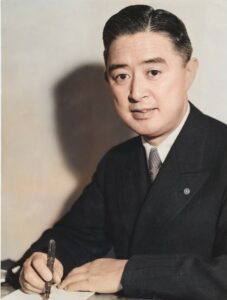
                             Prince Iyesato Tokugawa (1863-1940)      Takashi Komatsu (1887-1965)

Prince Tokugawa was the Heir to the last Shogun, a dynasty that had ruled Japan for 260 years. He served as President of Japan’s Upper House of Congress, was President of the Japanese Medical Association. And held many other leadership positions, shaping international and domestic policies of Japan. Based on his humanitarian accomplishments, US newspapers called him The Prince of Peace. It was only after his passing in 1940, that Japan was pressured by militants to enter WWII against the Allies.

Announcing an important new biographical work released in late 2024:

The Cherry Blossom Weeps for Me:  A Quest for the Dawn of Peace, by James Mikel Wilson.

This illustrated biography highlights the untold story of how Prince Tokugawa’s outstanding legacy lived on through his impressive protégé, the Japanese American statesman, Takashi Komatsu. Komatsu relit the torch of friendship and alliance between the US and Japan following WWII. Working with influential American leaders such as General MacArthur, John D. Rockefeller III, and Secretary of State Henry Kissinger, as well as many others.

Print and Kindle Edition


When the author, James Mikel Wilson, first contacted me several years ago, it was a pleasant surprise. Wilson had read the The Emperor and the Spy, I’d written and was familiar with the illustrated Prince Tokugawa biographies that followed: The Art of Peace and The Art of Diplomacy. Those biographies described Komatsu during the years proceeding WWII. However, Wilson felt Komatsu deserved a biography to reveal how significant Komatsu was during the decades following WWII in re-kindling the strong friendship and alliance between the US and Japan.

“The Cherry Tree Weeps For Me” gives an intimate view of US / Japanese relations during the first 70 years of the 20th Century, beginning the journey through the eyes of twelve old, Komatsu. Who immigrated alone to America to seek his fortune. He would become a vital bridge between the East and West, meeting with Prime Ministers, Generals, US Presidents, and Secretaries of State. While maintaining his integrity and humility. This biography is also a testimonial to Monmouth University in Illinois, which Takashi Komatsu and the James Wilson attended. The book highlights many other alumni from that fine learning institution who took heroic and humanitarian roles linked to international relations – You’ll likely find yourself becoming a friend of Takashi Komatsu, seeing his life devoted to the highest values of humanity: joy, peace, love, and mutual respect.

Circa 1935: Takashi Komatsu takes the place for Prince Tokugawa, who was unable to attend the above diplomatic event. Source: America-Japan Society Press Photo [color enhanced].

Below is a description from the back of the above Photo.

American “Embassy Day” held in Tokyo to Honor New American Consul General and Secretaries. Takashi Komatsu, pinch-hitting for Prince Tokugawa as toastmaster at a recent luncheon of the America-Japan Society held in the Imperial Hotel. This event honored the Consul General and Mrs. George A. Makinson (of San Francisco), first Secretary of the Embassy and Mrs. Stuart E. Grummon (of Newark, N.J.), and Second Secretary and Mrs. W.T. Turner (from Emory, Georgia). Mr. Komatsu [standing], and to his right: Mrs. Makinson (with fur), Mr. Grummon and Mrs. Turner: and to his left: Mrs. Grummon and Consul General Makinson (baldish).

Mr. John L. Curtis, Far Eastern manager of the National City Bank of New York, said he was glad to return to Tokyo, his second home, after a summer in New England. Non-Embassy guests present included Mr. John Moorris, chief of the Far East bureau of the United Press, from Shanghai: Mr. Archibald T. Steele, of the Far East Bureau of the Chicago Daily News; and Captain Maxwell representing the Chicago Tribune, en route from the United States to Berlin via Siberia.


In many ways, The Cherry Tree Weeps for Me, is a sequel to the below books.


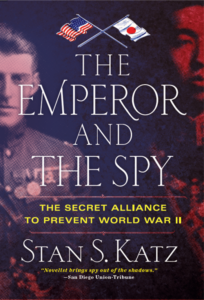
Mashbir was a brilliant US intelligence agent. During the 1920 and ‘30s, he allied with Prince Tokugawa, promoting amity between their nations. It was only after Tokugawa’s passing that militants pushed Japan into war. 

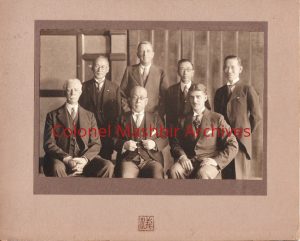
April, 1937: Imperial Hotel, Tokyo, following a Pan Pacific Club luncheon hosted by Prince Iyesato Tokugawa to honor Colonel Sidney Mashbir’s return visit to Japan. Tokugawa is seated adjacent to his American friend and ally, Mashbir. Accompanying them are several of Tokugawa’s other Japanese and American advisers. There was a rising militant movement in Japan and Mashbir was on a dangerous undercover mission. During Mashbir’s visit, Tokugawa heroically placed his own life in danger by sharing top secret intelligence information with Mashbir to bring back to the U.S. that might have preserved peace between their nations. However, their efforts were undermined. The novel The Emperor and the Spy highlights this untold story.

  • Despite their best efforts, WWII could not be stopped….Colonel Mashbir was then recruited by General Douglas MacArthur to command a top-secret intelligence organization ATIS (Allied Translator and Interpreter Section). ATIS grew to almost 5,000 members, and significantly shaped the successful Allied battle strategy in the Pacific, dramatically shortening the war. ATIS was mainly composed of thousands of first generation Japanese Americans (Nisei) who patriotically volunteered to serve under Mashbir’s command, translating and interpreting strategic military documents coming in from the Pacific battlefields. While also interrogating Japanese prisoners of war. And many also heroically went into the battlefield to serve at the front lines. Based on their major contributions, Colonel Mashbir felt the injustice of Presidential Executive Order 9066 that resulted in the illegal imprisonment of  loyal Japanese. Approximately 112,000 persons were sent  to “relocation centers” that would be their home for the duration of the war. Nearly 70,000 of the evacuees were American citizens. There were no charges of disloyalty against any of these citizens. Nor was there any means they could appeal their loss of property and personal liberty. 
  • Colonel Mashbir swore that once the war was over, he would devote himself to letting the world know of the major contributions made by patriotic Japanese Americans who had served under his command in ATIS.
  • Colonel Mashbir took a major role in ending WWII and orchestrated the Japanese Surrender Signing Ceremony. Thereby avoiding a major destructive battle on mainland Japan.
  • Mashbir arranged for General MacArthur and Emperor Hirohito to meet, to plan the rebuilding of Japan and the rekindling of US / Japan friendship. Mashbir served as the translator and facilitator.


 Back cover: The Emperor and the Spy

Published 2015, 2017, 2019

Available in Print, Kindle, and Audiobook


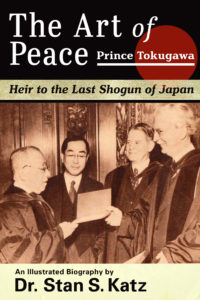
Here are biographies that highlight the fascinating life of Prince Iyesato Tokugawa.

  Published 2019

KINDLE EDITION

DESCRIPTION OF BOOK COVER PHOTO:

When WWII ended, for various geopolitical reasons there was an urgent agenda in place to leave behind the details of the period leading up to that tragic conflict. And instead, the goal was to expediently reestablish Japan and the U.S. as friends and allies. This resulted in much of the significant peaceful Japanese diplomatic engagement during the prior decades to that war being lost, forgotten, or destroyed – For instance, the above book cover photo comes from what might well be the last remaining crumbling copy of a 1934 Japanese magazine. It presents Prince Tokugawa receiving an Honorary Doctor of Laws Degree from the University of Southern California. The president of the university Dr. Rufus B. von Kleinsmid hands the certificate to Prince Tokugawa. (Left to right in photo: Prince Iyesato Tokugawa; Iyemasa Tokugawa; George I. Cochran; Dr. Rufus B. von Kleinsmid.)

This presentation took place during a special luncheon given March 19, 1934 in Los Angeles, hosted by George I. Cochran, the president of the school’s Board of Trustees. Prince Iyesato Tokugawa was accompanied by his son Iyemasa, the newly appointed Japanese Minister to Canada.

The Los Angeles Times stated that this honorary degree was given to Prince Tokugawa “in recognition of distinguished service in international statesmanship,” and for his “support of many philanthropic and educational movements.”

In accepting the honor, Tokugawa respectfully responded, 

“He wished to receive it in the name of the Japanese people as a whole rather than as a personal distinction.” 

The Los Angeles Times stated that a banquet dinner was to be hosted by the Japan-America Society of Los Angeles to honor Prince Tokugawa’s visit. The Governor of California and the former Mayor of Los Angeles planned to attend.

Surprisingly, the University of Southern California currently has no record of this event having taken place. 

And it’s an intriguing coincidence that during the following year, 1935, President Franklin D. Roosevelt was also awarded an Honorary Doctor of Laws Degree from USC, on October 1, 1935. Prince Tokugawa and President FDR knew each other well. During Tokugawa’s 1934 visit to the U.S. the  two men met and discussed ways in which they could maintain amity between their nations. Prince Tokugawa invited FDR to visit Japan with hope that a face to face meeting between US and Japanese leaders including the Japanese Royal Family might strengthen their friendship and understanding.

*The publication of THE ART OF PEACE was brought to the attention of the leadership of USC, revealing significant forgotten history about their school from over 85 years earlier – It is exciting that not long afterwards, USC awarded honorary degrees to former USC Nisei (first generation Japanese-American) students who had not been allowed to continue their education at USC following their release from internment camps. In which they had been unfairly imprisoned during WWII – Many of these former students were deceased, so their honorary degrees were conferred to their families. There is a USC Annenberg Media article about this college degree presentation titled: “President Folt conferred honorary degrees to the families of 33 former Nisei students.” Written by Clara Preve-Durrieu, April 06, 2022. Thus correcting an injustice from the distant past.


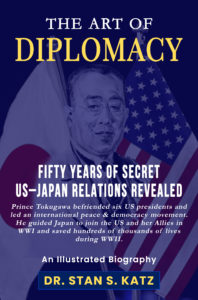
The ART OF PEACE was republished in a General Reader Edition titled: THE ART OF DIPLOMACY.

(Note:  THE ART OF PEACE  has an additional 100 pages of historical notes to assist researchers.)

Print and Kindle Edition


Our times need inspiring role models in the art of peaceful and respectful international diplomacy – It would improve international relations in Asia to recognize Prince Tokugawa’s major humanitarian achievements as President of the Red Cross Society of Japan, promoting the creation of demilitarized safe zones in China. These havens helped protect the lives of hundreds of thousands of Chinese civilians during the years leading up to and during WWII. They also served as refuge for tens of thousands of European Jews fleeing the Holocaust. 

During 1921-1922, Prince Tokugawa headed the Japanese Delegation to the Washington Naval Arms Limitation Conference, hoping to maintain peace.

To combat racism, during the 1920s and ’30s, Prince Tokugawa incorporated Lincoln Essay Contests into all Japan’s public schools and universities. Giving awards to students who wrote the best essays honoring the humanitarian principles of Abraham Lincoln.  

Prince Tokugawa took a guiding role in 1912 Japanese gifting of Cherry Trees to Washington, D.C. evolving into the National Cherry Blossom Festival, Our capital’s largest annual international goodwill celebration. This achievement has also surprisingly not yet been recognized.

The timing is right to bring deserved international attention to these outstanding statesmen: Prince Tokugawa and Takashi Komatsu.


Reader Praise for:

The Emperor and the Spy

The Art of Peace

The Art of Diplomacy

The Cherry Tree Weeps For Me


Filed Under: Tokugawa Archives Tagged With: 1934 USC Bestows Honorary Doctor of Laws Degree on Prince Tokugawa, Abraham Lincoln, Abraham Lincoln and Japan, Abraham Lincoln Commemorative Medal, Ambassador Grew, Ambassador Grew and Prince Tokugawa, Ambassador Joseph C. Grew, Ambassador Joseph Grew, American “Embassy Day” held in Tokyo, Anti-Asian Racism, Archibald T. Steele, Baron Eiichi Shibusawa, Baron Shibusawa, Baron Shibusawa Eiichi, Captain Maxwell representing the Chicago Tribune, Carol L. Folt, chief of the Far East bureau of the United Press, Clara Preve-Durrieu, Colonel Mashbir, Colonel Sidney Forrester Mashbir, Colonel Sidney Mashbir, Consul General George A. Makinson, Dr. Rufus B. von Kleinsmid, Eiichi Shibusawa, Far Eastern manager of the National City Bank of New York, FDR, Frank A. Vanderlip, Frank Vanderlip, General Douglas MacArthur, General MacArthur, George A. Makinson, George I. Cochran, Heir to the Last Shogun, Heir to the last Tokugawa Shogun, Henry Kissinger, Henry Kissinger and Japan, History of Racism, History of the University of Southern California, History of University of Southern California, History of USC, Honorary Doctor of Laws Degree from USC, Honoring Abraham Lincoln, Iesato Tokugawa, Iyemasa Tokugawa, Jacquinot Safe Zone, James Mikel Wilson, Japanese Internment Camps, Japanese Racism at USC, John D. Rockefeller III, John L. Curtis, John Moorris, Komatsu and Tokugawa, Komatsu Takashi, Lincoln Essay Contest, Lincoln Essay Contests, Monmouth University, Monmouth University History, of the Far East Bureau of the Chicago Daily News, president abraham, President Abraham Lincoln, President Folt conferred honorary degrees to the families of 33 former Nisei students, President Franklin D. Roosevelt, Prince Iyemasa Tokugawa, Prince Tokugawa Iesato, Prince Tokugawa Iesato Archives, Racism at USC, Shanghai Safe Zone, Shogunate, Stan S. Katz, Stan S. Katz archives, Stan S. Katz blog, Stuart E. Grummon, Takashi Komatsu, Takashi Komatsu and Prince Tokugawa, Takashi Komatsu businessman, Takashi Komatsu diplomat, Takashi Komatsu industrialist, Takashi Komatsu international statesman, The art of diplomacy, The Art of Diplomacy biography, The Art of Peace, The Art of Peace biography, The Cherry Blossom Weeps for Me, The Cherry Blossom Weeps for Me:  A Quest for the Dawn of Peace, Tokugawa and Grew, Tokugawa and Komatsu, Tokugawa Iesato, US Japan relations, USC and Japan, USC Annenberg Media, USC Bestows Honorary Doctor of Laws Degree, USC Bestows Honorary Doctor of Laws Degree on Prince Tokugawa, USC History, USC President Folt, W.T. Turner

Have you ever wondered how US and Japan re-established their friendship and alliance following the trauma of WWII? Here’s a new biography that honors an amazing Japanese American statesman, Takashi Komatsu, who guided this major achievement.

October 11, 2024 by Stan S. Katz Leave a Comment


The Cherry Tree Weeps for Me: A Quest for The Dawn of Peace chronicles one man’s lifelong pursuit of peace before and after the Pacific War. Takashi Komatsu’s incredible story is told alongside Japan’s pre- and post–WWII history and the country’s remarkable rebirth as a vibrant democratic global economic powerhouse. Komatsu’s life journey from a 12-year-old immigrant living in New York City’s YMCA  to his delivery of Harvard’s 1911 commencement address—proves that real life can be stranger than fiction.

Komatsu’s rose to become the head of a large shipping company in Japan, allied with Prince Tokugawa heir to the last Shogun and the US Ambassador to Japan Joseph Grew, and became a respected international businessman and statesman. Risking incarceration and assassination, Komatsu made choices that defied military rulers and right-wing extremists as they edged Japan toward war and devoured a democracy.

Within days of the war’s end, inconceivable events led General MacArthur, the Supreme Commander of the Occupation Forces, to seek Komatsu’s aid to help rebuild Japan and restore amity with the United States. Repairing friendship between the two countries was complex and daunting. Komatsu went far beyond this, forging relationships with US presidents, ambassadors, scholars, philanthropists, and leaders in the public and private sectors of both Japan and the United States. His legacy is a powerful reminder of the importance of tenacity, empathy, and understanding in international affairs, offering an intimate view of US/Japanese relations during the first 70 years of the 20th Century.

If you enjoy books like Malcolm Gladwell’s The Bomber Mafia, you’ll love The Cherry Tree Weeps for Me. Find out what transpired after the devastation and one man’s unsung influence that restored a stolen democracy.


About the Author

Born during World War II in Moline, Illinois, James Mikel Wilson grew up in the lingering dark shadows of that era. His father and uncles fought in WWII, moved on with their lives, and rarely ever discussed it.

Over four decades, Wilson’s work in international marketing and personal travel took him to five continents, thirty-three countries, and forty-seven states. He craved to understand the history, culture, and politics of each place visited. Wilson’s lingering itch to better grasp the fuses that sparked WW II in Europe and Asia led to two meticulously researched books.

His first book, Churchill and Roosevelt: The Big Sleepover at the White House (2015), earned an Author Academy Award. Wilson was invited to participate in a book signing during America’s National Churchill Museum’s 50th-anniversary celebration. In 2020, the International Churchill Society’s annual meeting in London featured the book and a reading of Alliance, a stageplay version of the book.

All book sale proceeds from “The Cherry Tree Weeps for Me: A Quest for The Dawn of Peace” will be donated to Monmouth College, located in Monmouth, Illinois, the alma mater of the Author and of Takashi Komatsu.


Publication date November 1st, 2024.

Available through the links below:

Amazon eBook: https://www.amazon.com/dp/B0DHV1RPHH  

Amazon Paperback: : https://www.amazon.com/dp/1662952775

Barnes and Noble: https://www.barnesandnoble.com/w/9781662952777     On this site, enter the author name James Mikel Wilson or Book Title and then select eBook or paperback.


READER PRAISE FOR THIS BOOK

“James Mikel Wilson’s The Cherry Tree Weeps for Me is a gripping journey through time. With the skill of a seasoned storyteller, Wilson paints a vivid portrait of a man who straddled two worlds, from Takashi Komatsu’s beginnings as a twelve-year-old boy venturing overseas to seek his destiny to his pivotal role in shaping Japanese-American relations in the wake of World War II. Meticulously researched and utterly absorbing, Wilson’s book delves deep into the complexities of Komatsu’s life. What emerges is a tale of resilience, sacrifice, and unwavering dedication to peace and democracy. The Cherry Tree Weeps for Me is not just a historical account; it is a testament to the power of compassion, courage, and diplomacy in the face of adversity, a poignant story that lingers in the mind long after the final page is turned.”

—Monte Francis. Multiple Emmy Award-winning journalist and News Presenter, France 24; Author of Ice and Bone and By Their Fathers Hand.


“Wilson puts on full display in this book his liberal arts education to tell the story not only of the unsung hero, Takashi Komatsu, who was educated at Wilson’s and my alma mater, but of the history of the relationship between Japan and the United States. Wilson ties together these threads and alerts us to the incredible coincidences. These included living next door to a curious younger boy in Monmouth, Illinois, who would later become responsible for one-half of the US occupation of Japan and, by happenstance, cross paths with Komatsu in Tokyo after 35 years of separation. They would collaborate to begin reconstruction, and their sons would become Monmouth College classmates after the war.”

—Dan Cotter. Author of The Chief Justices –The Seventeen Men of the Center Seat; Member of the Board of Trustees of Monmouth College, and 2024–25 President of the National Board of Bar Presidents.


“Unearthing the obscure life of an unsung hero, Wilson’s newest book masterfully unravels how Komatsu emerges as a catalyst for unity and prosperity in post-WWII Japan. The Cherry Tree Weeps for Me provokes introspection of the age-old quandary of ‘what next’ after conflict termination. Perhaps Wilson employs Komatsu’s character and actions to inspire Americans during this time of extreme political divisiveness and mistrust. Will we forsake revenge and retribution by uniting to fortify peace, democracy, and prosperity? If so, who will emerge as our Komatsu?”

—Colonel Kay A. Smith. Colonel, USAF (Retired).


“James Mikel Wilson’s book takes us on a wonderful deep dive into the incredible life of Takashi Komatsu and his dedication to peace and friendship between the US and Japan. I particularly enjoyed Wilson’s exploration of Shofuso House, which I have had the privilege of experiencing firsthand. It is a living symbol of the enduring friendship between the two nations, largely thanks to Komatsu’s efforts. In the years following the San Francisco Peace Treaty, Komatsu played a pivotal role in fostering cultural exchange and understanding between the US and Japan, including his work with John D. Rockefeller III to bring Shofuso to life. This traditional Japanese house and garden, originally exhibited at the Museum of Modern Art in NYC and now permanently displayed in Philadelphia, captivated American audiences and reignited interest in Japan’s rich heritage.”

—Alan Wilkis. Artist (Big Data), Music Producer, and Composer for Film and TV.


“I applaud James Mikel Wilson for his insightful narrative of Takashi Komatsu. When conflicts end, like the current Russian-Ukrainian War, who will be the artist of peace to bring warring partners past the residual anger to cooperation and perhaps friendship? Komatsu was such a man, and his impact seems incomprehensible.”

—Dr. Stan S. Katz. Author of The Art of Diplomacy and former San Diego World Affairs Council Board Member.                                                                   

*The Art of Diplomacy is the illustrated biography of Prince Iyesato Tokugawa (1863-1940), an international statesman who promoted peace and democracy. Tokugawa was so influential that it was only after his passing in 1940, that militants were able to push Japan into joining the Axis Powers during WWII. Prince Tokugawa allied with and mentored Takashi Komatsu.  Tokugawa’s peace-loving legacy would live on after WWII, through the creative efforts of Takashi Komatsu, who took a pivotal role in bringing the US and Japan together again as friends and allies.


“I was absolutely blown away by the volume of Wilson’s research on Japan’s geopolitical history and the details of Takashi Komatsu’s life—particularly how they intersected with important global events. Komatsu’s influence on the early years of Japan’s post-WW II recovery and renewed friendship with the US is still felt today, as evidenced by their strong strategic and economic alliances. Wilson’s book illustrates that real life can be as captivating as fiction.”

—Jeff Rankin. Retired Editor and Historian, Monmouth College.


Wilson’s new book helps readers understand how Takashi Komatsu was influenced by his mentors in the US and Japan. These influences played a major role in his ability to form alliances and work as a catalyst to building the Japanese economy and the strong economic ties between Japan and the US. —Gary Randazzo. Sr Lecturer, C.T. College of Business, University of Houston; Former EVP and General Manager, San Francisco Chronicle and Sr. VP Houston Chronicle.


BELOW IS A MESSAGE FROM THE AUTHOR:

To guide others to discover Komatsu’s unheralded contributions to peace, I respectfully ask that you share this announcement with family, friends, and acquaintances so they can know how this remarkable man shaped our history.

I would also appreciate your posting a reader review on Amazon or Goodreads to help others learn about Komatsu and his astonishing true story. Amazon elevates the visibility of a new book based on sales and the number of reviews posted.

I hope you enjoy the front cover of The Cherry Tree Weeps For Me. After researching hundreds of images and dozens of photographers, I selected one of Kunihito Ohtsubo’s stunning photos. He graciously allowed me to use his work for the cover. Ohtsubo is among Japan’s finest photographers and has my sincere gratitude and appreciation. (Instagram @kunihito_ohtsubo)

Sincerely,

Jim

James Mikel Wilson

Houston, TX

Author: www.jamesmikelwilson.com

Instagram: @jamesmikelwilson


Below is a link to the Harvard Magazine Jan.-Feb. 2026 article titled: A Congenial Voice in Japanese-American Relations, about Takashi Komatsu and Prince Tokugawa.

https://www.harvardmagazine.com/alumni/harvard-takashi-komatsu-japanese-american-relations

Filed Under: Tokugawa Archives Tagged With: A Congenial Voice in Japanese-American Relations, Alan Wilkis, Ambassador Grew, Baron Shibusawa, Baron Shibusawa Eiichi, Colonel Kay A. Smith, Dan Cotter, Dr. Stan Katz, Eiichi Shibusawa, Gary Randazzo, General MacArthur, Harvard Law School, Harvard Magazine, Harvard Magazine and Takashi Komatsu, Harvard Magazine Jan.-Feb. 2026, Harvard University and Takashi Komatsu, Henry Kissinger and Japan, Historical biography, International diplomacy, James Mikel Wilson, James Wilson, Japanese / American History, Japanese History, Jeff Rankin, John D. Rockefeller and Japan, John D. Rockefeller III, Kissinger and Japan, Komatsu Takashi, Kunihito Ohtsubo, Monmouth College, Monte Francis, Post-WWII History, Prince Iyesato Tokugawa, Prince Tokugawa, Prince Tokugawa and Ambassador Grew, Prince Tokugawa Iesato, Prince Tokugawa Iesato Archives, Rockefeller Family and Japan, San Diego World Affairs Council, Shofuso House, Stan S. Katz, Stan S. Katz archives, Stan S. Katz blog, Takashi Komatsu, The art of diplomacy, The Art of Diplomacy biography, The Art of Peace biography, The Cherry Tree Weeps for Me: A Quest for The Dawn of Peace

Welcome!

April 13, 2020 by Stan S. Katz Leave a Comment


The illustrated Blog posts on this website focus on U.S. Japan relations and Japanese history.

Katz was a Specialist in Rare Books and Ephemera when he acquired the personal papers of a Master Spy, Colonel Sidney Forrester Mashbir (1891-1973). These fascinating materials, combined with his passion for history and many years of research resulted in the exciting historical novel THE EMPEROR AND THE SPY, followed by a sequel, an illustrated biography titled: THE ART OF PEACE.

The Emperor and the Spy highlights the adventurous life of Colonel Mashbir and reveals his alliance during the 1920s and 1930s with many Japanese leaders, including members of the Japanese Royal Family. These influential Japanese included Prince Tokugawa Iesato (1863-1940) President of Japan’s upper house of congress for thirty years & Baron Shibusawa Eiichi, who is known as the Father of the Modern Japanese Economy. These fine Japanese statesmen blended international diplomacy, art and cultural exchange, as well as business and commerce to bring nations together in friendship. 

Colonel Mashbir in his personal writings emphasized:

Prince Tokugawa was the true hidden power behind the Imperial Throne & was so politically influential in supporting democracy and peace, it was only after his death in 1940, that Japan was pressured into joining the Axis Powers in WWII.

In the process of rapidly moving forward towards reconciliation between the U.S. and Japan following that tragic conflict, much of the history of the first four decades of the 1900s were lost or forgotten, with little recognition given to heroic efforts by many Japanese and non-Japanese who strove to prevent that war. Many readers of The Emperor and the Spy wanted to know more about the impressive individuals depicted in the novel and the period they lived, leading to the Prince Tokugawa biography: The Art of Peace. 


Praise for The Art of Peace

“Your new biography is the perfect follow on to your historical novel The Emperor and the Spy about Colonel Mashbir, a  superlative history that was a fun read, yet it was also eye opening to the story behind the scenes in that critical time of history between the west and Japan.  Here is all that anyone who is a serious student of conflict and history of Japan could possibly want.  The illustrated version of pure history makes this biography as fun to read as a novel. I enjoyed every chapter.  Just as a footnote, I loved the way you ended the book with President Obama’s and Japanese Prime Minister Abe’s speeches – Those words are exactly how all our minds should work in building relationships between peoples that are of different cultures.  I am richer in knowledge about all the amazing heretofore unknown to me heroes that you portrayed, especially Prince Tokugawa.

Paul Ringwood U.S. Navy Commander (retired)


“I am very pleased to learn that you have now published ”The Emperor and the Spy”…‘’I have learned a lot about Colonel Mashbir and his real friendship with Prince Iesato Tokugawa which was a pleasant surprise for me.” “I wish you all the best & best of luck on your new book on ‘’Tokugawa Iesato.”

Kazuo Kodama, former Ambassador of Japan to the United Nations / current Ambassador of Japan to the European Union


“This is a really interesting and understudied topic.”

Professor Benjamin Uchiyama, Ph.D. History, University of Southern California


“The importance of preventing war is rarely given recognition through literature and in accounts of history.  It can be every bit as exciting as glorified accounts of war and certainly a better approach.”

Professor Claire Langham, former President of the East-West Center of Southern California Chapter, an organization which promotes positive relations among the people and nations of the United States, Asia, and the Pacific through cooperative study, research, and dialogue.


“We appreciate your kindness and all the work you have done to promote understanding of Shibusawa Eiichi and US-Japan relations as a whole. I wish you all the best in your current and future endeavors.”

With gratitude, Toru Shigehara

Head Librarian/Information Resources Center

Shibusawa Eiichi Memorial Foundation


In 2021, the general reader digital edition of THE ART OF PEACE was revised, retitled, and newly published as THE ART OF DIPLOMACY to better represent the broad spectrum of Prince Tokugawa’s achievements.

AVAILABLE IN PRINT AND KINDLE EBOOK EDITION


Filed Under: Tokugawa Archives Tagged With: 25th Anniversary of Rotary International, Allied Translator Interpreter Section, Ambassador Grew, Ambassador Katsuji Debuchi, Ambassador of Japan to the United Nations, America-Japan Society, Armenian Genocide, Arms Limitation, ATIS, Baron Eiichi Shibusawa, Baron Shibusawa, Baron Shibusawa Eiichi, Chinese History, Chiune Sugihara, Colonel Mashbir, Colonel Mashbir Archives, Colonel Sidney Mashbir, Commodore Perry, Communism, Crown Prince Hirohito, Democracy, Diplomacy, Director of Planning and Communications for: The Missouri School of Journalism at University of Missouri, East-West Center of Southern California, Eiichi Shibusawa, Emperor Akihito, Emperor Hirohito, Garden Club of America, Garden Club of America Visits Japan 1935, General Douglas MacArthur, General MacArthur, History of the Cherry Blossom Festival in Washington D.C., History of the Garden Club of America, History of the National Cherry Blossom Festival, History of University of Southern California, Holocaust, International Friendship, International Relations, Iyemasa Tokugawa, Japan China relations, Japan U.S. Relations, Japan-America Society, Kazuo Kodama, Kazuo Kodama Ambassador of Japan to the European Union, Mashbir Archives, National Cherry Blossom Festival, Paul Ringwood U.S. Navy Commander, Ph.D. History, President Barack Obama, President Warren Harding, Prince Iemasa Tokugawa, Prince Iyemasa Tokugawa, Prince Iyesato Tokugawa Archives, Prince Takamatsu, Prince Tokugawa Archives, Prince Tokugawa Iesato Archives, Prince Tokugawa Yoshihisa, Princess Takamatsu, Professor Benjamin Uchiyama, Professor Claire Langham, Rotary History, Rotary International History, ROTC History, Safe Zones, Safes Zones, Saving Jewish Lives in WWII, Shanghai Ghetto, Shanghai Safe Zone, Shibusawa Archives, Shibusawa Eiichi, Shibusawa Eiichi Memorial Foundation and Museum, Shogun Yoshinobu, Stan S. Katz, Suzette Heiman, The Art of Peace, The Art of Peace biography, The Emperor and the Spy, Tokugawa Iemasa, Tokugawa Iyemasa, Tokugawa Shogun Dynasty, Tokugawa Shogun History, Toru Shigehara Head Librarian/Information Resources Center Shibusawa Eiichi Memorial Foundation, U.S. Japan relations, U.S.-Japan History, University of Southern California, World War One, World War Two

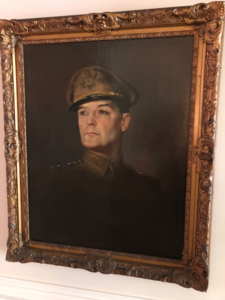
Colonel Sidney Mashbir’s widow Alice gifted her husband’s portrait of General MacArthur to his good friends Marine Captain William Warren and Marine Colonel Robert F. Warren…Robert and William shared their personal experiences with their friend Sidney.

April 11, 2020 by Stan S. Katz 1 Comment


Having studied and written about Colonel Sidney Mashbir, it was my good fortune when Robert Warren and his son William Warren contacted me in 2018 to discuss their close friendship with Colonel Mashbir many years earlier.

William and Robert generously shared various historical materials linked to Colonel Mashbir (1891-1973). This blog post will present a number of those items, as well as Robert and William’s recollections of Colonel Mashbir. Also included is biographic material about Robert and William Warren, who being younger than Mashbir, were inspired and influenced by Colonel Mashbir’s heroic dedication to our nation.

-The oil painting illustration of General Douglas MacArthur shown above is courtesy of the William Warren.


Further details about the General MacArthur oil painting.

Below is an email sent by William (aka Bill) dated April 17, 2018, giving more info about the history of the painting and why it was gifted to him.

“Stan, here are photographs of the portrait of General MacArthur.  I have provided three views, one where I stood back in order to give you an idea of the relative size of it.

According to Alice Mashbir, she thought that Sid would have wanted me to have this portrait as it was one of his most loved things.  The portrait hung over his mantle at his house in Emerald Bay (Laguna Beach).  Also according to Alice, Sid acquired this portrait from an art store in New York (City I think) and it was a big secret about what he may have paid for it.  It was apparently commissioned by General MacArthur’s wife.  The story goes that when she discovered an infidelity she threw champagne at the portrait.  That may be true since one can clearly see very faint dribbles of something.

The artist of the portrait was Julian Lamar.  I am not sure when it was painted.  A bit about Julian Lamar:

Born Julian Kitchen Lamar Miller in Augusta, Georgia, he shortened his name to Lamar in 1922 to honor his mother’s family and to make his name more memorable as an artist. Although he began painting as a child, his family encouraged him to attend the United States Military Academy, from which he graduated in 1918. After the Armistice, he resigned his commission to concentrate on his career as an artist. Lamar lived for a while in Chicago, then moved to New York in 1920.

He maintained an active studio in New York, but traveled extensively to paint his subjects in their native surroundings. He painted many prominent figures, including Prime Minister Winston Churchill; President Franklin D. Roosevelt; Franklin H. Martin, President, American College of Surgeons; and Governor Frank Dixon, Alabama. He was also an accomplished landscape painter.

You can Google him…there is a lot of information about him on the web.

Enjoy Stan.  I will forward documents this afternoon.

Bill Warren”


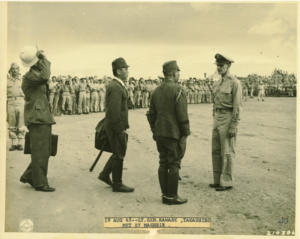
August 19, 1945, Lt. General Kawabe, Takashiro met by Mashbir.                Source of photo: courtesy of William Warren.                                      

Besides taking a decisive role in the winning of WWII, Colonel Mashbir also helped orchestrate the Japanese Surrender Signing Ceremony, officially ending the conflict. In the above photo, Mashbir receives the Japanese Surrender Signing Arrangement committee in Manila, Philippines. They would work together to organize the details for the surrender.

The term V-J Day represents both the initial announcement of Japan’s surrender on the afternoon of August 15, 1945 in Japan, and because of time zone differences, August 14, 1945 when it was announced in the United States and the rest of the Americas and Eastern Pacific Islands. V-J Day is also represented as September 2, 1945, when the actual signing of the surrender document occurred, officially ending World War II.


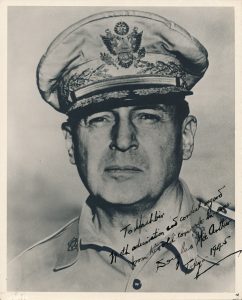
A Gift to Colonel Mashbir from General MacArthur

The Photo inscription reveals Mashbir’s significant role in winning World War Two.


“To Mashbir”


“With admiration and cordial regard from his old comrade-in-arms.”


“Douglas MacArthur”


“Tokyo – 1945”   


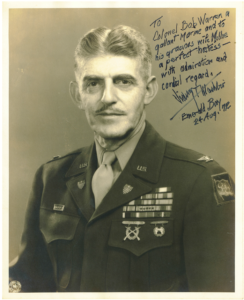
Twenty seven years later, in 1972, the below inscribed portrait photo of Colonel Mashbir was respectfully gifted to his good friend Robert Warren, who Mashbir addressed as:

“Colonel Bob Warren, a gallant Marine”.


Robert’s son, William, has added the below description linked to this photo.

“Here is a photo of Sid with an inscription to my Dad and Mother (Millie).  Mother passed away in January 2010, but she, my Dad, Sid and Alice became good friends over the years.  This photo is dated 1972.  There are two photos of my Dad that I thought you might like to have, one was his official USMC photo taken in 1969 I think and the other where he is posed on the jet was taken, I think, in 1965 (see below).  He was then a Lt. Colonel and was the Commanding Officer of the Marine Attack Squadron, VMA-331 based in Beaufort, SC.  The squadron flew the Douglas A-4 Skyhawk.  A side note, one of the previous Commanding Officers of VMA-331 was Lt. Colonel Don Conroy who was the “Great Santini” character in Pat Conroy’s novel of the same name.” 


­­­­­­­­­­­­­­­­______________________________


Presented below is further Information about Colonel Mashbir and other topics gathered during an interview with Colonel Robert F. Warren – May 18, 2018.

Colonel Robert F. Warren proudly mentioned that his son William had been an infantry platoon leader in Viet Nam, and that the survival rate for that position averaged only 4-6 months. Thank God he made it back.

Robert stated he spent many hours with Mashbir and recalled that Mashbir was angry with General Willoughby, who was General MacArthur’s chief of staff GHQ during WWII. Robert said that Mashbir would mockingly imitate Willoughby’s accent. Mashbir’s anger stemmed from his feeling that Willoughby had often prevented Mashbir from directly delivering urgent strategic information to MacArthur, and that Willoughby regularly took credit for many of Mashbir’s ideas.

Below are a number of other comments Colonel Warren made related to Colonel Mashbir.

-When Mashbir returned to the Imperial Hotel after surviving the Great Kanto Earthquake of 1923, the Hotel Manager Inmaru (sp?) responded as if, “He couldn’t be more surprised if he’d seen the Buddha step out of Hell.”

-Robert clarified a matter linked to the historical novel about Colonel Mashbir, titled The Emperor and the Spy. Robert said that Mashbir’s good friend James Moriarty (Marine) was sent to China first, then to Japan.

-Sidney Mashbir’s son Forrester (his older son) became the manager of entertainment at the Sands Hotel/Casino in Las Vegas.

-Robert met Don Mashbir (Sidney’s younger son) and Don’s wife Rosa.

-Sid told Don that Sid didn’t want heroics to keep him alive when he got near the end.

-Sidney Mashbir’s home was in Emerald Bay, in Laguna Beach, which has beautiful views.

-Sid came to Robert’s military retirement party.

-Sid started the Pan-Pacific Club of Tokyo. Robert said, “Sid had a strong positive feeling for the whole nation of Japan.”

-Robert stated, “Sid had respect for the top levels of the Japanese hierarchy who were against war; they were almost prisoners of the military or they were eliminated altogether.”

-When Mashbir was leaving Japan, he laid on the floor of the ship, so as not to see Mt. Fuji, because he was superstitious that if you do not wish to return to Japan, you should not look back at that magnificent mountain view.


William Warren wrote the below letter:

“I have just ordered two copies of your book [The Emperor and the Spy], one for my father and one for myself. Both of us had the pleasure of calling Colonel Mashbir our friend. I personally spent many, many hours with Colonel Mashbir at his home in Laguna Beach. He and his second wife, Alice were host to me on many, many weekends when I was a young Lieutenant in the US Marine Corps. Sid also invited me to the Army and Navy Club in Washington DC where I believe he was a charter member. He was a most amazing man and one of my all-time heroes!! After Sid’s death, Alice sent me the original oil painting of General MacArthur that was one of his prized possessions. This portrait hung over the mantel in his Laguna Beach home. Alice told me that Sid would have wanted me to have this portrait and that I was to forever keep this in my family, never giving it to a museum or selling it. That portrait still hangs in my home today. Alice also gave me a copy of Sid’s book, “I was an American Spy” and she endorsed the book for me.

I have not yet read your book, but would love to keep in touch with you. Thank you for honoring this great man.

(William) Bill Warren, 9026 Mossy Hill Lane, Indian Land, SC 29707.”


Presented below are William Warren’s comments after reading this novel:

“Review of “The Emperor and the Spy”

“A true story of intrigue, history and a little known American hero.”

By Bill Warren on May 27, 2018

“I had the good fortune to have met Colonel Sidney Mashbir when I was a newly minted Lieutenant in the Marine Corps. It was my distinct honor to have spent hours and hours with him over the years, visiting him both in his home in Laguna Beach, California and at the Army and Navy Club in Washington, DC where he enjoyed the status as a charter member. During those visits, Colonel Mashbir related hundreds of stories and showed me untold number of documents and I think I spent hundreds of hours listening to him. I am not sure what cemented the relationship I had with this fascinating hero, but I treasured every moment and consider him to have been among my very best friends, mentor and teacher. I am both in awe of and pleased with Stan S. Katz who recognized a real hero of our country and that he undertook the mission to write this book. His research for The Emperor and the Spy, appears to be meticulous and he tells a story that NEEDS to be told. Not many would ever have guessed that Colonel Mashbir served with General Pershing in Mexico. Likewise, who would have believed that Colonel Mashbir would have become so endeared with, respected by and maintained a secret alliance with the royal family of Japan prior to World War II. The Colonel indeed had a special relationship with Prince Tokugawa, the Emperor Hirohito and their families. Through these relationships, Colonel Mashbir made a valiant attempt to avert WWII in the Pacific. That is just part of the story. The other part is the intelligence work performed for General Douglas MacArthur during the war that, without a doubt, shortened the war with Japan. Even after the war, Colonel Mashbir utilized his deep understanding of the Japanese and his friendship with many of its leaders to make major contributions to the peaceful occupation of Japan and without those efforts, the outcome of post-war Japan would have been a completely different country.

Stan Katz skillfully weaves this story into a very readable and exciting historical fictionalized novel. His facts, based on the stories told to me by Colonel Mashbir are genuine and because of the nature of Colonel’s work, are irrefutable. Stan easily stands with Bernard Cornwell, Jeff Sharra and Michael Sharra in his skill constructing a superb story around historical facts and with Brad Meltzer in his ability to develop historical characters while keeping the adventure exciting. If you like historical novels and want to learn about a real American hero, you will find it in this magnificent book.” Note: On May 13th, 2018, Bill Warren called his father Robert and related, “That his Dad had read the first half of The Emperor and the Spy, and was thoroughly enjoying it.”


Another Interview with William Warren linked to Colonel Mashbir.

William described Sidney Mashbir as the consummate gentlemen. Rarely, if ever, did he hear him raise his voice. William commented that I had captured the essence of the man in The Emperor and the Spy, and that he thought Sidney and I would have gotten along well, which made my day. 

William confirmed what his father Robert had told him, that during WWII, Mashbir hated General Willoughby and they had numerous confrontations/tussles. William felt that Willoughby outranked Mashbir and Mashbir had to take it. “Mashbir couldn’t stand the man.” William said, “Willoughby might have blocked Mashbir from getting directly to General MacArthur, but Mashbir probably violated the chain of command to get to General MacArthur on occasion.”

William stated I got the story right in the novel, that when recruiting the Nisei for the WWII intelligence organization ATIS, it helped that they could both speak and read the language. Speaking Japanese is relatively easy, but reading it is much more difficult.

William said he thought that MacArthur felt somewhat abandoned in the Pacific theater, with most of the military resources going to the European theater of war.


THESE BOOKS OFFER FURTHER INSIGHTS INTO THE FASCINATING AND EXCITING EXPLOITS OF COLONEL MASHBIR.


This biography highlights one of Colonel Mashbir’s most influential Japanese allies, Prince Tokugawa Iesato.

During the 1920s and ’30s, Mashbir and Tokugawa heroically strove to maintain the goodwill between their nations. 

Available in Print and Kindle EBook


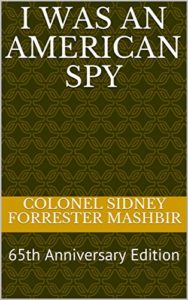
EBOOK REPUBLICATION OF COLONEL MASHBIR’S 1953 AUTOBIOGRAPHY


PARTING NOTE:

It was a pleasure meeting Robert and William Warren, two impressive gentlemen who proudly served our nation.

Colonel Robert F. Warren wrote a screenplay, and in association with U.S. military historian and writer, Navy Lt. Charles Wyatt, they completed an adaptation of that screenplay into a short novel titled: The Elephants of Trabong – This dramatic and engaging story is linked to Robert’s experiences during the Viet Nam War, where his assignment was to win the hearts and minds of the Vietnamese citizenry thru improving the economic life in their villages. It would definitely make a great movie!

*Representatives of the film industry can receive a synopsis of the screenplay and novel thru the below contacts:

William Warren:   [email protected]

Colonel Robert F. Warren also wrote an autobiography on his personal life story & military experiences in three wars. 

Blog link on the website for more information about Colonel Warren and his autobiography “ONLY IN MY AMERICA”.


Filed Under: Mashbir Archives Tagged With: Alice Mashbir, Allied Translator and Interpreter Section, American Spies, Army and Navy Club, Army and Navy Club in Washington DC, ATIS, Bernard Cornwell, Brad Meltzer, Charles Willoughby, Charles Wyatt, CIA, Colonel Mashbir, Colonel Mashbir Archives, Colonel Robert F. Warren, Colonel Robert Warren, Colonel Sidney Forrester Mashbir, Colonel Sidney Mashbir, Don Mashbir, Donald Mashbir, Douglas MacArthur, Dwight D. Eisenhower, first U.S. Military all-helicopter squadron, Forrester Mashbir, General Charles Willoughby, General Douglas MacArthur, General MacArthur, General Pershing, General Pershing in Mexico, General Willoughby, Great Kanto Earthquake, Helicopter Squadron 161, Heroes of World War Two, History of the CIA, HMH-363, Hotel Manager Inmaru, https://www.airzoo.org/, James Moriarty, Japanese Surrender Signing Ceremony, Jeff Sharra, Julian Kitchen Lamar Miller, Julian Lamar, Kalamazoo Aviation History Museum, Kelvin Bailey, Korean War, Lieutenant Charles Wyatt, Lord Louis Mountbatten, Lt. Colonel Don Conroy, Lt. General Kawabe, Marine Attack Squadron-331, Marine Corps League, Marine Corps League Toys for Tots, Mashbir Archive, Mashbir Archives, Michael Sharra, Michigan Aviation Hall of Fame, Mickey Mouse One, ONLY IN AMERICA, ONLY IN AMERICA By Robert (Bob) Warren, Pan-Pacific Club of Tokyo, Sands Hotel/Casino in Las Vegas, Sidney F. Mashbi, Sidney Mashbir, South Korean President Syngman Rhee, Stan S. Katz, Stan S. Katz blog, Takashiro, The Air Zoo, The Elephants of Trabong, The Emperor and the Spy, Toys for Tots, V-J Day, Viet Nam War, Vietnam War, VMA-331, Walt Disney, Walt Disney and Toys for Tots, William Warren, Willoughby, World War Two, WWII

Copyright © 2026 Stan S. Katz