Stan. S. Katz

Author of The Emperor and the Spy

  • Home
  • Author
  • Books
  • Reviews
  • Educators
  • News
  • Audiobook & Timeline
  • Mashbir Archives
  • Tokugawa Archives
  • Contact
Follow Stan on FacebookFollow Stan on TwitterFollow Stan on GoodreadsFollow Stan on RSS

Sign Up for Future Blogs Linked to Colonel Mashbir and Japanese History

Read the Intro Posts

INTRODUCTION TO THE ART OF PEACE

WELCOME!

Recent Posts

  • San Diego Jewish Journal Holocaust Remembrance Edition May 2016 highlights the historical novel, The Emperor and the Spy and the outstanding achievements of Colonel Sidney Mashbir.
  • The Emperor and the Spy, was one of two books highlighted during academic/diplomatic event sponsored by the Prime Minister’s Office of Japan and hosted by San Diego World Affairs Council
  • Osher Lifelong Education Institute – UCSD Presentation. Remarkable story, the alliance between a patriotic U.S. Intelligence Agent, Colonel Sidney Mashbir, and a humanitarian Japanese International Statesman, Prince Iyesato Tokugawa, who heroically delayed and attempted to prevent WWII in the Pacific.
  • Tokugawa & Komatsu, Forgotten Heroes – Until his passing in 1940, Prince Iyesato Tokugawa held back WWII in the Pacific – Tokugawa’s diplomatic legacy lived on after WWII ended, when his protégé, Takashi Komatsu, guided the US and Japan to again become friends and allies.
  • Have you ever wondered how US and Japan re-established their friendship and alliance following the trauma of WWII? Here’s a new biography that honors an amazing Japanese American statesman, Takashi Komatsu, who guided this major achievement.

Archives

Captain Sidney Mashbir’s successful 1922 secret mission prevented a potential war in Asia. However, the Great Kanto Earthquake of 1923 again destabilized Japan – During the challenging first months following that major disaster, Mashbir spearheaded a U.S. Medical Relief Effort to assist many of the injured Japanese.

March 8, 2020 by Stan S. Katz Leave a Comment

In 1922, Mashbir completed a dangerous mission in Vladivostok, Russia, preventing the outbreak of a regional war between Japan, China, and Russia, which might have expanded further!
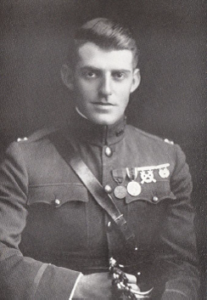
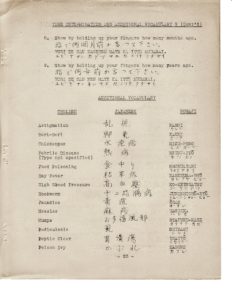
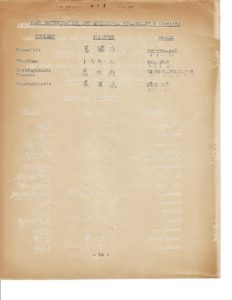
The following year on September 1, 1923, the most destructive natural disaster in modern Japanese history occurred, The Great Kantō Earthquake (関東大震災, Kantō daishinsai), a Japanese natural disaster in the Kantō region of the island of Honshū. This earthquake destroyed Tokyo, the port city of Yokohama, surrounding prefectures of Chiba, Kanagawa, and Shizuoka, and approximately 140,000 people died. During the challenging first months following that major disaster, Mashbir spearheaded an American Medical Relief Effort to assist many of the injured Japanese – As part of this humanitarian process, Mashbir created the first English – Japanese Medical Translation Dictionary that was used by English speaking health care workers while treating Japanese speaking patients.

The Great Kanto Earthquake, dramatically threw Japan back into a state of political and social instability. The Emperor and the Spy historical novel reveals Mashbir’s involvement during these dramatic events.
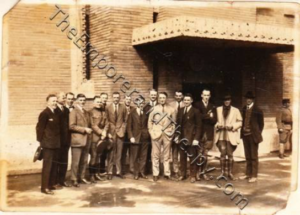


The above November 10th, 1923 photo is labeled: The Volunteer Workers American Relief in Japan

Mashbir (fourth from the left) led this group immediately after the Great Kanto Earthquake. These were the first relief workers to coordinate a major rescue/medical response to this major disaster. Mashbir and his team’s altruistic efforts were gratefully appreciated and remembered by the leaders of Japan. This picture was taken approximately two months after the earthquake, once things had been gotten under control, with Mashbir and his team proudly standing in front of the Imperial Hotel, Tokyo, after a job well done. The back of this photo is presented below.
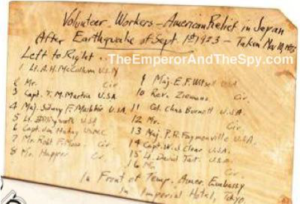
 

Most of these volunteers’ names listed below:

1- Lieutenant A. H. McCollum, U. S. Navy
2- Unnamed civilian
3- Captain T. M. Martin, U.S. Army
4- Major Sidney F. Mashbir, U.S. Army
5- Lieutenant Dillingsworth, U.S. Army
6- Captain Joe Hickey, U.S. Marine Corps
7- Robert F. Moss, a civilian
8- Mr. Harper, a civilian
9- Major Edward Witsell, U.S. Army
10- Reverend Ziemans, civilian
11- Colonel Chas (Charles) Burnett U.S. Army
12- Unnamed civilian
13- Major P. R. Faymonville U.S. Army
14- Captain W. J. Clear, U. S. Army
15- Lieutenant David Tait, U. S. Army
16- Unnamed civilian

Side note: Who would have thought when this photo was taken, it would be almost a century later that this never before publicly seen photo would be shared over the world wide web, honoring these volunteers’ heroic efforts.

The backdrop for the above group photo, the Imperial Hotel, was Frank Lloyd Wright’s architectural masterpiece. It was one of the very few large structures not destroyed by the earthquake. Due to the vast destruction throughout Japan, this hotel was temporarily used as the American Embassy.
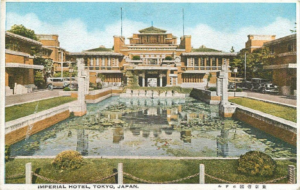


A 1920’s postcard photo of the Imperial Hotel.

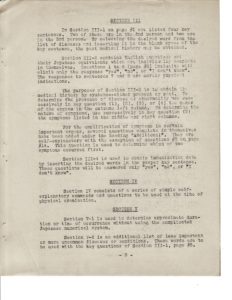
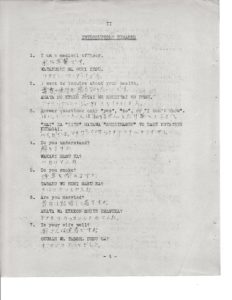
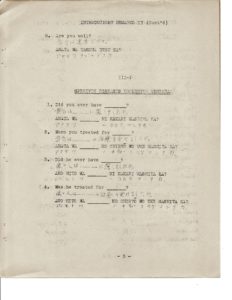
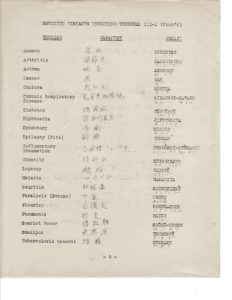
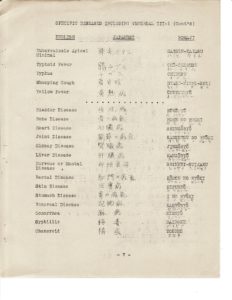
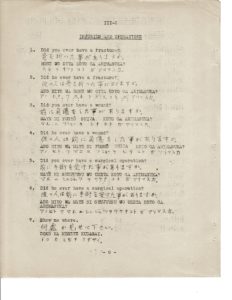
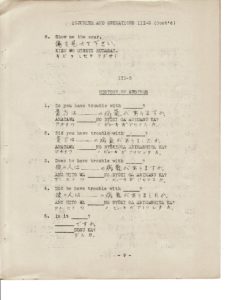
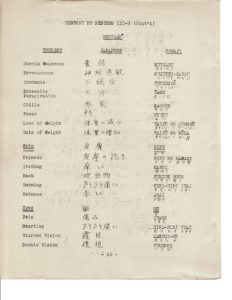
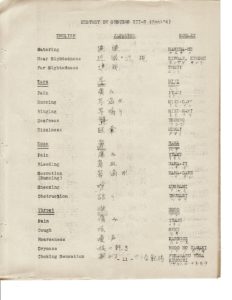
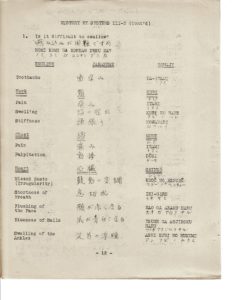
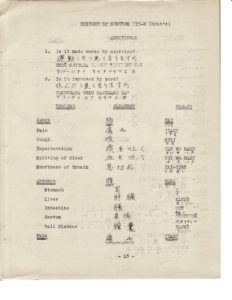
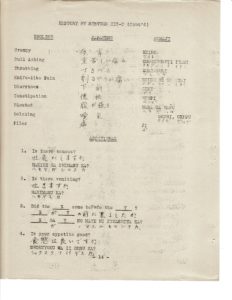
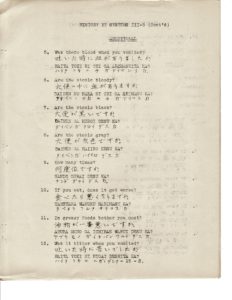
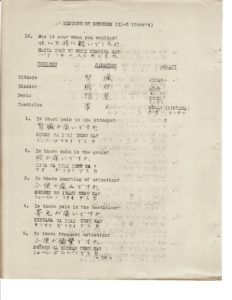
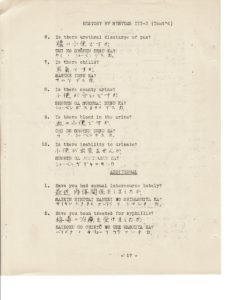
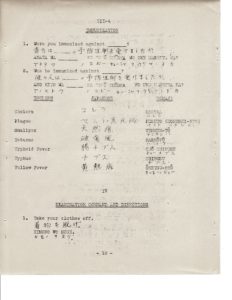
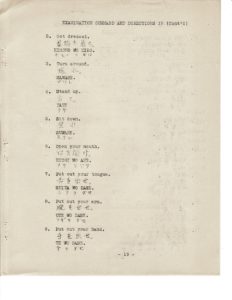
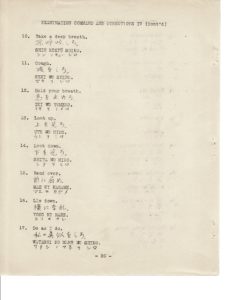
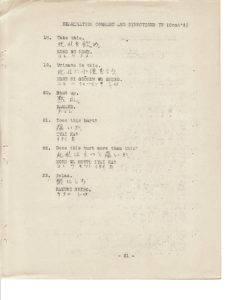
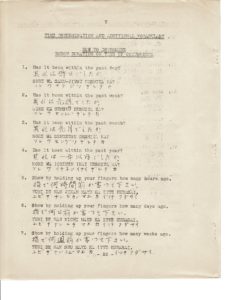
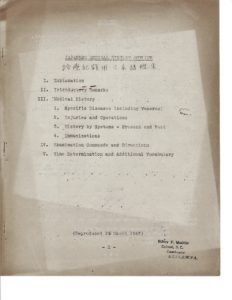
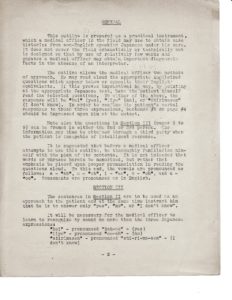
Captain Sidney Mashbir realized that language barriers would get in the way of English speaking emergency health care providers from being able to communicate with and assist the injured Japanese who spoke only Japanese, so he cleverly created an English to Japanese / Japanese to English Medical Translation Dictionary to better facilitate the  treatment of these injured Japanese during the traumatic aftermath of the Great Kanto Earthquake; further below is this 24 page bilingual medical dictionary.

It was republished in 1942, by the then Colonel Mashbir, probably to assist in the treatment of Japanese prisoners of war, who needed U.S. medical treatment. That conflict which Mashbir had devoted his efforts to prevent between the U.S. and Japan during the 1920s and 1930s, regrettably, could not be avoided. The below medical dictionary honors Colonel Mashbir’s altruistic intentions towards the Japanese, and it might also served as a template for an updated version for today to assist in medical situations involving English / Japanese translation while taking a patient’s medical history and to better understand the patient’s current symptoms/injuries.


Filed Under: Mashbir Archives Tagged With: 1923, A. H. McCollum, Captain Joe Hickey, Captain T. M. Martin, Captain W. J. Clear, Colonel Charles Burnett, Colonel Mashbir, Colonel Mashbir Archives, Colonel Sidney Mashbir, David Tait, Edward Witsell, English to Japan / Japanese to English Medical Dictionary, First English to Japanese Medical Dictionary, Great Kanto Earthquake, Imperial Hotel, Imperial Hotel 1922, Kantō daishinsai, Lieutenant A. H. McCollum, Lieutenant David Tait, Lieutenant Dillingsworth, Major Edward Witsell, Major P. R. Faymonville, Mashbir Archives, Mr. Harper 1823, P. R. Faymonville, Reverend Ziemans, Robert F. Moss, September 1, Sidney F. Mashbir, Stan S. Katz, Stan S. Katz blog, T. M. Martin, The art of diplomacy, The Art of Peace, The Art of Peace biography, The Emperor and the Spy, The Volunteer Workers American Relief in Japan, TheEmperorAndTheSpy.com, U.S. Japan, U.S. Japan goodwill, U.S. Japan relations, U.S.-Japan History, US Japan relations, W. J. Clear, World War Two, 関東大震災

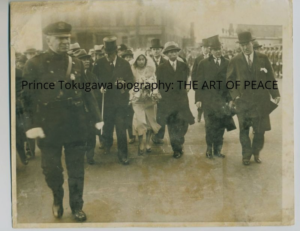
Prince Tokugawa encouraged Emperor Hirohito’s younger brother Prince Takamatsu and Princess Takamatsu to take a fourteen month Goodwill World Tour during 1930-1931. In Washington, D.C., they were personally escorted by President Herbert Hoover down Pennsylvania Avenue, as part of their special reception.

January 14, 2020 by Stan S. Katz Leave a Comment


These rare antique photos present a long forgotten 1931 diplomatic event where Prince and Princess Takamatsu as a gesture of international goodwill visited the US Capital and were personally escorted down Pennsylvania Avenue. by President Herbert Hoover, as thousands of onlookers gathered to honor their visit. Surprisingly, it has proved difficult to find news coverage about the above diplomatic procession.

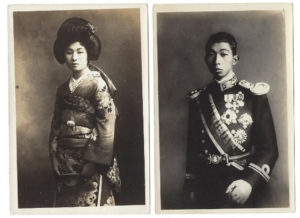
Left to right in the center of the procession photo: Japanese Ambassador to the U.S. Katsuji Debuchi speaks with President Hoover (wearing a top hat and holding a cane); Princess and Prince Takamatsu walk side by side.  Included above are two earlier individual photos of Princess and Prince Takamatsu.


In 1988 an international goodwill organization PRAEMIUM IMPERIALE was created to honor Prince Takamatsu and his efforts to utilize the arts as a means of bringing nations and peoples together in mutual appreciation and goodwill.

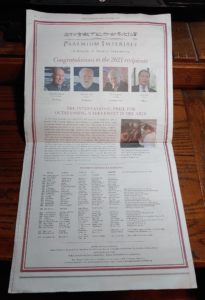
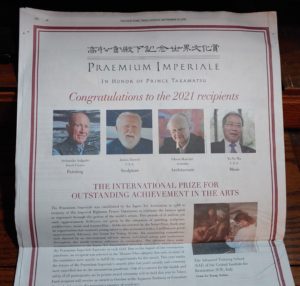
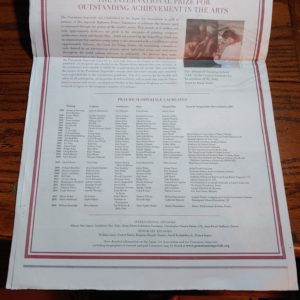
The below Sunday, Sept. 19th, 2021 full page announcement in the NEW YORK TIMES honors this prestigious organization’s 2021 artist award recipients.


The Praemium Imperiale is a global arts prize awarded annually by the Japan Art Association. Since its inauguration in 1988, it has been recognized as a  significant supporter of the arts – Six nomination committees, each chaired by an International Advisor, propose candidates in five fields: Painting, Sculpture, Architecture, Music and Theatre/Film.

The below link gives you a detailed introduction to Praemium Imperiale and its laureates in words, image, audio and video.

https://www.praemiumimperiale.org/en/


Prince Tokugawa’s biography highlights Prince and Princess Takamatsu, who served as representatives of Japan, promoting international friendship through the exchange of the arts and intercultural events. This biography includes many more rare photos of Prince Takamatsu and Princess Takamatsu’s exciting 1930-1931 Goodwill World Tour. Over the past two decades, a large collection of rare photos of Prince Takamatsu and Princess Takamatsu were collected by the author of this blog post. Perhaps, a film documentarian who also enjoys history will assist in creating a documentary about this Royal Couple, highlighting their 19301-1931 Goodwill World Tour.


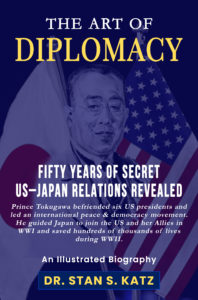
PRINCE TOKUGAWA’S BIOGRAPHY  IS AVAILABLE IN TWO VERSIONS: “THE ART OF PEACE”  & “The ART OF DIPLOMACY”


PRINT & KINDLE EDITION


EXPANDED EBOOK EDITION


Filed Under: Tokugawa Archives Tagged With: 1931 U.S. Japan relations, Ambassador Grew, Ambassador Katsuji Debuchi, Baron Eiichi Shibusawa, Baron Shibusawa, Baron Shibusawa Eiichi, Colonel Mashbir, Colonel Mashbir Archives, Colonel Sidney Mashbir, Diplomacy, Diplomacy of Peace, Eiichi Shibusawa, Herbert Hoover, Historical biography, International Friendship, International Relations, Iyemasa Tokugawa, Japan China relations, Japan History, Japan U.S. Relations, Japanese Ambassador Debuchi, Japanese Royal Family, Katsuji Debuchi, President Herbert Hoover, President Hoover, Prince and Princess Takamatsu's World Tour, Prince Iyesato Tokugawa, Prince Takamatsu, Prince Tokugawa, Prince Tokugawa Archives, Prince Tokugawa Iesato, Princess Takamatsu, Shibusawa Eiichi, Stan S. Katz, Stan S. Katz blog, The Art of Di, The art of diplomacy, The Art of Diplomacy biography, The Art of Peace, The Art of Peace biography, The Emperor and the Spy, TheEmperorAndTheSpy.com, Tokugawa biography, U.S. Japan relations, U.S.-Japan History, US Japan relations, World War Two

Friendship & Alliance between Presidents Theodore Roosevelt & William Howard Taft with the Japanese leaders Baron Shibusawa & Prince Tokugawa and a Tour of the Japanese Friendship Garden San Diego

December 9, 2019 by Stan S. Katz 1 Comment

The Spirit of International Goodwill 


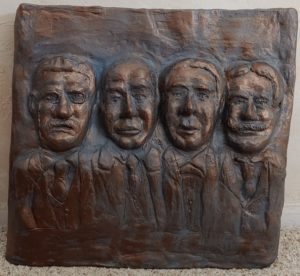
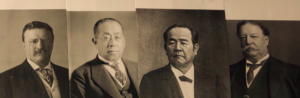
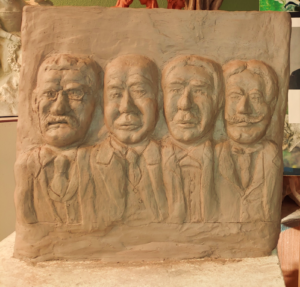
President Roosevelt – Prince Tokugawa – Baron Shibusawa – President Taft

During the first decades of the 1900s, these four accomplished statesmen allied together to promote amity between their nations.

This relief sculpture has been accented with metallic paint to look like a bronze – If the Japanese Friendship Garden in Balboa Park, San Diego welcomes this gift, it will be cast in bronze and be presented as a token of goodwill from the San Diego World Affairs Council (a chapter of the World Affairs Councils of America) and perhaps also from the San Diego Diplomacy Council & the East West Center – Fine organizations that support international cooperation for a more peaceful and democratic world.

TheEmperorAndTheSpy.com website presents additional blog posts revealing the strong alliance between them.

The inspiration for this sculpture arose while the author of this blog was researching for the biography The Art of Peace, which highlights the friendship and political alliance between these four leaders. It includes hundreds of illustrations, including many rare photos, offering a new perspective on U.S. Japan relations during the first half of the twentieth century, and illustrates that nations come together thru their mutual appreciation of one another’s arts and culture – To further enhance the friendship between the U.S. and Japan today a gift of a bronze sculpture was created by the author of this article to honor these four fine diplomats, who worked shoulder to shoulder in the pursuit of peace.

Below is the clay version of the sculpture

President Theodore Roosevelt (1858 – 1919) 

In office as president from September 14, 1901 – March 4, 1909.

Received the Nobel Peace Prize in 1906 for guiding the arbitration that ended the Russo-Japanese War of 1904-1905.  


Prince Tokugawa Iesato aka Prince Iyesato Tokugawa (1863-1940)         

President of Japan’s upper house of congress The House of Peers for thirty years from 1903-1933. He was also the President of the Japanese Red Cross Society and headed many other significant Japanese organizations. Prince Tokugawa took a pivotal guiding role in both the Japanese gifting of the Cherry Blossom Trees to Washington, D.C. in 1912 and in this gesture of international goodwill becoming the official National Cherry Blossom Festival beginning in 1935, an event celebrated annually by hundreds of thousands of U.S. citizens and visitors from around the world. 


Baron Shibusawa Eiichi aka Baron Eiichi Shibusawa (1840-1931)     

Known as the ‘Father of Japan’s modern economic system,‘ Shibusawa helped launch hundreds of business ventures as well as social service organizations, including universities, hospitals, social welfare and international relations/relief organizations. 

Baron Shibusawa was twice nominated for a Nobel Peace Prize for the years 1926 and 1927.


President William Howard Taft (1857 – 1930)

In office as president March 4, 1909 – March 4, 1913

President Taft and his wife First Lady Helen Herron Taft were the official U.S. recipients the Japanese Gift of Cherry Blossom Trees in 1912. 

Eight years after his presidency, Taft became the first U.S. President to later become the Chief Justice of the United States Supreme Court from July 11, 1921 – February 3, 1930.


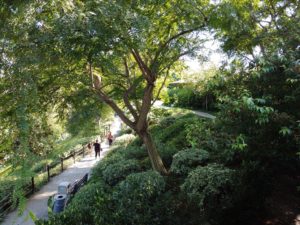
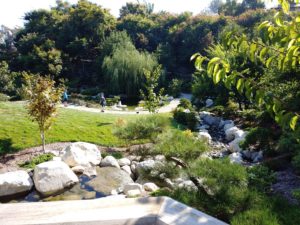
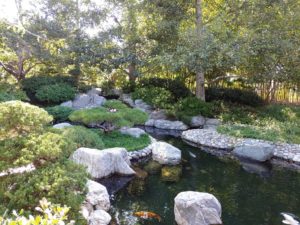
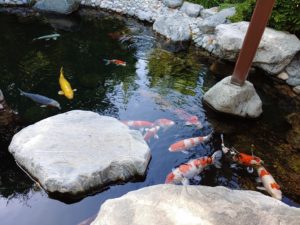
You are now invited to take a brief tour of the beautiful Japanese Friendship Garden.


Here is the link to the Japanese Friendship Garden Official Website: http://www.niwa.org/

Their mission statement: to develop a traditional Japanese garden as a center to educate, engage, and inspire people of diverse backgrounds about Japanese culture and community legacy.


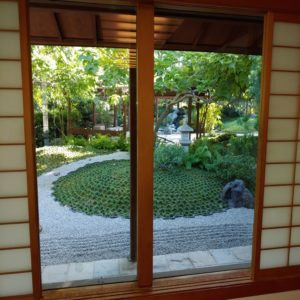
An outside view from inside of one of the tranquil buildings in the garden.

Photos taken by the author of this blog on August 2019


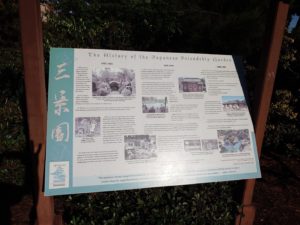
Near the entrance to the Japanese Friendship Garden is a presentation board displaying the history of this beautiful place, whose roots go back to the 1915-1916 Pan-American Exposition, where there was a popular Japanese Teahouse that was enjoyed by many visitors. Over the following century, the hospitality theme of that teahouse has evolved into the current Japanese Friendship Garden. Much of the impressive architecture that today comprises the expansive Balboa Park in San Diego, were part of that exposition.


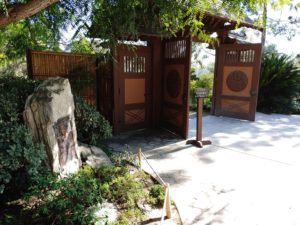
Charles C. Dail Memorial Gate (above)

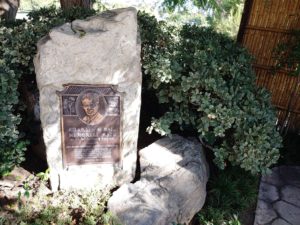
Close-up view (below) of the Bronze plaque near the gate honoring Charles C. Dail, who was the Mayor of San Diego from 1953-1963 and the Founder of the San Diego – Yokohama Sister Cities Program.


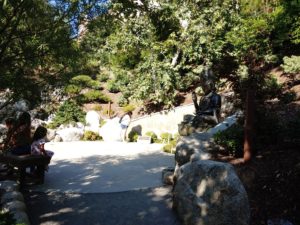
Above: in the distance, a mother reads a statue’s dedication plaque, while her daughter (seated to the left) appreciatively looks at the lovely Buddhist statue in the shadows, which is called ‘The Goddess of Mercy and Compassion’ – To learn more about this sculpture from the 1700s, the dedication plaque describes its fascinating history.


Hope you enjoyed your visit to the Japanese Friendship Garden. 


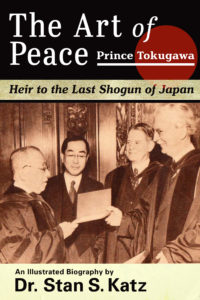
THE ART OF PEACE book cover presents Prince Tokugawa receiving an Honorary Doctor of Laws Degree from the University of Southern California. The president of the university Dr. Rufus B. von Kleinsmid hands the degree to Prince Tokugawa on March 19th, 1934. This presentation took place during a special luncheon given in Los Angeles, hosted by George I. Cochran, the president of USC’s Board of Trustees. Prince Iyesato Tokugawa was accompanied by his son Iyemasa, the newly appointed Minister to Canada.

Left to right in photo: Prince Iyesato Tokugawa; Iyemasa Tokugawa; George I. Cochran; Dr. Rufus B. von Kleinsmid.

In accepting the honor, Tokugawa respectfully said,

“He wished to receive it in the name of the Japanese people as a whole rather than as a personal distinction.”

During Prince Tokugawa’s 1934 visit to Los Angeles, The Los Angeles Times stated that a banquet dinner in his honor was hosted by the Japan America Society of Los Angeles. The Japan America Society of Los Angeles is now known as the Japan America Society of Southern California, its goal
“Building Japan-America Relationships Since 1909“

In 1909, during the first year of The Japan America Society of Los Angeles, they had also welcomed and hosted Baron Eiichi Shibusawa and fifty members of his goodwill/trade delegation.
 

THE ART OF PEACE biography highlights U.S. – Japan relations during the first half of the twentieth century.

The friendship and alliance between Prince Tokugawa, Baron Shibusawa and President Roosevelt and President Taft is presented as part of this history.

EBook Available thru Amazon in two Versions:

Expanded Edition


The General Reader Edition of PRINCE TOKUGAWA’S BIOGRAPHY IS TITLED:

THE ART OF DIPLOMACY


AVAILABLE IN PRINT AND KINDLE EBOOK


Filed Under: Tokugawa Archives Tagged With: Ambassador Katsuji Debuchi, Balboa Park, Baron Eiichi Shibusawa, Baron Shibusawa, Baron Shibusawa Eiichi, Chinese History, Colonel Mashbir, Colonel Mashbir Archives, Colonel Sidney Mashbir, Diplomacy, Eiichi Shibusawa, General Douglas MacArthur, Gift for Japanese Friendship Garden, Gift of Sculpture, Historical biography, History of Japanese Friendship Garden, History of the Cherry Blossom Festival in Washington D.C., History of the National Cherry Blossom Festival, History of USC, Holocaust, International Friendship, International Relations, Iyemasa Tokugawa, Japan China relations, Japan History, Japan U.S. Relations, Japanese Friendship Garden, Japanese Friendship Garden in Balboa Park, President Theodore Roosevelt, Prince Iyesato Tokugawa, Prince Tokugawa, Prince Tokugawa Archives, Prince Tokugawa Iesato, Prince Tokugawa Iesato Archives, San Diego, Shibusawa Eiichi, Stan S. Katz, Stan S. Katz blog, The Art of Peace, The Art of Peace biography, TheEmperorAndTheSpy.com, Theodore Roosevelt, U.S. Japan relations, U.S.-Japan History, US Japan relations, William Howard Taft, World War One, World War Two

  • « Previous Page
  • 1
  • 2

Copyright © 2026 Stan S. Katz