Stan. S. Katz

Author of The Emperor and the Spy

  • Home
  • Author
  • Books
  • Reviews
  • Educators
  • News
  • Audiobook & Timeline
  • Mashbir Archives
  • Tokugawa Archives
  • Contact
Follow Stan on FacebookFollow Stan on TwitterFollow Stan on GoodreadsFollow Stan on RSS

Sign Up for Future Blogs Linked to Colonel Mashbir and Japanese History

Read the Intro Posts

INTRODUCTION TO THE ART OF PEACE

WELCOME!

Recent Posts

  • San Diego Jewish Journal Holocaust Remembrance Edition May 2016 highlights the historical novel, The Emperor and the Spy and the outstanding achievements of Colonel Sidney Mashbir.
  • The Emperor and the Spy, was one of two books highlighted during academic/diplomatic event sponsored by the Prime Minister’s Office of Japan and hosted by San Diego World Affairs Council
  • Osher Lifelong Education Institute – UCSD Presentation. Remarkable story, the alliance between a patriotic U.S. Intelligence Agent, Colonel Sidney Mashbir, and a humanitarian Japanese International Statesman, Prince Iyesato Tokugawa, who heroically delayed and attempted to prevent WWII in the Pacific.
  • Tokugawa & Komatsu, Forgotten Heroes – Until his passing in 1940, Prince Iyesato Tokugawa held back WWII in the Pacific – Tokugawa’s diplomatic legacy lived on after WWII ended, when his protégé, Takashi Komatsu, guided the US and Japan to again become friends and allies.
  • Have you ever wondered how US and Japan re-established their friendship and alliance following the trauma of WWII? Here’s a new biography that honors an amazing Japanese American statesman, Takashi Komatsu, who guided this major achievement.

Archives

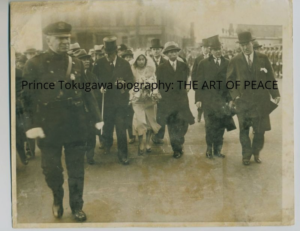
Prince Tokugawa encouraged Emperor Hirohito’s younger brother Prince Takamatsu and Princess Takamatsu to take a fourteen month Goodwill World Tour during 1930-1931. In Washington, D.C., they were personally escorted by President Herbert Hoover down Pennsylvania Avenue, as part of their special reception.

January 14, 2020 by Stan S. Katz Leave a Comment


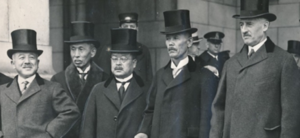
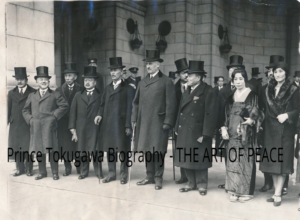
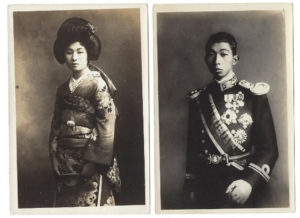
These rare antique photos present a long forgotten 1931 diplomatic event where Prince and Princess Takamatsu as a gesture of international goodwill visited the US Capital and were personally escorted down Pennsylvania Avenue. by President Herbert Hoover, as thousands of onlookers gathered to honor their visit. Surprisingly, it has proved difficult to find news coverage about the above diplomatic procession.

Left to right in the center of the procession photo: Japanese Ambassador to the U.S. Katsuji Debuchi speaks with President Hoover (wearing a top hat and holding a cane); Princess and Prince Takamatsu walk side by side.  Included above are two earlier individual photos of Princess and Prince Takamatsu.


In 1988 an international goodwill organization PRAEMIUM IMPERIALE was created to honor Prince Takamatsu and his efforts to utilize the arts as a means of bringing nations and peoples together in mutual appreciation and goodwill.

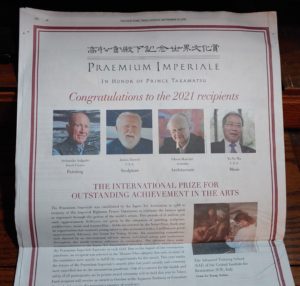
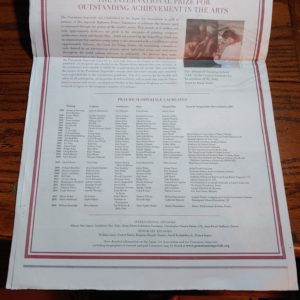
The below Sunday, Sept. 19th, 2021 full page announcement in the NEW YORK TIMES honors this prestigious organization’s 2021 artist award recipients.
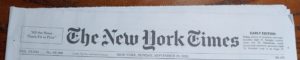
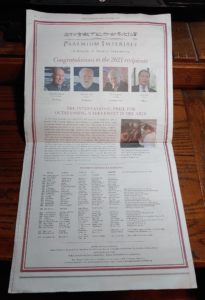
 

The Praemium Imperiale is a global arts prize awarded annually by the Japan Art Association. Since its inauguration in 1988, it has been recognized as a  significant supporter of the arts – Six nomination committees, each chaired by an International Advisor, propose candidates in five fields: Painting, Sculpture, Architecture, Music and Theatre/Film.

The below link gives you a detailed introduction to Praemium Imperiale and its laureates in words, image, audio and video.

https://www.praemiumimperiale.org/en/


Prince Tokugawa’s biography highlights Prince and Princess Takamatsu, who served as representatives of Japan, promoting international friendship through the exchange of the arts and intercultural events. This biography includes many more rare photos of Prince Takamatsu and Princess Takamatsu’s exciting 1930-1931 Goodwill World Tour. Over the past two decades, a large collection of rare photos of Prince Takamatsu and Princess Takamatsu were collected by the author of this blog post. Perhaps, a film documentarian who also enjoys history will assist in creating a documentary about this Royal Couple, highlighting their 19301-1931 Goodwill World Tour.


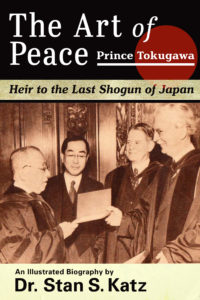
PRINCE TOKUGAWA’S BIOGRAPHY  IS AVAILABLE IN TWO VERSIONS: “THE ART OF PEACE”  & “The ART OF DIPLOMACY”


PRINT & KINDLE EDITION
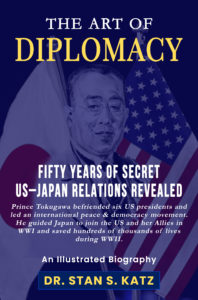


EXPANDED EBOOK EDITION


Filed Under: Tokugawa Archives Tagged With: 1931 U.S. Japan relations, Ambassador Grew, Ambassador Katsuji Debuchi, Baron Eiichi Shibusawa, Baron Shibusawa, Baron Shibusawa Eiichi, Colonel Mashbir, Colonel Mashbir Archives, Colonel Sidney Mashbir, Diplomacy, Diplomacy of Peace, Eiichi Shibusawa, Herbert Hoover, Historical biography, International Friendship, International Relations, Iyemasa Tokugawa, Japan China relations, Japan History, Japan U.S. Relations, Japanese Ambassador Debuchi, Japanese Royal Family, Katsuji Debuchi, President Herbert Hoover, President Hoover, Prince and Princess Takamatsu's World Tour, Prince Iyesato Tokugawa, Prince Takamatsu, Prince Tokugawa, Prince Tokugawa Archives, Prince Tokugawa Iesato, Princess Takamatsu, Shibusawa Eiichi, Stan S. Katz, Stan S. Katz blog, The Art of Di, The art of diplomacy, The Art of Diplomacy biography, The Art of Peace, The Art of Peace biography, The Emperor and the Spy, TheEmperorAndTheSpy.com, Tokugawa biography, U.S. Japan relations, U.S.-Japan History, US Japan relations, World War Two

Dec. 23, 1929 – J. Edgar Hoover oversees the protection detail for the visiting Japanese Naval Delegation in Washington, D.C. – U.S. Secretary of State Stimson and the Japanese Ambassador Debuchi greet the visitors and escort them to the White House to meet with President Hoover

July 8, 2019 by Stan S. Katz Leave a Comment

Dec. 23, 1929 – A rare photo of J. Edgar Hoover as he oversees the protection detail for the visiting Japanese Naval Delegation in Washington, D.C. The Japanese delegation were were on their way to attend negotiations in Europe for the ratification of the 1930 London Naval Treaty (officially the Treaty for the Limitation and Reduction of Naval Armament). The delegation was greeted at the Washington Union (Train) Station by U.S. Secretary of State Henry L. Stimson and the Japanese Ambassador Katsuji Debuchi; the delegation then visited the White House to meet with President Herbert Hoover.


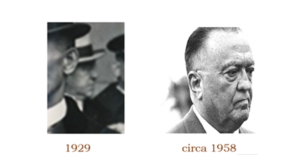
December 23, 1929 – This photo offers rare candid view of J. Edgar Hoover, who is wearing the straw hat in the background and standing near a policeman. This photo is a sectional view of the larger group photo. This sectional view allowed the enlargement necessary to clearly view J. Edgar Hoover. This photo presents a unique glimpse of Hoover during a Bureau of Investigation (prior name of the FBI) field operation, when he wasn’t posing for the camera.

This photo highlights the arriving Japanese Naval Delegation in Washington, D.C., prior to the delegation being received by President Herbert Hoover at the White House. We see U. S. Secretary of State Henry L. Stimson (1867 – 1950) at the far right, with Japanese Ambassador to the U.S. Katsuji Debuchi  at the far left. They are greeting the arriving Japanese Naval Delegation at the Washington Union (Train) Station. The delegation was passing thru the U.S. on their way to Europe for the negotiations that would ratify the 1930 London Naval Arms (limitation) Conference. The 1930 The London Naval Treaty (officially the Treaty for the Limitation and Reduction of Naval Armament) was an agreement between Great Britain, Japan, France, Italy and the United States, signed on 22 April 1930. Seeking to address a loophole in the formidable 1922 Washington Naval Treaty (that created tonnage limits for each nation’s surface warships), it regulated submarine warfare and limited naval shipbuilding. Ratifications were exchanged in London on 27 October 1930, and the treaty went into effect on the same day.

One of the significant benefits of this treaty, beyond attempting to maintain peace, was that the Great Depression had just begun in late 1929, and the treaty encouraged less funds be spent in an international Arms Race, when that money could better be used for urgently needed social support programs during the economic downturn.


Above is the larger version of the December 23, 1929 photo as the Japanese Naval Delegation arrive in Washington, D.C., on their way to the 1930 London Naval Conference.

Front row, Left to right: Admiral Seizō Sakonji; Japanese Ambassador Katsuji Debuchi; , T. Kawasaki, Reijiro Wakatsuki chief of delegates; U.S. Secretary of State Stimson: Hirosi Saito, Madame Takarabe, and Madame Debuchi. Back row right side: Takeshi Takarabe, assistant chief delegate (wearing glasses and standing behind his wife).


The individual in the background wearing a straw hat, adjacent to the policeman is J. Edgar Hoover (see below photo enlargements):


John Edgar Hoover (January 1, 1895 – May 2, 1972) was the first Director of the Federal Bureau of Investigation (FBI) of the United States and an American law enforcement administrator. He was first appointed as the director of the Bureau of Investigation – the FBI’s predecessor – in 1924 and was instrumental in founding the FBI in 1935, where he remained director for another 37 years until his death in 1972 at the age of 77.

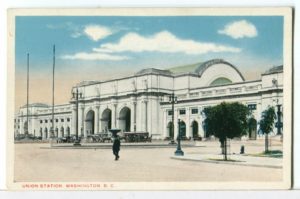
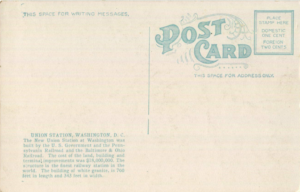
The Dec. 23, 1929 group photo was taken in front of the south main entrance to the Washington Union Station. Below is a circa 1929 postcard of the train station. The descriptive reverse side of the postcard is also displayed below:


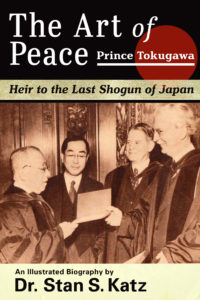
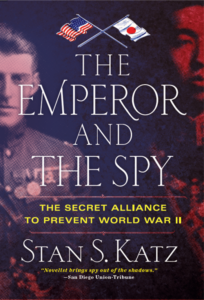
It was a surprising discovery noticing that J. Edgar Hoover appeared in the Dec. 23rd, 1929 photo. The photo was acquired while doing research for the historical novel The Emperor and the Spy: The Secret Alliance to Prevent WWII, and the illustrated biography The Art of Peace by Stan S. Katz.

The Emperor and the Spy focuses on the life of a high level U.S. intelligence agent Colonel Sidney Mashbir who befriended and allied with Japanese leaders, including members of the Japanese royal family during the 1920s and 1930s, in a valiant attempt to maintain goodwill between their nations.

The Art of Peace biography is in many ways a nonfictional sequel to the novel and highlights the pivotal behind the scenes events in U.S. Japan relations during the first half of the twentieth century. The book highlights one of Colonel Mashbir’s closest and most influential Japanese allies Prince Iyesato Tokugawa (1863-1940).

For further information visit the website TheEmperorAndTheSpy.com


Link to the Introduction of THE ART OF PEACE


Link to Introduction for THE EMPEROR AND THE SPY


Filed Under: Tokugawa Archives Tagged With: 1915 U.S. Japan relations, 1930 London Naval Treaty, Admiral Seizō Sakonji, Aisuke Kabayama, Ambassador Katsuji Debuchi, Count Aisuke Kabayama, F.B.I., Federal Bureau of Investigation, Henry L. Stimson, Herbert Hoover, Hirosi Saito, J. Edgar Hoover, Japanese Ambassador Katsuji Debuchi, Katsuji Debuchi, London Naval Treaty, Madame Debuchi, Madame Takarabe, President Herbert Hoover, President Hoover, Prince Iyesato Tokugawa, Prince Tokugawa Iesato, Reijiro Wakatsuki, Secretary of State Henry L. Stimson, Seizō Sakonji, Stan S. Katz, Stan S. Katz blog, T. Kawasaki, Takeshi Takarabe, The Art of Peace, The Art of Peace biography, The Emperor and the Spy, TheEmperorAndTheSpy.com, Tokugawa Iesato, U.S. Japan Diplomacy, U.S. Secretary of State Henry L. Stimson

Copyright © 2026 Stan S. Katz