Stan. S. Katz

Author of The Emperor and the Spy

  • Home
  • Author
  • Books
  • Reviews
  • Educators
  • News
  • Audiobook & Timeline
  • Mashbir Archives
  • Tokugawa Archives
  • Contact
Follow Stan on FacebookFollow Stan on TwitterFollow Stan on GoodreadsFollow Stan on RSS

Sign Up for Future Blogs Linked to Colonel Mashbir and Japanese History

Read the Intro Posts

INTRODUCTION TO THE ART OF PEACE

WELCOME!

Recent Posts

  • San Diego Jewish Journal Holocaust Remembrance Edition May 2016 highlights the historical novel, The Emperor and the Spy and the outstanding achievements of Colonel Sidney Mashbir.
  • The Emperor and the Spy, was one of two books highlighted during academic/diplomatic event sponsored by the Prime Minister’s Office of Japan and hosted by San Diego World Affairs Council
  • Osher Lifelong Education Institute – UCSD Presentation. Remarkable story, the alliance between a patriotic U.S. Intelligence Agent, Colonel Sidney Mashbir, and a humanitarian Japanese International Statesman, Prince Iyesato Tokugawa, who heroically delayed and attempted to prevent WWII in the Pacific.
  • Tokugawa & Komatsu, Forgotten Heroes – Until his passing in 1940, Prince Iyesato Tokugawa held back WWII in the Pacific – Tokugawa’s diplomatic legacy lived on after WWII ended, when his protégé, Takashi Komatsu, guided the US and Japan to again become friends and allies.
  • Have you ever wondered how US and Japan re-established their friendship and alliance following the trauma of WWII? Here’s a new biography that honors an amazing Japanese American statesman, Takashi Komatsu, who guided this major achievement.

Archives

Osher Lifelong Education Institute – UCSD Presentation. Remarkable story, the alliance between a patriotic U.S. Intelligence Agent, Colonel Sidney Mashbir, and a humanitarian Japanese International Statesman, Prince Iyesato Tokugawa, who heroically delayed and attempted to prevent WWII in the Pacific.

November 20, 2024 by Stan S. Katz Leave a Comment

Osher Lifelong Education Institute – University of California San Diego

January 8th, 2020 the author of historical novel The Emperor and the Spy & the biography The Art of Peace gave a presentation on significant unknown events linked to U.S. Japan relations during the first half of the twentieth century. Highlighted is the fascinating career of the the intelligence agent, Colonel Mashbir, and the outstanding diplomatic and political achievements of Prince Iyesato Tokugawa. Spotlighted is the close friendship and alliance of Colonel Mashbir and Prince Tokugawa.T

The below one hour video that was followed by a one hour non-recorded question and answer session with inquiries from the one hundred attendees.  Hope you enjoy.
Filed Under: Mashbir Archives Tagged With: 1934 USC Bestows Honorary Doctor of Laws Degree on Prince Tokugawa, 25th Anniversary of Rotary International, Apache, Apache language, Arizona Military Heroes, Baron Eiichi Shibusawa, Baron Shibusawa, Baron Shibusawa Eiichi, Cherry Blossom Festival, Colonel Mashbir, Colonel Mashbir Archives, Colonel Sidney Forrester Mashbir, Donald Mashbir, Douglas MacArthur, Eiichi Shibusawa, Eiichi Shibusawa 1909 Delegation, Emperor Hirohito, FDR, Fruedenthal Family History, General John J. Pershing, General Joseph Pershing, General MacArthur, General Pershing, General Pershing in Mexico, Heir to the last Tokugawa Shogun, Heroes of World War Two, History of the Cherry Blossom Festival in Washington D.C., History of the National Cherry Blossom Festival, History of USC, Iemasa Tokugawa, Iesato Tokugawa, Japan in World War One, Japanese Racism at USC, Japanese Royal Family, Jewish History, Kikuko Tokugawa, Lincoln Essay Contests, National Cherry Blossom Festival, Osher Lifelong Learning Institute: Extension of UCSD, Pershing and Pancho Villa, President Franklin D. Roosevelt, President Franklin Delano Roosevelt, Prince and Princess Takamatsu's World Tour, Prince Iyesato Tokugawa, Prince Takamatsu, Princess Takamatsu, Racism at USC, Rotary History, Rotary International History, ROTC History, Safe Zones, Saving Jews during WWII, Shanghai Ghetto, Shibusawa Archives, Shibusawa Eiichi Memorial Foundation, Shibusawa Eiichi Memorial Foundation / Museum, Shogun History, Sidney F. Mashbir, Stan S. Katz, Stan S. Katz archives, Stan S. Katz blog, Suzanne Orcutt, Syracuse University History, Syracuse University ROTC, The art of diplomacy, The Art of Diplomacy biography, The Art of Peace, The Art of Peace biography, The Emperor and the Spy, Tokugawa Shogun Dynasty, Tokugawa Shogun History, Tokugawa Yoshinobu, Tucson Heroes, Tucson History, University of Arizona ROTC, Unknown Japanese History, USC and Japan, Washington Naval Arms Conference, WWII and Japan

Welcome!

April 13, 2020 by Stan S. Katz Leave a Comment


The illustrated Blog posts on this website focus on U.S. Japan relations and Japanese history.

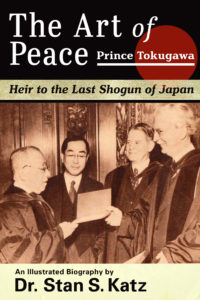
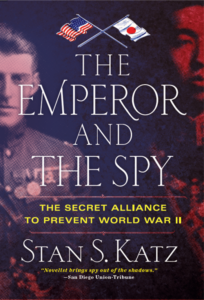
Katz was a Specialist in Rare Books and Ephemera when he acquired the personal papers of a Master Spy, Colonel Sidney Forrester Mashbir (1891-1973). These fascinating materials, combined with his passion for history and many years of research resulted in the exciting historical novel THE EMPEROR AND THE SPY, followed by a sequel, an illustrated biography titled: THE ART OF PEACE.

The Emperor and the Spy highlights the adventurous life of Colonel Mashbir and reveals his alliance during the 1920s and 1930s with many Japanese leaders, including members of the Japanese Royal Family. These influential Japanese included Prince Tokugawa Iesato (1863-1940) President of Japan’s upper house of congress for thirty years & Baron Shibusawa Eiichi, who is known as the Father of the Modern Japanese Economy. These fine Japanese statesmen blended international diplomacy, art and cultural exchange, as well as business and commerce to bring nations together in friendship. 

Colonel Mashbir in his personal writings emphasized:

Prince Tokugawa was the true hidden power behind the Imperial Throne & was so politically influential in supporting democracy and peace, it was only after his death in 1940, that Japan was pressured into joining the Axis Powers in WWII.

In the process of rapidly moving forward towards reconciliation between the U.S. and Japan following that tragic conflict, much of the history of the first four decades of the 1900s were lost or forgotten, with little recognition given to heroic efforts by many Japanese and non-Japanese who strove to prevent that war. Many readers of The Emperor and the Spy wanted to know more about the impressive individuals depicted in the novel and the period they lived, leading to the Prince Tokugawa biography: The Art of Peace. 


Praise for The Art of Peace

“Your new biography is the perfect follow on to your historical novel The Emperor and the Spy about Colonel Mashbir, a  superlative history that was a fun read, yet it was also eye opening to the story behind the scenes in that critical time of history between the west and Japan.  Here is all that anyone who is a serious student of conflict and history of Japan could possibly want.  The illustrated version of pure history makes this biography as fun to read as a novel. I enjoyed every chapter.  Just as a footnote, I loved the way you ended the book with President Obama’s and Japanese Prime Minister Abe’s speeches – Those words are exactly how all our minds should work in building relationships between peoples that are of different cultures.  I am richer in knowledge about all the amazing heretofore unknown to me heroes that you portrayed, especially Prince Tokugawa.

Paul Ringwood U.S. Navy Commander (retired)


“I am very pleased to learn that you have now published ”The Emperor and the Spy”…‘’I have learned a lot about Colonel Mashbir and his real friendship with Prince Iesato Tokugawa which was a pleasant surprise for me.” “I wish you all the best & best of luck on your new book on ‘’Tokugawa Iesato.”

Kazuo Kodama, former Ambassador of Japan to the United Nations / current Ambassador of Japan to the European Union


“This is a really interesting and understudied topic.”

Professor Benjamin Uchiyama, Ph.D. History, University of Southern California


“The importance of preventing war is rarely given recognition through literature and in accounts of history.  It can be every bit as exciting as glorified accounts of war and certainly a better approach.”

Professor Claire Langham, former President of the East-West Center of Southern California Chapter, an organization which promotes positive relations among the people and nations of the United States, Asia, and the Pacific through cooperative study, research, and dialogue.


“We appreciate your kindness and all the work you have done to promote understanding of Shibusawa Eiichi and US-Japan relations as a whole. I wish you all the best in your current and future endeavors.”

With gratitude, Toru Shigehara

Head Librarian/Information Resources Center

Shibusawa Eiichi Memorial Foundation


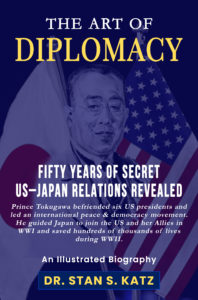
In 2021, the general reader digital edition of THE ART OF PEACE was revised, retitled, and newly published as THE ART OF DIPLOMACY to better represent the broad spectrum of Prince Tokugawa’s achievements.

AVAILABLE IN PRINT AND KINDLE EBOOK EDITION


Filed Under: Tokugawa Archives Tagged With: 25th Anniversary of Rotary International, Allied Translator Interpreter Section, Ambassador Grew, Ambassador Katsuji Debuchi, Ambassador of Japan to the United Nations, America-Japan Society, Armenian Genocide, Arms Limitation, ATIS, Baron Eiichi Shibusawa, Baron Shibusawa, Baron Shibusawa Eiichi, Chinese History, Chiune Sugihara, Colonel Mashbir, Colonel Mashbir Archives, Colonel Sidney Mashbir, Commodore Perry, Communism, Crown Prince Hirohito, Democracy, Diplomacy, Director of Planning and Communications for: The Missouri School of Journalism at University of Missouri, East-West Center of Southern California, Eiichi Shibusawa, Emperor Akihito, Emperor Hirohito, Garden Club of America, Garden Club of America Visits Japan 1935, General Douglas MacArthur, General MacArthur, History of the Cherry Blossom Festival in Washington D.C., History of the Garden Club of America, History of the National Cherry Blossom Festival, History of University of Southern California, Holocaust, International Friendship, International Relations, Iyemasa Tokugawa, Japan China relations, Japan U.S. Relations, Japan-America Society, Kazuo Kodama, Kazuo Kodama Ambassador of Japan to the European Union, Mashbir Archives, National Cherry Blossom Festival, Paul Ringwood U.S. Navy Commander, Ph.D. History, President Barack Obama, President Warren Harding, Prince Iemasa Tokugawa, Prince Iyemasa Tokugawa, Prince Iyesato Tokugawa Archives, Prince Takamatsu, Prince Tokugawa Archives, Prince Tokugawa Iesato Archives, Prince Tokugawa Yoshihisa, Princess Takamatsu, Professor Benjamin Uchiyama, Professor Claire Langham, Rotary History, Rotary International History, ROTC History, Safe Zones, Safes Zones, Saving Jewish Lives in WWII, Shanghai Ghetto, Shanghai Safe Zone, Shibusawa Archives, Shibusawa Eiichi, Shibusawa Eiichi Memorial Foundation and Museum, Shogun Yoshinobu, Stan S. Katz, Suzette Heiman, The Art of Peace, The Art of Peace biography, The Emperor and the Spy, Tokugawa Iemasa, Tokugawa Iyemasa, Tokugawa Shogun Dynasty, Tokugawa Shogun History, Toru Shigehara Head Librarian/Information Resources Center Shibusawa Eiichi Memorial Foundation, U.S. Japan relations, U.S.-Japan History, University of Southern California, World War One, World War Two

Colonel Mashbir’s autobiography, “I Was an American Spy”

November 10, 2018 by Stan S. Katz Leave a Comment


It is an honor to announce the publication of:

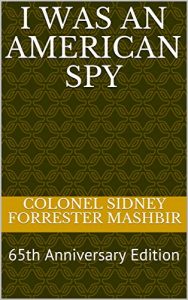
The 65th Anniversary Edition of Colonel Sidney Forrester Mashbir’s exciting 1953 autobiography:

I WAS AN AMERICAN SPY


Besides being a fascinating story, Colonel Mashbir’s autobiography is a textbook in the art of espionage and counter-espionage.

Colonel Mashbir (1891-1973) led an adventurous life – At the age of thirteen, he began his military career as a bugle boy in the Arizona Guard, in the still untamed Arizona Territory. During 1914-1916, he served under General Funston and General Pershing, and went on daring missions across the U.S./Mexican border during the Mexican Revolution, attempting to maintain stability between those nations. He personally escorted the Mexican revolutionary Pancho Villa to a peace parley with General Pershing in 1914.

During World War One, Mashbir protected U.S homeland security. He headed the U.S. Army’s Eastern Division of counter-espionage where he eliminated an extensive domestic spy network.

After WWI, Mashbir was attached to the U.S. Embassy in Japan in the early 1920s. Mashbir became fluent in the Japanese language and intimately familiar with the Japanese culture. During the early 1920s, Mashbir was sent on a perilous top secret mission into Russia and China, where he used his clever bluffing abilities to prevent a regional war.

During the two decades prior to WWII, Mashbir allied and befriended many leaders of Japan, including members of the Japanese Royal Family. Together, they strove to preserve peace between their nations. But the winds of war could not be stopped – When WWII erupted, Colonel Mashbir became General MacArthur’s top intelligence advisor – He commanded a top secret intelligence gathering organization called A.T.I.S. (Allied Translator and Interpreter Section) that dramatically shaped the successful strategy in the Pacific. In spite of it being many decades since the end of WWII, ATIS is still little known about. This organization was composed mainly of thousands of Japanese American Nisei (persons born in the United States whose parents were immigrants from Japan) who served as translators, interpreters, interrogators, and also went out into the battlefield. Their heroic contributions significantly shortened the war, saving countless lives.

Once WWII ended, Mashbir took a pivotal role in bringing Japan and the U.S. together again as allies. He served as translator and liaison between General MacArthur and Emperor Hirohito during eleven top secret meetings during the early reconstruction period of Japan.

As a pioneer of modern military intelligence, Mashbir was one of the two men who prepared the first draft implementing directives for the creation of the CIA (Central Intelligence Agency) at the request of the Joint Chiefs of Staff.

On a related note – The historical novel The Emperor and the Spy dramatically highlights the exciting life and accomplishments of Colonel Mashbir. The research required for writing this novel drew from Colonel Mashbir’s autobiography I Was an American Spy, combined with having access to Mashbir’s personal library of  letters, official documents, and photos, along with many other historical resources discovered over two decades of research. TheEmperorAndTheSpy.com website presents this material thru blog posts.

Colonel Mashbir is an unsung American hero!

The 65th Anniversary Edition of his autobiography reveals the epic odyssey of this Master Spy who engaged in behind the scenes diplomacy and dangerous missions to shape world events.

The EBook is available on Amazon 


Filed Under: Mashbir Archives Tagged With: A.T.I.S., Admiral Joseph King, Allied Translator and Interpreter Section, American Spies, ATIS, Autobiography of a Spy, CIA, Colonel Mashbir, Colonel Sidney Mashbir, Communism, Counter-espionage, Espionage, General Douglas MacArthur, General Joseph Pershing, History of Espionage, History of the CIA, History of the U.S. Central Intelligence Agency, Holocaust, Holocaust History, I Was an American Spy, Japan and the Holocaust, Japan China relations, Japan History, Jewish Spies, Prince Iyesato Tokugawa, Prince Tokugawa, Prince Tokugawa Iesato, ROTC His, ROTC History, Sidney Forrester Mashbir, Spy autobiographies, Spycraft, Syracuse University ROTC, Tokugawa Shogun History, U.S. Japan relations, U.S.-Japan History, University of Arizona ROTC, US Japan relations, World War One, World War Two

Copyright © 2026 Stan S. Katz