Stan. S. Katz

Author of The Emperor and the Spy

  • Home
  • Author
  • Books
  • Reviews
  • Educators
  • News
  • Audiobook & Timeline
  • Mashbir Archives
  • Tokugawa Archives
  • Contact
Follow Stan on FacebookFollow Stan on TwitterFollow Stan on GoodreadsFollow Stan on RSS

Sign Up for Future Blogs Linked to Colonel Mashbir and Japanese History

Read the Intro Posts

INTRODUCTION TO THE ART OF PEACE

WELCOME!

Recent Posts

  • San Diego Jewish Journal Holocaust Remembrance Edition May 2016 highlights the historical novel, The Emperor and the Spy and the outstanding achievements of Colonel Sidney Mashbir.
  • The Emperor and the Spy, was one of two books highlighted during academic/diplomatic event sponsored by the Prime Minister’s Office of Japan and hosted by San Diego World Affairs Council
  • Osher Lifelong Education Institute – UCSD Presentation. Remarkable story, the alliance between a patriotic U.S. Intelligence Agent, Colonel Sidney Mashbir, and a humanitarian Japanese International Statesman, Prince Iyesato Tokugawa, who heroically delayed and attempted to prevent WWII in the Pacific.
  • Tokugawa & Komatsu, Forgotten Heroes – Until his passing in 1940, Prince Iyesato Tokugawa held back WWII in the Pacific – Tokugawa’s diplomatic legacy lived on after WWII ended, when his protégé, Takashi Komatsu, guided the US and Japan to again become friends and allies.
  • Have you ever wondered how US and Japan re-established their friendship and alliance following the trauma of WWII? Here’s a new biography that honors an amazing Japanese American statesman, Takashi Komatsu, who guided this major achievement.

Archives

Tokugawa & Komatsu, Forgotten Heroes – Until his passing in 1940, Prince Iyesato Tokugawa held back WWII in the Pacific – Tokugawa’s diplomatic legacy lived on after WWII ended, when his protégé, Takashi Komatsu, guided the US and Japan to again become friends and allies.

November 12, 2024 by Stan S. Katz Leave a Comment

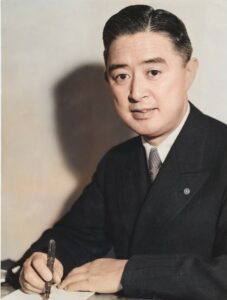
                             Prince Iyesato Tokugawa (1863-1940)      Takashi Komatsu (1887-1965)

Prince Tokugawa was the Heir to the last Shogun, a dynasty that had ruled Japan for 260 years. He served as President of Japan’s Upper House of Congress, was President of the Japanese Medical Association. And held many other leadership positions, shaping international and domestic policies of Japan. Based on his humanitarian accomplishments, US newspapers called him The Prince of Peace. It was only after his passing in 1940, that Japan was pressured by militants to enter WWII against the Allies.

Announcing an important new biographical work released in late 2024:

The Cherry Blossom Weeps for Me:  A Quest for the Dawn of Peace, by James Mikel Wilson.

This illustrated biography highlights the untold story of how Prince Tokugawa’s outstanding legacy lived on through his impressive protégé, the Japanese American statesman, Takashi Komatsu. Komatsu relit the torch of friendship and alliance between the US and Japan following WWII. Working with influential American leaders such as General MacArthur, John D. Rockefeller III, and Secretary of State Henry Kissinger, as well as many others.

Print and Kindle Edition


When the author, James Mikel Wilson, first contacted me several years ago, it was a pleasant surprise. Wilson had read the The Emperor and the Spy, I’d written and was familiar with the illustrated Prince Tokugawa biographies that followed: The Art of Peace and The Art of Diplomacy. Those biographies described Komatsu during the years proceeding WWII. However, Wilson felt Komatsu deserved a biography to reveal how significant Komatsu was during the decades following WWII in re-kindling the strong friendship and alliance between the US and Japan.

“The Cherry Tree Weeps For Me” gives an intimate view of US / Japanese relations during the first 70 years of the 20th Century, beginning the journey through the eyes of twelve old, Komatsu. Who immigrated alone to America to seek his fortune. He would become a vital bridge between the East and West, meeting with Prime Ministers, Generals, US Presidents, and Secretaries of State. While maintaining his integrity and humility. This biography is also a testimonial to Monmouth University in Illinois, which Takashi Komatsu and the James Wilson attended. The book highlights many other alumni from that fine learning institution who took heroic and humanitarian roles linked to international relations – You’ll likely find yourself becoming a friend of Takashi Komatsu, seeing his life devoted to the highest values of humanity: joy, peace, love, and mutual respect.

Circa 1935: Takashi Komatsu takes the place for Prince Tokugawa, who was unable to attend the above diplomatic event. Source: America-Japan Society Press Photo [color enhanced].

Below is a description from the back of the above Photo.

American “Embassy Day” held in Tokyo to Honor New American Consul General and Secretaries. Takashi Komatsu, pinch-hitting for Prince Tokugawa as toastmaster at a recent luncheon of the America-Japan Society held in the Imperial Hotel. This event honored the Consul General and Mrs. George A. Makinson (of San Francisco), first Secretary of the Embassy and Mrs. Stuart E. Grummon (of Newark, N.J.), and Second Secretary and Mrs. W.T. Turner (from Emory, Georgia). Mr. Komatsu [standing], and to his right: Mrs. Makinson (with fur), Mr. Grummon and Mrs. Turner: and to his left: Mrs. Grummon and Consul General Makinson (baldish).

Mr. John L. Curtis, Far Eastern manager of the National City Bank of New York, said he was glad to return to Tokyo, his second home, after a summer in New England. Non-Embassy guests present included Mr. John Moorris, chief of the Far East bureau of the United Press, from Shanghai: Mr. Archibald T. Steele, of the Far East Bureau of the Chicago Daily News; and Captain Maxwell representing the Chicago Tribune, en route from the United States to Berlin via Siberia.


In many ways, The Cherry Tree Weeps for Me, is a sequel to the below books.


Mashbir was a brilliant US intelligence agent. During the 1920 and ‘30s, he allied with Prince Tokugawa, promoting amity between their nations. It was only after Tokugawa’s passing that militants pushed Japan into war. 
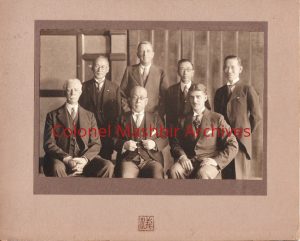
April, 1937: Imperial Hotel, Tokyo, following a Pan Pacific Club luncheon hosted by Prince Iyesato Tokugawa to honor Colonel Sidney Mashbir’s return visit to Japan. Tokugawa is seated adjacent to his American friend and ally, Mashbir. Accompanying them are several of Tokugawa’s other Japanese and American advisers. There was a rising militant movement in Japan and Mashbir was on a dangerous undercover mission. During Mashbir’s visit, Tokugawa heroically placed his own life in danger by sharing top secret intelligence information with Mashbir to bring back to the U.S. that might have preserved peace between their nations. However, their efforts were undermined. The novel The Emperor and the Spy highlights this untold story.

  • Despite their best efforts, WWII could not be stopped….Colonel Mashbir was then recruited by General Douglas MacArthur to command a top-secret intelligence organization ATIS (Allied Translator and Interpreter Section). ATIS grew to almost 5,000 members, and significantly shaped the successful Allied battle strategy in the Pacific, dramatically shortening the war. ATIS was mainly composed of thousands of first generation Japanese Americans (Nisei) who patriotically volunteered to serve under Mashbir’s command, translating and interpreting strategic military documents coming in from the Pacific battlefields. While also interrogating Japanese prisoners of war. And many also heroically went into the battlefield to serve at the front lines. Based on their major contributions, Colonel Mashbir felt the injustice of Presidential Executive Order 9066 that resulted in the illegal imprisonment of  loyal Japanese. Approximately 112,000 persons were sent  to “relocation centers” that would be their home for the duration of the war. Nearly 70,000 of the evacuees were American citizens. There were no charges of disloyalty against any of these citizens. Nor was there any means they could appeal their loss of property and personal liberty. 
  • Colonel Mashbir swore that once the war was over, he would devote himself to letting the world know of the major contributions made by patriotic Japanese Americans who had served under his command in ATIS.
  • Colonel Mashbir took a major role in ending WWII and orchestrated the Japanese Surrender Signing Ceremony. Thereby avoiding a major destructive battle on mainland Japan.
  • Mashbir arranged for General MacArthur and Emperor Hirohito to meet, to plan the rebuilding of Japan and the rekindling of US / Japan friendship. Mashbir served as the translator and facilitator.


 Back cover: The Emperor and the Spy

Published 2015, 2017, 2019

Available in Print, Kindle, and Audiobook


Here are biographies that highlight the fascinating life of Prince Iyesato Tokugawa.

  Published 2019

KINDLE EDITION

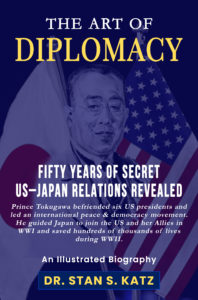
DESCRIPTION OF BOOK COVER PHOTO:

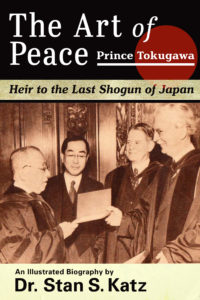
When WWII ended, for various geopolitical reasons there was an urgent agenda in place to leave behind the details of the period leading up to that tragic conflict. And instead, the goal was to expediently reestablish Japan and the U.S. as friends and allies. This resulted in much of the significant peaceful Japanese diplomatic engagement during the prior decades to that war being lost, forgotten, or destroyed – For instance, the above book cover photo comes from what might well be the last remaining crumbling copy of a 1934 Japanese magazine. It presents Prince Tokugawa receiving an Honorary Doctor of Laws Degree from the University of Southern California. The president of the university Dr. Rufus B. von Kleinsmid hands the certificate to Prince Tokugawa. (Left to right in photo: Prince Iyesato Tokugawa; Iyemasa Tokugawa; George I. Cochran; Dr. Rufus B. von Kleinsmid.)

This presentation took place during a special luncheon given March 19, 1934 in Los Angeles, hosted by George I. Cochran, the president of the school’s Board of Trustees. Prince Iyesato Tokugawa was accompanied by his son Iyemasa, the newly appointed Japanese Minister to Canada.

The Los Angeles Times stated that this honorary degree was given to Prince Tokugawa “in recognition of distinguished service in international statesmanship,” and for his “support of many philanthropic and educational movements.”

In accepting the honor, Tokugawa respectfully responded, 

“He wished to receive it in the name of the Japanese people as a whole rather than as a personal distinction.” 

The Los Angeles Times stated that a banquet dinner was to be hosted by the Japan-America Society of Los Angeles to honor Prince Tokugawa’s visit. The Governor of California and the former Mayor of Los Angeles planned to attend.

Surprisingly, the University of Southern California currently has no record of this event having taken place. 

And it’s an intriguing coincidence that during the following year, 1935, President Franklin D. Roosevelt was also awarded an Honorary Doctor of Laws Degree from USC, on October 1, 1935. Prince Tokugawa and President FDR knew each other well. During Tokugawa’s 1934 visit to the U.S. the  two men met and discussed ways in which they could maintain amity between their nations. Prince Tokugawa invited FDR to visit Japan with hope that a face to face meeting between US and Japanese leaders including the Japanese Royal Family might strengthen their friendship and understanding.

*The publication of THE ART OF PEACE was brought to the attention of the leadership of USC, revealing significant forgotten history about their school from over 85 years earlier – It is exciting that not long afterwards, USC awarded honorary degrees to former USC Nisei (first generation Japanese-American) students who had not been allowed to continue their education at USC following their release from internment camps. In which they had been unfairly imprisoned during WWII – Many of these former students were deceased, so their honorary degrees were conferred to their families. There is a USC Annenberg Media article about this college degree presentation titled: “President Folt conferred honorary degrees to the families of 33 former Nisei students.” Written by Clara Preve-Durrieu, April 06, 2022. Thus correcting an injustice from the distant past.


The ART OF PEACE was republished in a General Reader Edition titled: THE ART OF DIPLOMACY.

(Note:  THE ART OF PEACE  has an additional 100 pages of historical notes to assist researchers.)

Print and Kindle Edition


Our times need inspiring role models in the art of peaceful and respectful international diplomacy – It would improve international relations in Asia to recognize Prince Tokugawa’s major humanitarian achievements as President of the Red Cross Society of Japan, promoting the creation of demilitarized safe zones in China. These havens helped protect the lives of hundreds of thousands of Chinese civilians during the years leading up to and during WWII. They also served as refuge for tens of thousands of European Jews fleeing the Holocaust. 

During 1921-1922, Prince Tokugawa headed the Japanese Delegation to the Washington Naval Arms Limitation Conference, hoping to maintain peace.

To combat racism, during the 1920s and ’30s, Prince Tokugawa incorporated Lincoln Essay Contests into all Japan’s public schools and universities. Giving awards to students who wrote the best essays honoring the humanitarian principles of Abraham Lincoln.  

Prince Tokugawa took a guiding role in 1912 Japanese gifting of Cherry Trees to Washington, D.C. evolving into the National Cherry Blossom Festival, Our capital’s largest annual international goodwill celebration. This achievement has also surprisingly not yet been recognized.

The timing is right to bring deserved international attention to these outstanding statesmen: Prince Tokugawa and Takashi Komatsu.


Reader Praise for:
The Emperor and the Spy

The Art of Peace

The Art of Diplomacy

The Cherry Tree Weeps For Me


Filed Under: Tokugawa Archives Tagged With: 1934 USC Bestows Honorary Doctor of Laws Degree on Prince Tokugawa, Abraham Lincoln, Abraham Lincoln and Japan, Abraham Lincoln Commemorative Medal, Ambassador Grew, Ambassador Grew and Prince Tokugawa, Ambassador Joseph C. Grew, Ambassador Joseph Grew, American “Embassy Day” held in Tokyo, Anti-Asian Racism, Archibald T. Steele, Baron Eiichi Shibusawa, Baron Shibusawa, Baron Shibusawa Eiichi, Captain Maxwell representing the Chicago Tribune, Carol L. Folt, chief of the Far East bureau of the United Press, Clara Preve-Durrieu, Colonel Mashbir, Colonel Sidney Forrester Mashbir, Colonel Sidney Mashbir, Consul General George A. Makinson, Dr. Rufus B. von Kleinsmid, Eiichi Shibusawa, Far Eastern manager of the National City Bank of New York, FDR, Frank A. Vanderlip, Frank Vanderlip, General Douglas MacArthur, General MacArthur, George A. Makinson, George I. Cochran, Heir to the Last Shogun, Heir to the last Tokugawa Shogun, Henry Kissinger, Henry Kissinger and Japan, History of Racism, History of the University of Southern California, History of University of Southern California, History of USC, Honorary Doctor of Laws Degree from USC, Honoring Abraham Lincoln, Iesato Tokugawa, Iyemasa Tokugawa, Jacquinot Safe Zone, James Mikel Wilson, Japanese Internment Camps, Japanese Racism at USC, John D. Rockefeller III, John L. Curtis, John Moorris, Komatsu and Tokugawa, Komatsu Takashi, Lincoln Essay Contest, Lincoln Essay Contests, Monmouth University, Monmouth University History, of the Far East Bureau of the Chicago Daily News, president abraham, President Abraham Lincoln, President Folt conferred honorary degrees to the families of 33 former Nisei students, President Franklin D. Roosevelt, Prince Iyemasa Tokugawa, Prince Tokugawa Iesato, Prince Tokugawa Iesato Archives, Racism at USC, Shanghai Safe Zone, Shogunate, Stan S. Katz, Stan S. Katz archives, Stan S. Katz blog, Stuart E. Grummon, Takashi Komatsu, Takashi Komatsu and Prince Tokugawa, Takashi Komatsu businessman, Takashi Komatsu diplomat, Takashi Komatsu industrialist, Takashi Komatsu international statesman, The art of diplomacy, The Art of Diplomacy biography, The Art of Peace, The Art of Peace biography, The Cherry Blossom Weeps for Me, The Cherry Blossom Weeps for Me:  A Quest for the Dawn of Peace, Tokugawa and Grew, Tokugawa and Komatsu, Tokugawa Iesato, US Japan relations, USC and Japan, USC Annenberg Media, USC Bestows Honorary Doctor of Laws Degree, USC Bestows Honorary Doctor of Laws Degree on Prince Tokugawa, USC History, USC President Folt, W.T. Turner

Prince Tokugawa as President of the Red Cross Society of Japan, working with US Ambassador Joseph Grew and Jesuit Priest Jacquinot, helped save tens of thousands of Jewish European refugees fleeing the Holocaust and hundreds of thousands of Chinese civilians.

January 26, 2024 by Stan S. Katz Leave a Comment


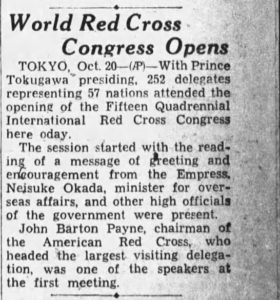
For decades, Prince Tokugawa Iesato (aka Prince Iyesato Tokugawa – 1863-1940) devoted his life to maintaining peace in Asia and specifically preventing Japan from coming into conflict with China. Tokugawa saw the clouds of war growing in Europe, as well as the militants in his own country pushing Japan towards conflict with China. He resisted these aggressions and wished to protect as many innocent lives as he could. As president of the Japanese Red Cross Society, Prince Tokugawa presided over the 1934 International Red Cross Conference in Tokyo (aka XVth International Conference of the Red Cross), where he urged the delegates to “Serve for Humanity.” It was at this gathering, where there was the first known example in history for the international creation of demilitarized Safe Zones, where civilians could find shelter, as outside warring armies fought one another.

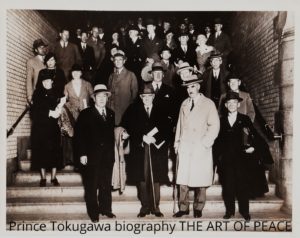
The above October 1934 Press photo presents the American delegates to the conference held in Tokyo. Front row: U.S. Ambassador Joseph C. Grew (in light overcoat); on Grew’s right, holding papers and a cane, is Judge John Barton Payne, Chairman of the American Red Cross. (The other Red Cross representatives are not listed.) Ambassador Grew and Judge Barton Payne were close allies of Prince Tokugawa. This was the important conference, where the foundation for Safe Zones in Japanese controlled Chinese cities, such as Shanghai, were established, which helped save so many Chinese and Jewish lives. Up till now, Prince Tokugawa has not been recognized for his guiding role in the creation of these Safe Zones.


October 20th, 1934, Oakland Tribune (Oakland, California)

Prince Tokugawa presided over the 1934 International Red Cross Conference held in Tokyo, where for the first time in history the concept of creating civilian/refugee Safe Zones in war-torn areas was established. Prince Tokugawa promoted these safe havens which continued to exist throughout WWII. Credit also goes out to the President of the Chinese Red Cross Society Zhengyan Wang (another spelling Zhengyuan Wang 卢敏课题组) 


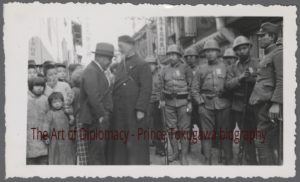
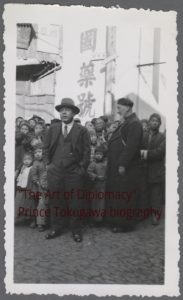
The above and below photo are courtesy of The Archive of the Jesuits in Canada / Archives des Jésuites au Canada  http://jesuitarchives.ca.

The photos were supplied specifically for use in this blog post.

The photos had the below description in French:

“Dans la zone “Jacquinot” avec le consul Japonais”

Below is the English translation:

“In the “Jacquinot” zone [Shanghai, China] with the Japanese consul.”

The date of these photos is estimated to be circa 1937-1940.


In these photos the bearded gentlemen in the French beret is a kind-hearted and heroic Jesuit Priest, Robert Jacquinot de Besange, who spent many years serving in China. He is conversing with one of Prince Tokugawa’s Japanese government representatives.

Father Jacquinot, with Prince Tokugawa’s strong support guided the Japanese military and their Chinese military counter-parts to agree to avoid conflict in these demilitarized Safe Zones.


Once WWII ended, there was the strong desire on the part of both the US and Japan to leave the recent dark war period behind them and expediently move forward again as allies. For this reason, Prince Tokugawa his supporters have become forgotten international heroes, who deserve recognition.

THE ART OF DIPLOMACY AND THE ART OF PEACE versions of Prince Tokugawa’s biography highlight Tokugawa’s significant involvement during the 1920s and 1930s in preventing the growing anti-Semitism in Europe from spreading to Japan and negatively influencing Japan’s treatment of Jews. A great debt is owed to Prince Tokugawa, by many, whose relatives were rescued by this noble individual.

These books also offer important lessons in creative intercultural and political relations for our current and future leaders.

Hopefully, these new insights will help heal some of hard residual feelings in Asia linked to events from WWII.


PRINT & KINDLE EDITION


EXPANDED EBOOK EDITION


                       Praise


Paul Ringwood U.S. Navy Commander (retired) wrote:

“Amazing little known history. I enjoyed every chapter.”


Kazuo Kodama, former Ambassador of Japan to the United Nations wrote:

“I wish you all the best & best of luck on your new book on ‘’Tokugawa Iesato.”


Professor Benjamin Uchiyama, Ph.D. History, University of Southern California wrote:

“This is a really interesting and understudied topic.”


Suzette Heiman, Director of Planning and Communications – The Missouri School of Journalism at University of Missouri [The first school of Journalism in the U.S.] wrote:

“We look forward to adding this biography to the School’s library collection. Your goal to reach high school and college students with this information is an ambitious – but important – goal.”


Toru Shigehara: Head Librarian/Information Resources Center Shibusawa Eiichi Memorial Foundation and Museum wrote:

“We appreciate your kindness and all the work you have done to promote understanding of Shibusawa Eiichi and US-Japan relations as a whole. I wish you all the best in your current and future endeavors. With gratitude,”


Bill Davison – President of the North County Chapter of the San Diego World Affairs Council wrote:

“Entertaining and Educational! This wonderful book will almost certainly broaden your perspective on US-Japanese relationships.”


Professor Claire Langham, former President of the East-West Center of Southern California wrote:

“The importance of preventing war is rarely given recognition through literature and in accounts of history.  It can be every bit as exciting as glorified accounts of war and certainly a better approach.”


Dr. Gerald Margolis, former Deputy Director of Operations of the University of Pennsylvania’s Museum, the Executive Director of the World Religions Museum in Taipei, Taiwan (1996-97), the Founding Director of the Museum of Tolerance in Los Angeles (1987-96) and the Director of the Simon Wiesenthal Center in Los Angeles (1983-96). Dr. Margolis offers the below description of my books/research:

“Once again, I am impressed by your diligence and adventurous engagement with a difficult subject. Your work is all about discovery. You seek out different tracks – I think you might wish to explore academic University departments that cover diplomacy, and the craft of international relations.”


Filed Under: Tokugawa Archives Tagged With: Bill Davison, Chinese History, Chinese Red Cross Society, Diplomacy, Dr. Gerald Margolis, Historical biography, History of Jews in China, Holocaust, Humanitarian efforts, International diplomacy, International Friendship, International Relations, Jacquinot, Jacquinot Safe Zone, Jacquinot Zone, Japan China relations, Japan Society of New York City Archives, Japanese History, Jesuit Priest saves Chinese lives History, Jewish History, Jews fleeing Holocaust, Kazuo Kodama, Kazuo Kodama Ambassador of Japan to the European Union, Kazuo Kodama Ambassador of Japan to the United Nations, Museum of Tolerance in Los Angeles, North County Chapter of the San Diego World Affairs Council, Paul Ringwood U.S. Navy Commander, President of the Chinese Red Cross Society, President of the Chinese Red Cross Society Zhengyan Wang, Prince Iyesato Tokugawa, Prince Tokugawa, Prince Tokugawa Archives, Prince Tokugawa Iesato, Prince Tokugawa Iesato Archives, Professor Claire Langham, Red Cross Society of Japan, Safe Zones, Saving Chinese lives, Saving Jewish Lives, Shanghai Ghetto, Shanghai Safe Zone, Simon Wiesenthal Center, Stan S. Katz, Stan S. Katz blog, Suzette Heiman, Taiwan, The Archive of the Jesuits in Canada, The Archive of the Jesuits in Canada / Archives des Jésuites au Canada, The ArchiveArchives des Jésuites au Canada, The art of diplomacy, The Art of Peace, The Missouri School of Journalism at University of Missouri, Tokugawa Archives, U.S. Japan relations, U.S.-Japan History, University of Pennsylvania’s Museum, US Japan relations, World Religions Museum in Taipei, WWII, Zhengyan Wang, Zhengyuan Wang, 中国红十字会), 卢敏课题组

Copyright © 2026 Stan S. Katz